
An office owner planning perimeter repairs needs to know what supports the metal as well as which visible pieces are damaged. Commercial Roofers Honolulu repairs roof edge metal, coping and gutters in Honolulu, HI, with that connection included in the examination. Downtown Honolulu’s office buildings and Kapolei’s retail and office premises can have different parapets, roof levels and access requirements. We identify the component, backing and adjoining waterproofing so replacement work restores a defined perimeter detail rather than leaves an uncertain attachment beneath new metal.
Edge metal, coping and gutters perform related but distinct functions. A membrane edge must terminate securely, a coping must protect the top of a wall and a gutter must convey discharge along its intended route. Their repair scopes should reflect those differences. We record movement, separation, drainage defects and supporting conditions, then explain how the proposed work interacts with the roof and exterior surfaces that remain. The resulting scope gives the owner a basis for reviewing both materials and connections.
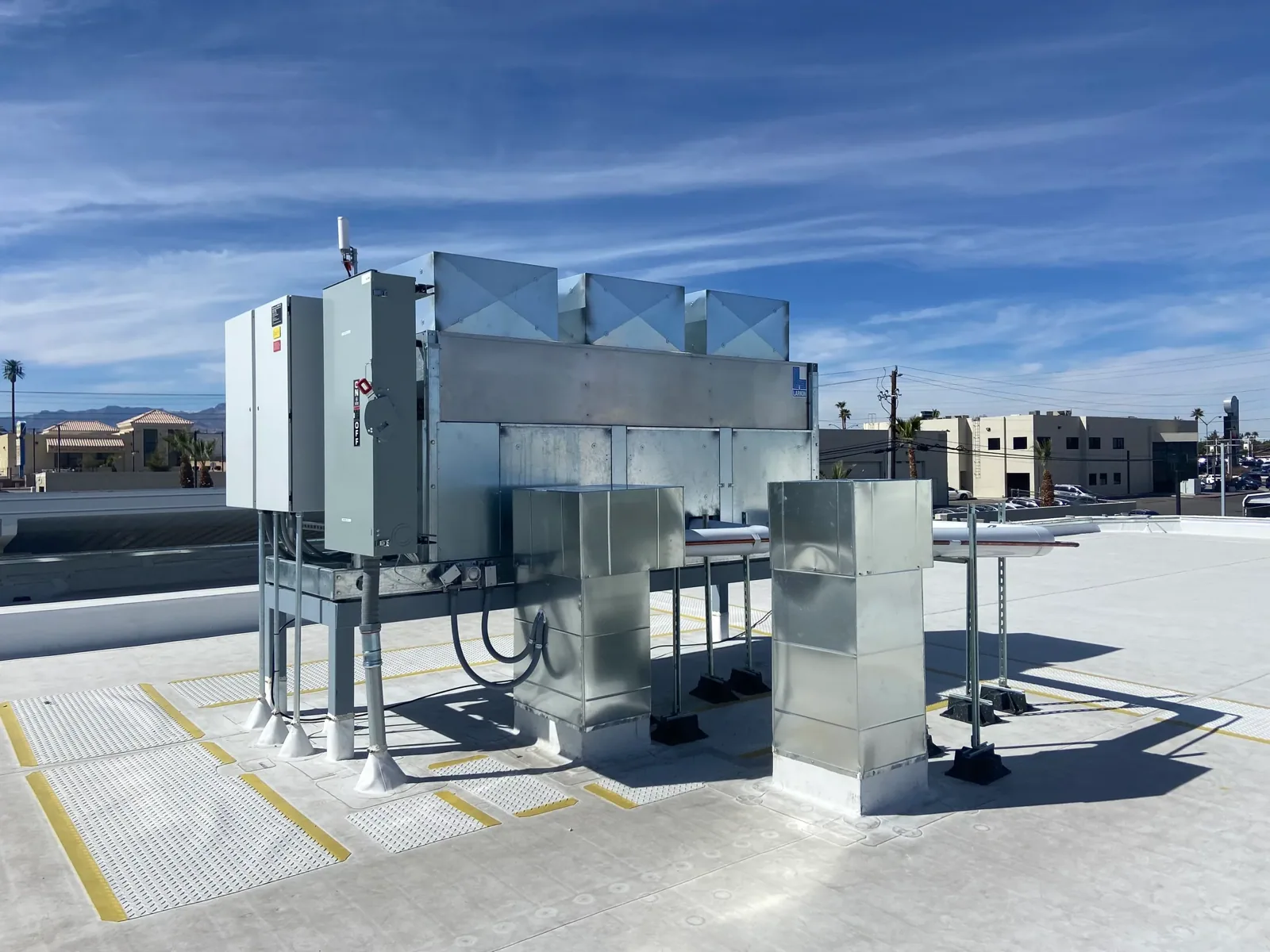
Roof edges connect several layers
At a low-slope perimeter, the membrane and metal edge need a compatible arrangement that provides weather protection and an appropriate attachment. We examine the existing termination, fasteners, seams and adjoining roof surface. Movement at the metal may have affected the waterproofing beyond the visible opening. A replacement length therefore requires assessment of how it joins retained metal and roofing, including corners and transitions where separate components meet.
A close perimeter examination helps distinguish a local damaged piece from a wider connection concern. We record where attachment can be inspected directly and where removal is necessary to establish backing condition. Corroded or deteriorated support may change the repair limits. The scope identifies that investigation before installation, allowing the owner to understand why replacing the visible component alone may not provide an adequate closure.
For a modified bitumen roof assembly, the edge connection and material preparation differ from a welded membrane detail. We evaluate the retained roof condition and the proposed termination method. New metal should not create an incompatible junction or cover damaged material that still requires removal. Where perimeter roofing is reconstructed, the layer sequence and connection to the retained field are documented before the metal conceals part of the work.
Coping protects the wall top
A coping repair begins with the wall-top condition and the existing metal arrangement. We examine joints, corners, attachment and the relationship to roof-side flashing. A loose cover can reflect failed fastening, deteriorated backing or movement that the current joint does not accommodate. Those findings require different responses. The repair describes the affected components and the support or waterproofing that must be corrected before the new cover is installed.
Water may enter through a coping joint and travel within a wall, making the interior symptom difficult to relate to the roof surface alone. A directed leak investigation can examine that relationship where the entry path is uncertain. We distinguish coping weather protection from the adjoining wall and roof details. Repairing one accessible seam does not establish that a concealed wall transition is sound, so any unresolved connection receives a specific investigation recommendation.
Joint arrangement also needs to accommodate the movement expected of the selected metal detail. Overly rigid repairs can shift stress to an adjoining connection, while unsuitable sealant or preparation can leave a vulnerable weathering joint. We assess the existing configuration and follow the requirements of the proposed components. Completion photographs show corners, joins and termination points so later inspection has a useful account of how the wall top was closed.
Gutters retain a discharge route
A gutter is examined for alignment, support, joint condition and the route to its outlets. Water overflowing at one point can result from debris, a displaced section or a restricted discharge rather than a need to replace every length. We identify the accessible condition and compare it with owner observations during rainfall. The proposed correction follows the finding, including related downspout work or another trade’s investigation where the discharge continues beyond our roofing scope.
The connection between the roof edge and gutter matters as much as the gutter itself. Water should reach the intended collection path without entering behind the receiving component. We examine flashing overlap and the supporting condition where repair access permits. Scupper and outlet work may be coordinated where a collector receives water through a perimeter opening. Changing a component without considering that interface can leave the original water entry or overflow problem unresolved.
Where gutter capacity or an outlet arrangement needs alteration, the appropriate project-specific assessment is identified before construction. A visible overflow does not establish the required dimensions of a replacement. The roofing proposal distinguishes cleaning, component repair and a design change. Owners can then authorize the necessary assessment and retain a record of the approved arrangement, rather than accept a larger-looking component without a supported basis for the change.
Removal reveals the repair boundary
Perimeter work can expose roof edges, wall tops and concealed backing. We plan a sequence that limits the open area and provides suitable closure before a weather interruption. Hawaii’s persistent northeasterly trade winds affect handling and control of loose components, while heavier winter rainfall makes protection of opened transitions consequential. The crew assesses conditions for the specific operation and coordinates access below where material removal could affect occupied or publicly accessible areas.
Where damage follows a reported weather event, storm repair documentation preserves the displaced component and supporting findings before replacement. Newly exposed deterioration is photographed and presented with the revised work needed. That record separates the initial visible damage from additional conditions encountered during removal. It also gives the owner a clear explanation of which backing, roofing and metal components were retained or replaced in the final detail.
Acceptance follows the connected detail
For office roof perimeter work, access, deliveries and areas below the edge may need coordination with building operations. We agree the work boundaries and identify conditions requiring a temporary restriction. The completed record includes relevant attachment and waterproofing photographs, particularly for portions concealed by the final metal. Exterior appearance is considered with the functional connection, so acceptance is based on the complete specified detail rather than the visible finish alone.
Owners in Downtown Honolulu’s office district can keep the repair description with later maintenance findings. Personnel inspecting the perimeter should know where joints, outlets and reconstructed transitions are located. We identify any remaining condition beyond the completed scope and explain suitable follow-up. A clear handover allows future observations to be compared with the installed arrangement, making movement or drainage changes easier to investigate without assuming that each new symptom begins at the roof membrane.
Commercial Roofing Questions
Does loose coping always require complete replacement?
The response depends on the cover, attachment and supporting condition. Examination may support a local repair, but deteriorated backing or an unsuitable joint can require a broader reconstruction.
What should be checked before new edge metal is installed?
The retained roofing, backing, attachment arrangement and adjoining metal connections need assessment. These findings establish whether the proposed termination can be installed on a suitable base.
Can gutter overflow be corrected by resealing its joints?
Resealing addresses an appropriate leaking joint, not every overflow cause. Obstruction, alignment and discharge restrictions need their own examination before the corrective work is chosen.
Why photograph backing that will be covered?
The image records support condition and work completed before the metal conceals it. That information helps the owner review the repair and gives future examination a useful starting point.
Who determines a revised outlet or gutter capacity?
A capacity change needs the appropriate qualified assessment for the project. We identify that requirement and connect the roofing scope to the approved drainage arrangement.
Examine the perimeter connection
Ask Commercial Roofers Honolulu to assess edge metal, coping or gutter conditions and define the backing, waterproofing and component work required.
Tell Us About Your Roof
We will follow up to set up a time to walk the roof.

Request a Roof Assessment
Tell us about the building and what you are seeing. We will follow up to set up a time to walk the roof.