
A medical office manager evaluating a membrane specification needs the proposed KEE product identified beyond its material-family label. Commercial Roofers Honolulu assesses KEE roofing in Honolulu, HI, with the product, supporting layers and detail requirements reviewed as a complete scope. Downtown Honolulu’s office setting and the commercial uses along Kailua Road provide local contexts for scheduling occupied work. We establish the existing assembly and the intended installation before recommending a material whose name alone cannot describe its compatibility, preparation or connection requirements.
KEE refers to ketone ethylene ester technology used in certain thermoplastic roof membranes, including PVC-alloy formulations. Products described within that category can have distinct requirements. The owner needs a clear account of the selected membrane and system rather than an assumption that a category name establishes identical performance across every product. We coordinate material selection with the actual substrate, exposures and project criteria, then define the seams and details needed to provide the proposed waterproofing.
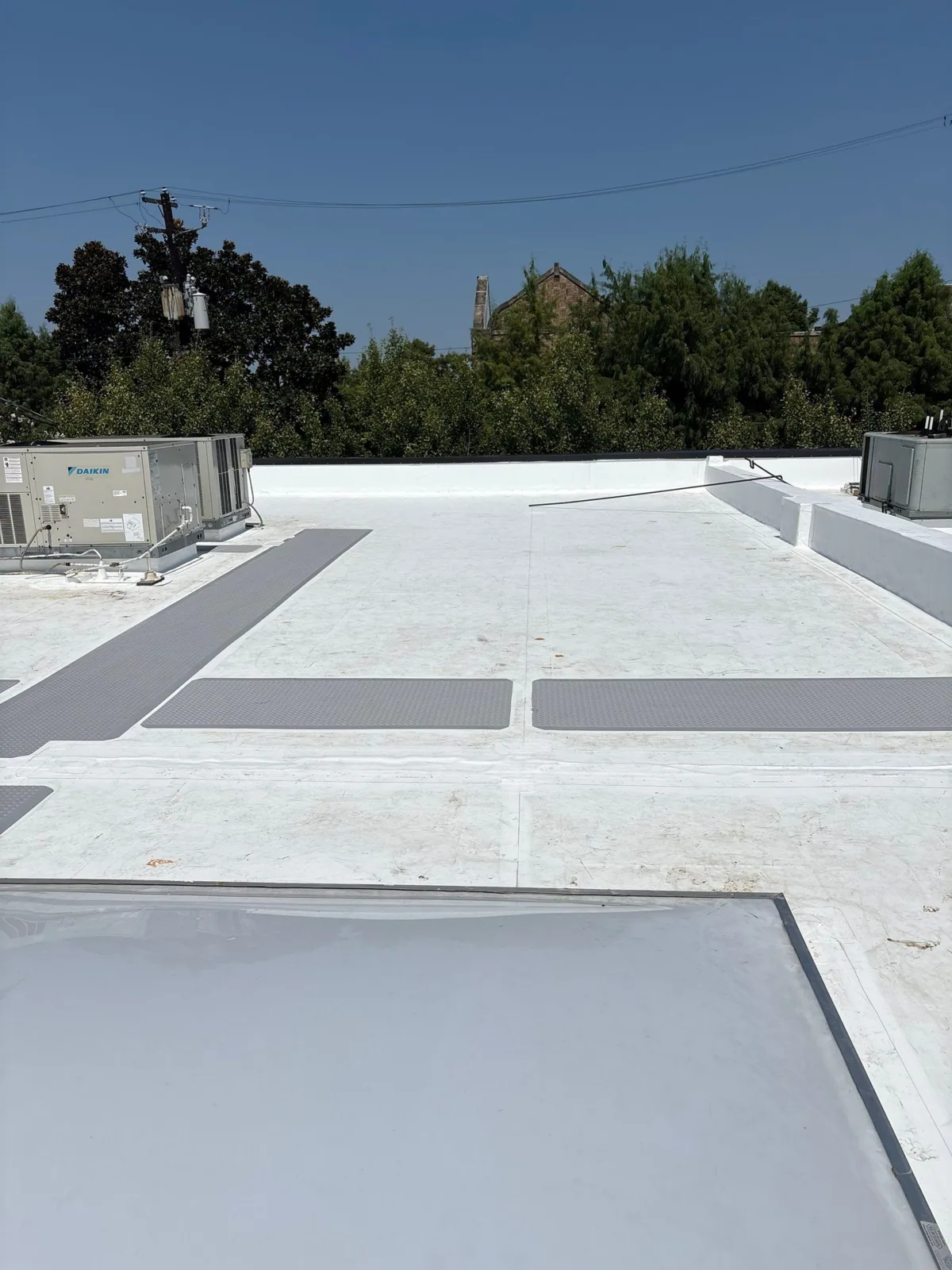
The product record comes before substitution
For an existing roof, installation documents and direct examination help establish the membrane and earlier repairs. Identification matters before another material is welded or bonded to the surface. A similar appearance or related formulation does not establish compatibility. We review the available product information and identify uncertainty relevant to the proposed work, including previous treatments that may affect preparation or prevent the intended connection.
A proposed new system likewise needs a specific material description and compatible components. The scope identifies the field membrane, detail products and attachment arrangement appropriate to the project. Alternatives are assessed as complete systems rather than substitutions of one sheet into an otherwise unchanged specification. This provides the owner with a basis for reviewing what will actually be installed and the information supporting its connections.
An identified PVC system may be considered in a material comparison, but related product categories should not be collapsed into an assumed common repair method. We explain the distinct preparation and assembly requirements of an appropriate option. If the existing membrane cannot be identified sufficiently for the proposed connection, further examination or another supported roofing route is needed before a local repair is authorized.
Retained layers need a condition basis
The selected membrane requires a suitable supporting assembly. We examine existing construction records and accessible findings, with selective openings where concealed material affects the installation decision. Confirmed damaged insulation or supporting material receives a defined removal scope. Retention boundaries should describe what remains and why its condition supports the proposed work, rather than treat a new thermoplastic surface as evidence that the concealed roof has also been renewed.
Insulation and cover-board coordination addresses material compatibility, thickness and the selected installation method. Height changes are considered at walls, drains and equipment curbs before the field is placed. An unsuitable transition can affect support and drainage even if the new membrane itself is correctly joined. We identify the preparation needed to create the proposed geometry, preserving a clear connection between layer selection and detail construction.
Where there is a leakage history or suspect concealed condition, targeted assembly investigation can help establish the material findings needed for scope selection under appropriate conditions. Direct openings confirm relevant questions and receive suitable closure. A survey indication and a confirmed material condition remain distinct in the record, allowing the owner to understand the basis for removal quantities and any further examination still required.
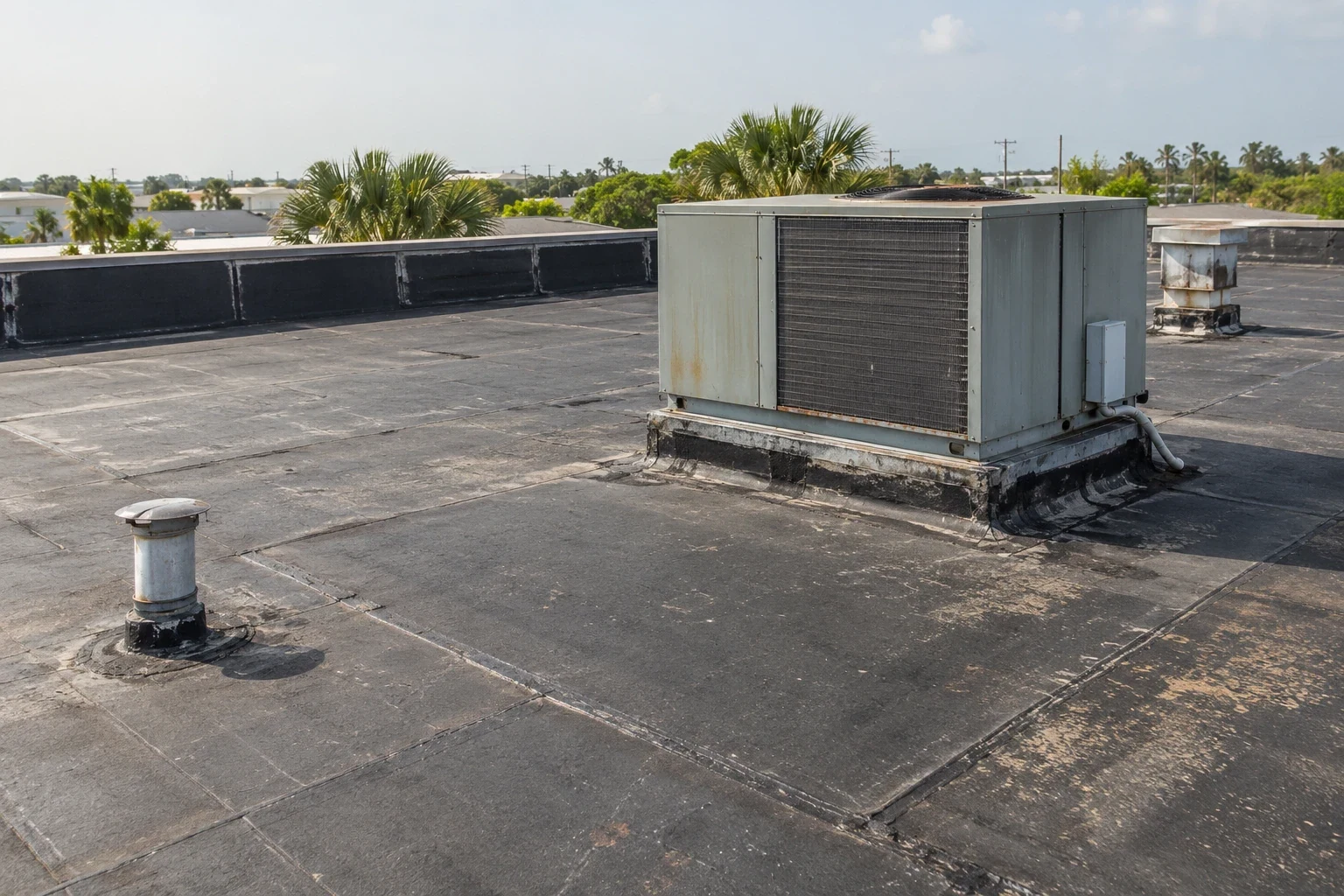
Welded details follow the actual system
KEE membrane connections use the methods required by the identified product and system. Heat-welded work needs suitable surfaces, conditions and equipment settings, with completed junctions checked as appropriate. Detail geometry should provide room for formation and examination. Corners, changes in plane and tight component groups can require specific arrangements rather than an improvised fold closed only by another surface treatment.
Work at curbs and penetrations is coordinated with sound backing and the component’s condition. A loose support or altered equipment base can place stress on the roof connection. We identify work another party must complete before final flashing proceeds, then record the prepared base and completed termination. The detail should have a defined weathering junction rather than rely on the assumption that a flexible membrane compensates for an unstable component.
Perimeters and drains need compatible transitions of their own. We examine the existing component and the roofing connection, identifying damaged backing or unsuitable outlet geometry. Reconstruction is included where required by the proposed installation. This keeps the new field connected to the parts of the assembly where weather protection and discharge occur, avoiding a proposal that specifies a membrane carefully but leaves its boundaries to an undefined later decision.
Operating conditions inform the material review
The owner’s account of rooftop discharges, equipment service and access helps identify exposure questions relevant to selection. We compare the actual conditions with the selected product requirements rather than make a general claim that KEE tolerates every chemical or operating environment. Where another trade must control a continuing discharge, that work remains distinct from roofing. Product choice should support the waterproofing decision without replacing the responsible equipment party’s care requirements.
For medical office membrane projects, equipment operation and areas below planned openings can affect construction sequencing. We agree access and protection with the owner and identify stages requiring coordination. Hawaii’s winter storms typically bring its heavier rain, making a suitable interval for exposed-layer work important. Northeasterly trade winds also influence material handling. The crew assesses the operation’s conditions while the selected assembly and project requirements establish its installation method.
The final record preserves the specification
Installed product descriptions and relevant layer photographs remain with the completed detail record. Authorized changes encountered during removal are retained, including any revised material or connection arrangement. A comparison with another thermoplastic roof option should likewise preserve the system-specific basis of the decision. The owner can then identify what was installed when a later repair or equipment change requires compatibility review.
Buildings in Kailua’s commercial district can keep those documents with the membrane maintenance record. Later findings should be compared with known details and earlier completed work. We identify outstanding conditions outside the contract and the follow-up needed where an interface remains unresolved. The handover makes the material selection usable for ownership, keeping product identity, installation scope and future care connected instead of leaving only an acronym to describe the roof.
Commercial Roofing Questions
What information does the KEE label leave unresolved?
The actual product, supporting assembly and connection requirements still need identification. Material-family terminology alone does not establish every component or repair method suitable for a particular roof.
May a similar-looking membrane be used for a local repair?
Compatibility must be established for the identified existing system. Appearance and related material categories do not provide a sufficient basis for selecting a new sheet or detail component.
Why retain the installed product description?
It helps future contractors review compatible preparation and repairs. Combined with detail photographs and assembly records, it establishes what was delivered before another roofing decision is made.
Does a KEE specification resolve rooftop discharge concerns?
Specific exposures need review against the selected product requirements. Ongoing discharge control remains a separate equipment responsibility rather than a condition solved by a general membrane designation.
How are changed concealed conditions reflected in the record?
The exposed finding and accepted scope change are retained with the final construction account. This explains why material or removal limits differ from the original proposal and supports later investigation.
Identify the KEE system and its connections
Review KEE roofing with Commercial Roofers Honolulu to establish product identity, retained assembly condition and the detail requirements supporting the proposed work.
Tell Us About Your Roof
We will follow up to set up a time to walk the roof.

Request a Roof Assessment
Tell us about the building and what you are seeing. We will follow up to set up a time to walk the roof.