
A production schedule can absorb a roof repair only when the work zone and closure boundary are known. We begin with the building use, roof assembly, process equipment above and below, and the access window the operator can provide. Honolulu’s economy includes manufacturing, research, trade, and business activity, while the airport-area plan considers Lower Mapunapuna and Waiwai Loop as existing employment areas. Those facts describe the market context, not a specific plant. The condition record remains tied to each roof’s visible seams, penetrations, drains, and concealed layers.
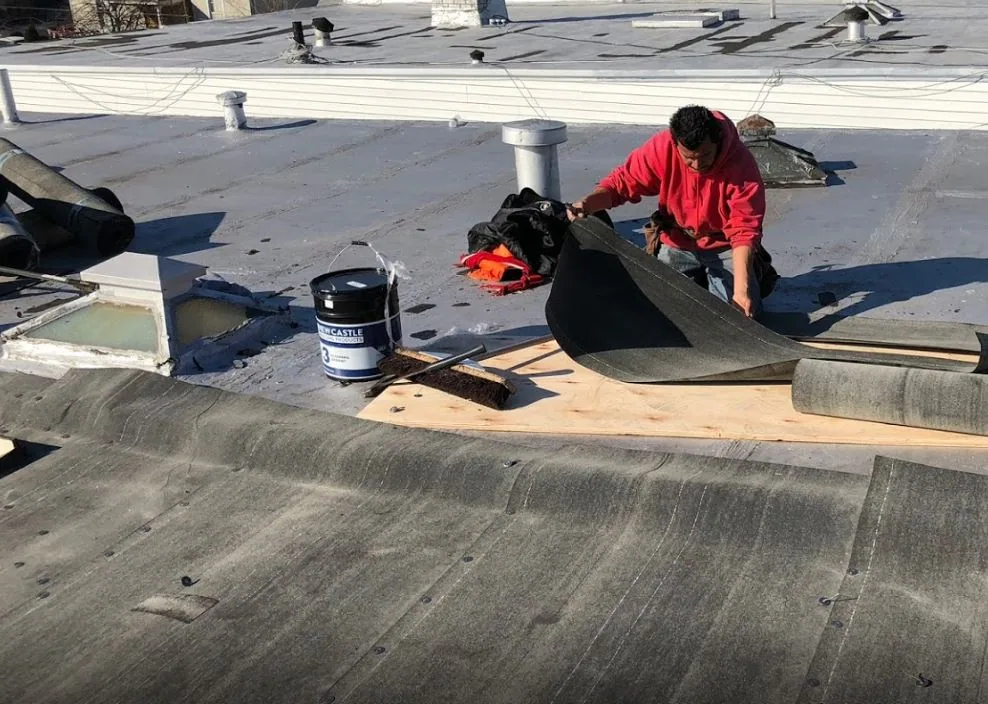
Map equipment before opening the roof
Process lines, exhausts, conduit, gas piping, and rooftop units can constrain both inspection and repair. We mark the equipment that blocks access, identify each curb or penetration, and note which trade owns removal or isolation. A roof plan that omits those interfaces can leave the crew unable to reach a drain or close a detail safely. Before work starts, the operator confirms shutdown windows, roof access, and any required protection around intakes or process areas.
The airport-area plan considers Lower Mapunapuna and Waiwai Loop existing employment areas, which helps locate a work file but does not establish a particular roof’s configuration. A distribution building’s loading and staging constraints may differ; here, the production schedule governs access, roof closure and the handoff back to operations.
Trace moisture without interrupting production
A stain below a production area can relate to a seam, drain, wall joint, curb, or water path through a concealed layer. We inspect the roof above the reported interior zone and document nearby equipment, seams, and drainage. If moisture is suspected below the membrane, readings and sample openings are located on a plan. The report states whether the condition is confirmed, what additional test is needed, and how the opening will be closed before production resumes.
Hawaii’s climate has persistent northeasterly trade winds and rainfall variation over short distances. We use that climate context when discussing exposure and weather protection, but the current roof inspection determines actual wet material and leakage. A moisture survey can help target follow-up testing when conditions support meaningful readings, and a hands-on review checks the field details that the instrument cannot resolve.
When a production unit or rooftop conveyor is replaced, the loads and curb geometry can change the detail that the roof must close around. We record the support spacing, visible attachment, and any change made by the equipment trade, then compare the roof work with the current plan. If the deck condition or attachment is uncertain, a test or design review belongs in the scope before a new membrane is selected. A Honolulu transition note preserves the previous code for applications and construction documents submitted before August 9, 2024, subject to stated revision provisions. For a reroof scope, we verify the governing submittal and applicable review instead of applying one code date to every project. The owner receives the open question and approval point before work proceeds.
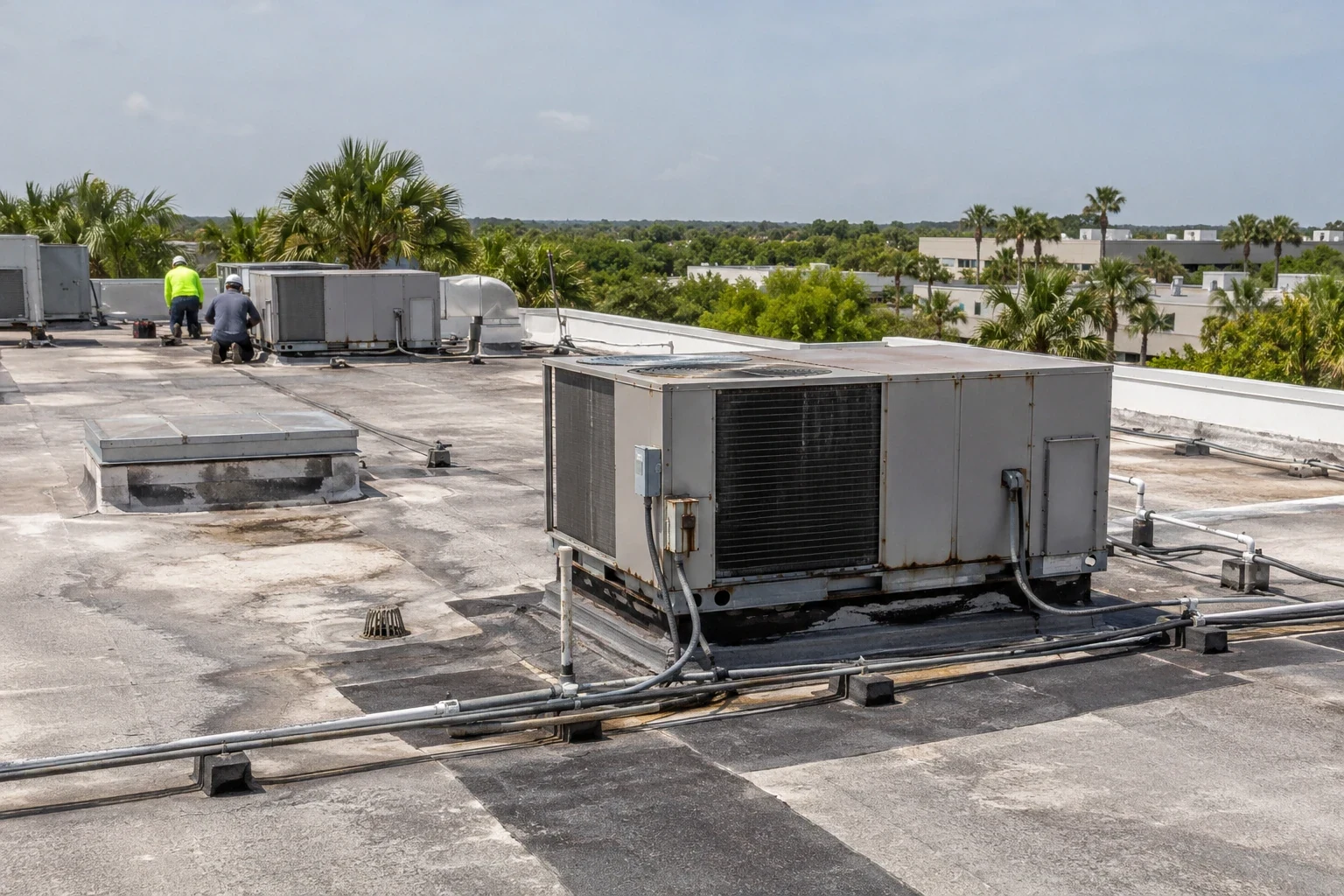
Control the boundary around exhaust and heat
Exhaust discharge, steam, grease, or process residue can affect nearby membrane and flashing. We note the outlet direction, the distance to a seam or curb, and any surface condition that needs cleaning or a compatible repair. Heat exposure is evaluated at the actual roof detail, not inferred from a machine name. If maintenance staff can provide operating cycles and service clearances, we can schedule the inspection when the relevant equipment condition is observable.
Kapolei connects to Waipahu by H-1, while Kalaeloa Boulevard leads toward Campbell Industrial Park. These regional connections can affect a manufacturer’s deliveries and crew staging, but they do not set a roof system. For work within an active plant, we define the equipment access and dry-in limit before the curb or support repair begins.
Set a repair that can close on schedule
A manufacturing roof repair must identify how each shift ends. We state the area opened, removal depth, substrate check, temporary cover, and closure detail, then establish who inspects the completed weld or flashing before equipment access resumes. If concealed wet insulation extends beyond the initial test, the owner receives the finding and the next approval point before additional material is removed. That keeps scope growth visible instead of leaving it to a crew decision at the roof edge.
August and September are Hawaii’s warmest months, when temperatures can reach the 90s; severe storms, including hurricanes, are uncommon but possible. That informs planning for exposed roofs and the closure method, while current conditions govern each work window. A repair scope may isolate one curb or seam; a wider occupied-site sequence coordinates roof work with production and interior operations.
After the repair, operations can use the marked drain and equipment zones during routine roof access. We note which surfaces must remain clear and where future service work could disturb a flashing.
The next review can then compare those details against the same photo locations.
Compare maintenance and replacement
Repeated repair at different equipment bases may indicate a broader problem in flashing design, drainage, or the condition of a roof zone. We compare dated photos and repair locations, then determine whether the scope should remain local or include a larger investigation. Replacement planning adds deck, insulation, cover board, edge metal, and equipment-support decisions. If a process unit must stay in service, the phasing plan also identifies temporary protection and access during roof work.
For a portfolio with several production sites, an asset management record keeps each building’s assembly and operating calendar distinct. A manufacturer should receive the condition evidence and closure sequence for the property under review, not a generic roof age or material assumption. If a recover is being considered, we identify test cuts and substrate checks before pricing the work.
Handover a condition record to operations
Closeout includes the marked roof zone, photographs before and after work, materials used, test and opening locations, and the repair acceptance check. The facility team receives any remaining limitations or follow-up inspections alongside the record. Where an exhaust, conduit, or equipment support was part of the work, its interface is documented so maintenance staff can recognize what changed and where the next observation belongs.
That handover helps operations distinguish a completed repair from a larger recommendation. Lower Mapunapuna and Waiwai Loop can help locate local scheduling context, while the roof plan points to the actual building and work area. We leave the owner with a clear status for each zone: closed, under observation, or awaiting another test or approval.
Commercial Roofing Questions
Can roof work be done while production continues?
Often it can be phased, but access, noise, equipment shutdowns, material movement, and the daily closure limit must be agreed first. We document the sequence around the operating schedule.
How do exhausts affect the roof inspection?
We examine discharge direction, nearby membrane, curb flashing, and surface condition. The operating cycle and service clearance help determine when that area can be viewed and how it will be repaired.
What happens if a core shows wet insulation?
We photograph and map the material found, then obtain approval for the removal limit. The report distinguishes confirmed moisture from areas not opened.
What does a manufacturing roof replacement scope include?
It should identify deck and insulation findings, tear-off limits, equipment transitions, drainage, staging, temporary protection, and the dry-in sequence for each production zone.
How do you handle a weather interruption?
The plan states the opening limit, temporary cover, inspection step, and restart condition. Winter rain timing informs the window, while the day’s conditions determine whether work proceeds.
Set the inspection boundary
Arrange an examination with the building use, roof plan, leak locations, access conditions, and operating schedule. We will document the observed assembly, concealed-work findings, closure detail, and scope boundary needed for the owner’s decision.
Tell Us About Your Roof
We will follow up to set up a time to walk the roof.

Request a Roof Assessment
Tell us about the building and what you are seeing. We will follow up to set up a time to walk the roof.