
An owner of an older commercial building needs a built-up roof assessed beyond the condition of its visible surfacing. Commercial Roofers Honolulu examines and installs built-up roofing in Honolulu, HI, with the waterproofing plies, insulation and supporting details included in the decision. Chinatown’s historic commercial buildings and Iwilei’s commercial-industrial uses provide local contexts for occupied work. We establish what the existing assembly contains and which conditions affect repair or replacement, giving the owner a scope that distinguishes surface maintenance from renewal of the layered roof below it.
Built-up roofing uses multiple reinforcing plies with bituminous material and a selected protective surface. The particular assembly and its installation history need identification before work is specified. A resurfacing proposal, local repair and new built-up system can involve substantially different construction. We explain the material sequence and work boundaries so the owner knows which waterproofing layers remain, which are changed and how the completed field connects with walls, penetrations and outlets.
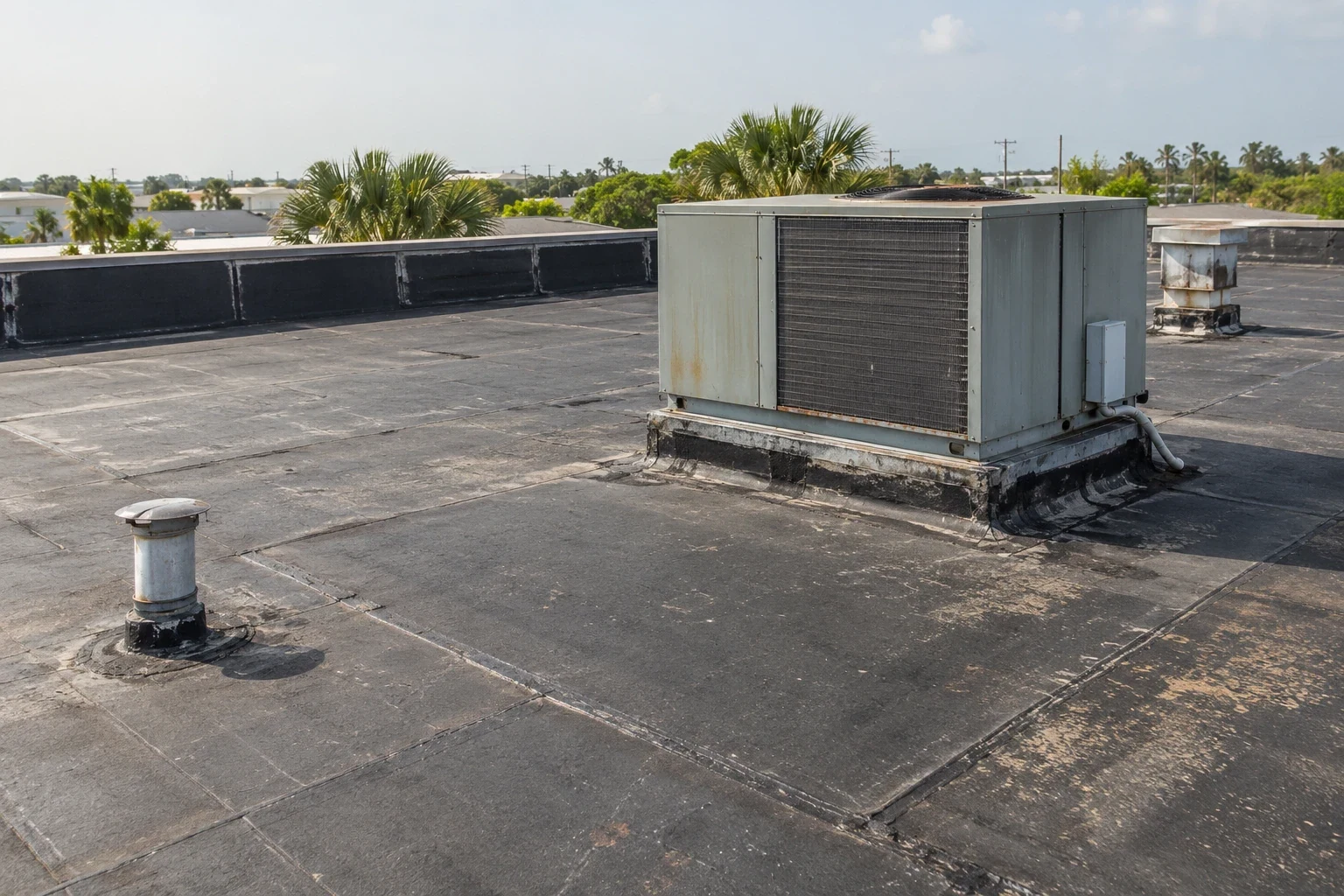
Layer history informs the examination
Installation records, prior openings and repair descriptions can help establish the roof build-up. We compare that information with accessible findings and investigate concealed conditions where they affect the decision. A later addition or resurfaced area may have a different construction from the original roof. The condition record preserves those differences rather than extend one observation across separate areas without a supporting basis.
A built-up roof condition examination identifies surfacing loss, exposed material, splits, blisters and detail deterioration. The finding is considered with its surrounding assembly. An isolated damaged location can support a different response from defects distributed across the field. We record location and extent, explaining any further investigation needed to distinguish an appropriate local repair from a broader roofing project.
Selective openings may establish ply condition and the state of insulation or supporting material below. Their purpose and closure requirements are agreed before examination. Where a suitable moisture survey assists in locating suspect areas, direct findings confirm the material questions relevant to scope. The record distinguishes an indication from an opened-layer observation, allowing removal quantities to remain traceable to the evidence supporting them.
Surfacing and waterproofing have different roles
The protective surface can include aggregate or another selected finish according to the system. We examine its condition and the waterproofing that can be assessed beneath or around it. Displaced surfacing may expose material to weathering, while a visible surface that appears intact does not establish every concealed ply’s condition. Cleaning or replenishing a surface treatment therefore needs its own suitability review rather than be presented as repair of an unexamined layered assembly.
Debris and material movement around outlets can also affect drainage. We locate accumulation and examine the drain connection and surrounding roof levels. Outlet assessment and repair is coordinated where those components require work. A drainage problem should not be addressed only by changing surfacing if an outlet or low area remains unsuitable. The scope explains whether the proposed action is cleaning, waterproofing reconstruction or a wider drainage correction.
Where the owner is considering a restoration treatment, the retained roof must provide a suitable substrate and assembly. Existing contamination, loose material and damaged areas can change preparation requirements or rule out the proposed route. We describe those findings and the necessary repairs. The owner should be able to distinguish work that protects a serviceable surface from work required because the waterproofing or concealed layers are no longer suitable to retain.
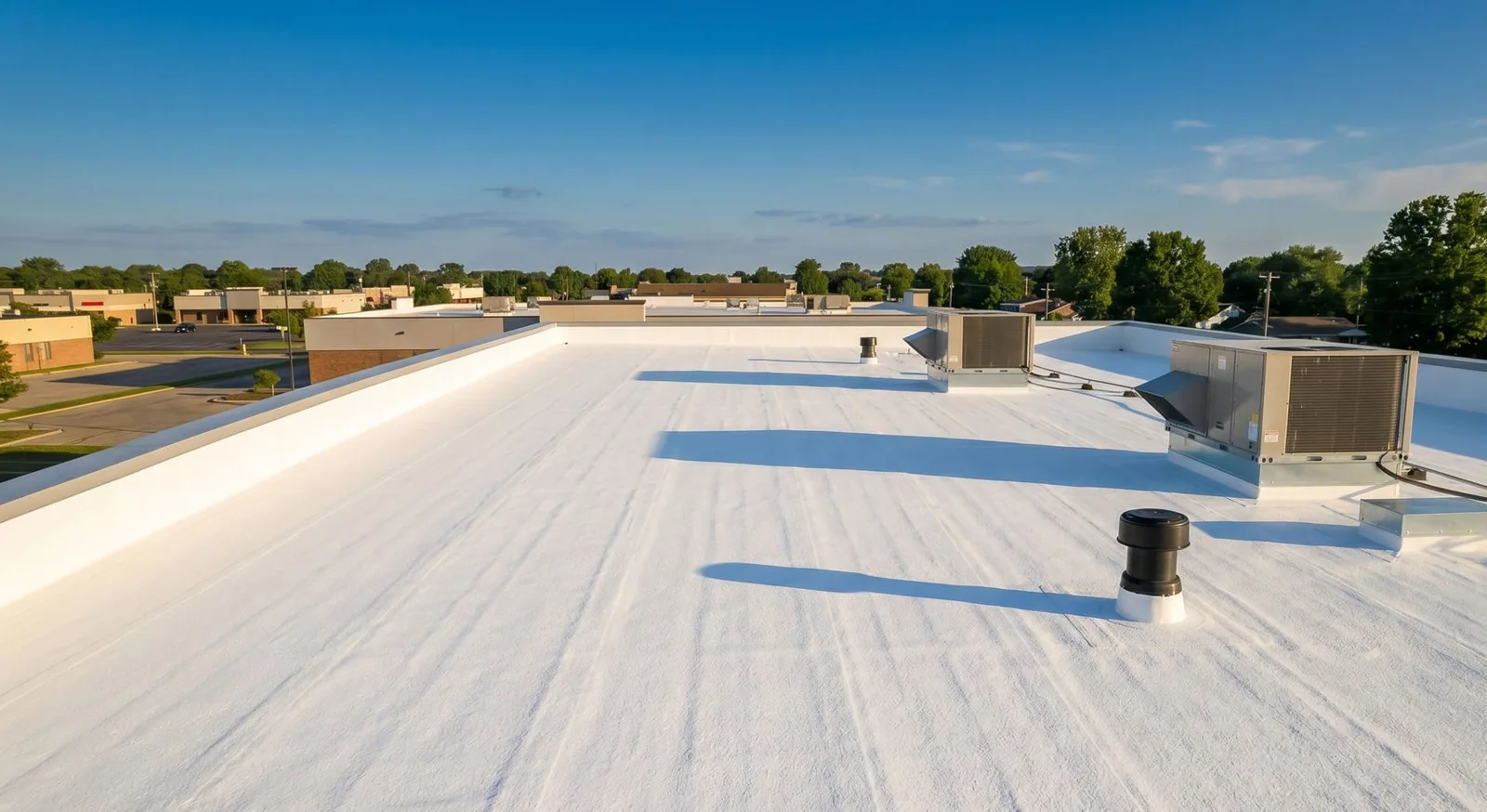
A patch connects to sound retained plies
A local built-up roof repair requires an appropriate connection to the material that remains. Preparation and removal depend on the selected repair method and existing construction. We identify damaged plies and supporting material before forming the replacement junction. Covering a split with an unspecified surface patch may leave unresolved deterioration below it, so the scope describes the layers addressed rather than use repair area alone as its technical explanation.
Wall and curb details require sound backing and a compatible waterproofing arrangement. Rebuilt flashing at openings is coordinated with component height, movement and the upper termination. Corners and changes in plane receive their own treatment. When removal reveals deterioration outside the anticipated boundary, we photograph the condition and explain the revised work before closure, preserving a record of why the final repair differs from the initial proposal.
A modified bitumen repair or replacement option needs assessment as its own system-specific scope. The relationship between retained built-up layers and new material must be supported. We do not assume that two bituminous descriptions establish compatibility or identical application requirements. The proposed junction, substrate and preparation are identified so the owner can understand how the new work will connect with the roof it does not replace.
A new assembly has an execution method
New built-up roofing includes the supporting construction, insulation, plies, bituminous material and protective surface specified for the project. Attachment and application are coordinated with the accepted assembly requirements. Where a particular operation creates heat, odor or another execution concern, the work plan addresses it for the building setting. We identify the proposed method before the owner coordinates occupancy, rather than leave installation activities hidden within a broad material label.
An owner comparing a single-ply PVC roof alternative should review the different construction and detail requirements. The appropriate option depends on the actual roof, project scope and operating constraints. We explain those differences without assigning an unsupported service-life figure or a universal ranking. A useful comparison shows what each suitable proposal retains, removes and installs, giving the owner a concrete basis for choosing the next roofing action.
The final record describes concealed construction
For occupied commercial shopping buildings, staging and removal are coordinated with premises below the work and shared access routes. Hawaii’s heavier winter rainfall makes the closure sequence relevant when a layered assembly is opened. The crew assesses conditions and protects the area before work stops. Photographs of exposed material and installed layers preserve findings that the finished surfacing may no longer reveal.
Owners in Chinatown’s commercial district can retain the final ply and detail descriptions with subsequent roof observations. Later repairs should begin with the known installed construction and a current examination of the affected area. We identify work completed and outstanding matters outside the contract. The resulting handover gives the owner a usable account of the layered waterproofing, preventing the appearance of its surface from becoming the only record available for the next decision.
Commercial Roofing Questions
What does visible surfacing establish about a built-up roof?
It provides an accessible observation of the protective surface, not complete proof of concealed ply or insulation condition. Those questions need appropriate examination when they affect the proposed work.
Can one opening describe every roof addition?
Separate areas may contain different assemblies or earlier alterations. Findings are related to their locations, with further investigation where a material difference affects retention, removal or repair selection.
Why does a local repair specify layers instead of area alone?
The damaged material and junction to retained roofing determine the method. Area alone does not explain preparation, supporting repairs or which waterproofing plies will be reconstructed.
Is modified bitumen automatically compatible with existing built-up roofing?
The actual materials and proposed connection require review. Related bituminous systems still have distinct preparation and installation requirements that need a supported project-specific scope.
Which information is useful after a newly surfaced roof is completed?
Keep the installed ply descriptions, relevant exposed-layer findings and closure photographs. They help future personnel understand construction that is no longer visible beneath the protective finish.
Examine the layers below the surface
Arrange a built-up roofing assessment with Commercial Roofers Honolulu to define ply condition, repair connections and the construction required for an appropriate next step.
Tell Us About Your Roof
We will follow up to set up a time to walk the roof.

Request a Roof Assessment
Tell us about the building and what you are seeing. We will follow up to set up a time to walk the roof.