
Industrial buildings with restricted roof access can leave an owner without a usable view of damaged surfaces or inaccessible edges. Commercial Roofers Honolulu uses drone imaging in Honolulu, HI, to obtain a visual account of roof areas where an aerial examination is appropriate. Lower Mapunapuna’s industrial area and the industrial facilities on Sand Island offer settings where access and continuing operations can affect an inspection arrangement. We define the roof areas to photograph and the ownership question the images should help resolve before arranging the flight.
Aerial images can show surface patterns, debris, displaced material and the relationship between separate roof areas. They can also direct closer examination of a detail that would otherwise be difficult to locate. We connect each visual finding to the relevant area and identify the next action, so the owner receives an inspection record rather than a collection of attractive overhead photographs. Material condition, attachment and concealed moisture still require methods suited to those questions.
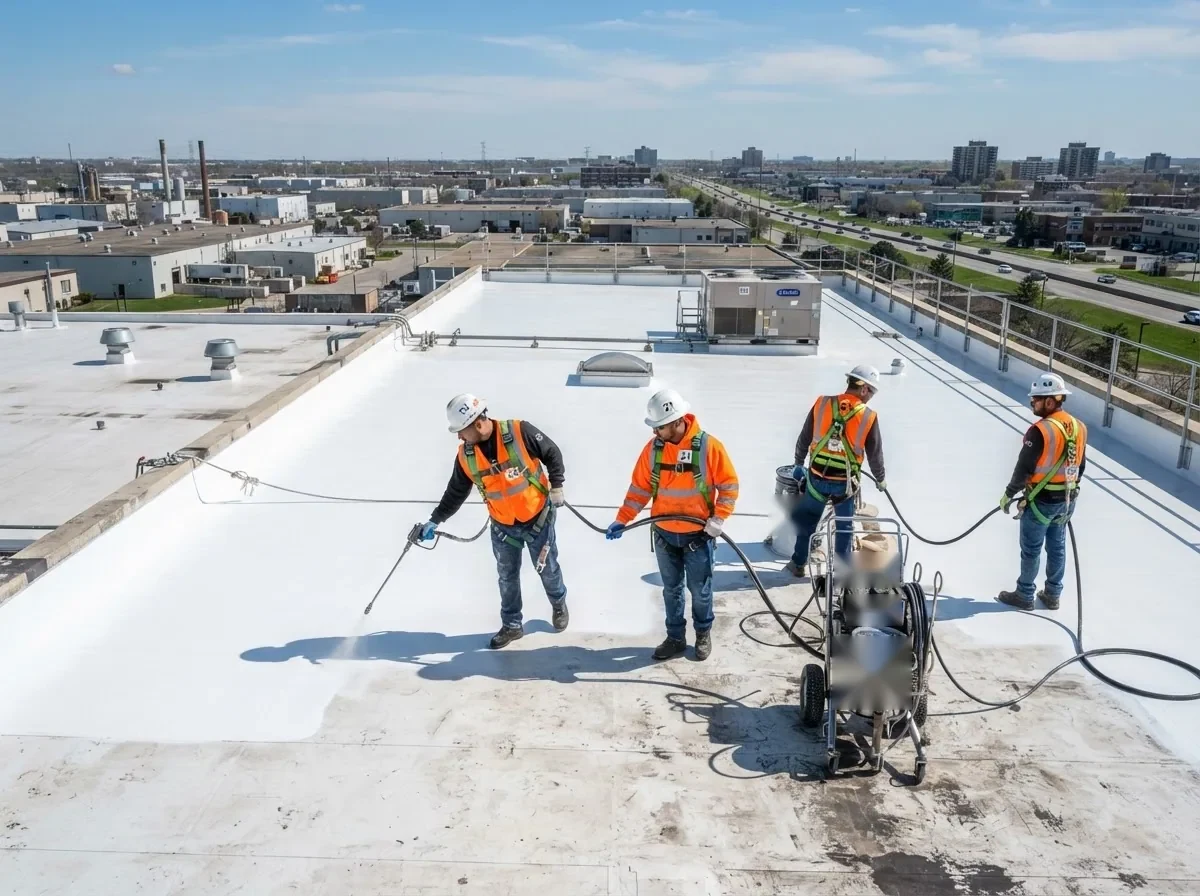
The flight has a defined purpose
The owner’s objective determines the useful image coverage. A review after wind damage may concentrate on displaced components and exposed areas; a condition assessment may need a broader view of roof levels, equipment and drainage features. We identify the requested coverage and the detail needed to interpret it. Available plans and earlier roof photographs can help relate the aerial view to a familiar layout, particularly where several similar roof areas are part of one property.
Flight feasibility includes airspace, weather, nearby activity and the ability to keep the operation safe. We assess those constraints before presenting aerial coverage as available at a particular building. Roof access restrictions do not automatically make a drone flight permissible. Where the flight cannot provide the required view, we explain another examination method or access arrangement. The owner can then authorize an assessment that answers the roof question instead of paying for images that leave the important area unresolved.
Images locate visible conditions
A wide view can reveal the distribution of patches, roof levels and surface discoloration across an assembly. Closer photographs can identify an open-looking seam, displaced edge component or debris accumulation for follow-up. The image record distinguishes those observations by location and viewing angle. A dark area on a membrane may reflect dirt, shadow or surface moisture, so we explain the examination needed to determine its meaning rather than assign a concealed condition from color alone.
On warehouse and industrial roofs, repeated equipment arrangements can make separate locations look alike in a close-up. We retain a wider reference image with the detail view so the owner can locate the finding. This also helps prepare a repair examination: a crew can approach the identified area with a clear account of the visual concern and the supporting images, rather than search the entire roof for an unlocated patch or lifted component.
Drainage features benefit from that relationship between wide and close views. Debris near an outlet, visible water and an interrupted flow path may be apparent from above. We identify them as visual conditions and assess whether closer examination of drainage outlets is needed. An aerial photograph does not establish drain-pipe condition or measure the concealed connection to the waterproofing. The follow-up scope identifies those components when they matter to the observed problem.
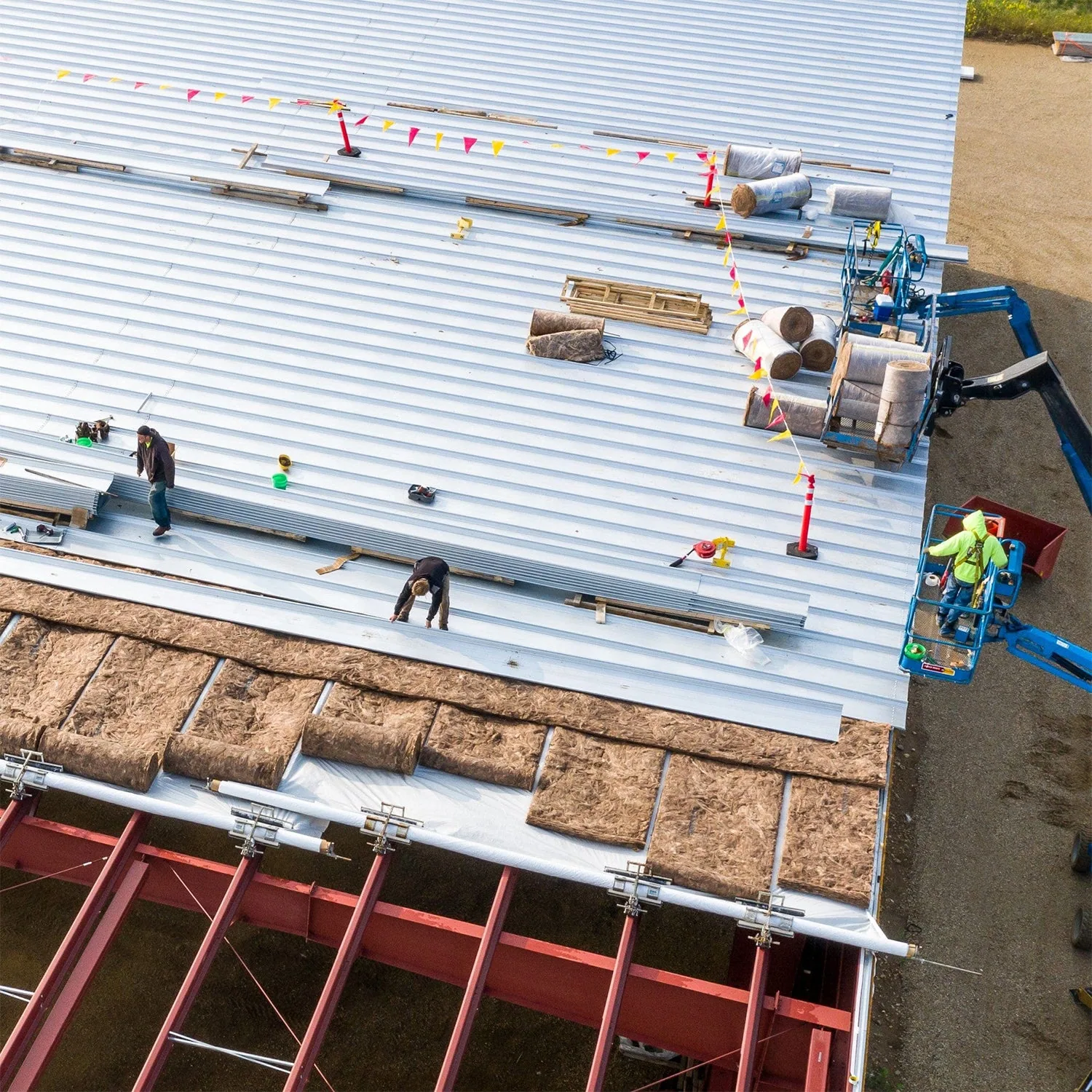
Detail questions receive follow-up
A seam that appears irregular in an image may need direct probing and material examination before its repair can be defined. The same applies to flashing corners, wall terminations and attachment concerns. We connect the image finding with hands-on inspection of the relevant detail, explaining the purpose of that access. The aerial account can reduce uncertainty about location while the direct examination establishes the actual material condition and repair connection.
For a metal roof with concealed attachments, surface photographs can identify distorted panels or displaced trim, but another assessment is needed to establish the support below. Roof assembly records, selective openings or appropriate testing can help answer that question. We distinguish visible surface damage from the additional information needed to design a repair, so an owner does not authorize attachment work based on an image that only describes the panel above it.
Suspected concealed moisture requires a separate investigation. An ordinary visual flight can identify areas worth examining, but a moisture survey with confirmation testing uses different evidence and conditions. Thermal assessment, where appropriate, must be related to assembly information and physical findings. We propose that work when moisture extent affects removal or repair decisions, keeping the visual inspection and the concealed-layer investigation clear within the scope.
Weather affects useful coverage
Hawaii’s persistent northeasterly trade winds influence flight conditions and the ability to obtain useful images at exposed roof areas. Rainfall, changing light and wet surfaces can also affect what an image shows. We choose a workable observation period and record conditions that influence interpretation. The state’s heavier rain generally comes from winter storms between October and April, which can make an unresolved visual concern more consequential for scheduling its direct examination.
Storm-related coverage should distinguish displaced material from intact neighboring areas and identify exposed openings that need attention. Where the photographs indicate an urgent condition, temporary roof protection may take priority over completing every planned image. We explain what was seen, what remains to be examined and how the immediate response relates to the later damage-repair assessment. An aerial observation can initiate that action without being treated as a complete account of concealed damage.
The image record remains traceable
Delivered images are related to roof areas and the relevant observations. We distinguish an overall view, a detail photograph and any area that could not be adequately captured. The finding describes the visible condition and the next examination or repair action it supports. Where aerial coverage is used again later, a comparable viewpoint can help identify a changed surface condition, provided the difference is interpreted alongside lighting, weather and work completed between examinations.
For property in Sand Island’s industrial district, that record can support coordination of roof access and maintenance without implying a particular roof system from the neighborhood alone. The owner retains the image coverage with subsequent inspection and repair records. A later decision about removal or assembly changes can then refer to the direct evidence obtained after the flight, while the aerial views preserve the roof layout and the visual condition that prompted closer examination.
Commercial Roofing Questions
Can a drone assessment proceed where ordinary roof access is restricted?
Restricted roof access may make aerial observation useful, but flight feasibility still needs assessment. We check the operating constraints and explain whether the required roof view can be obtained safely.
Will overhead photographs identify wet insulation?
Visual images show surface conditions. Concealed moisture requires a suitable investigation and physical confirmation where indicated, rather than a conclusion drawn from surface color.
How will a detail photograph be located on a large roof?
A wider reference view accompanies the relevant close image. The location is related to recognizable roof features so later examination can reach the intended detail.
Can aerial findings support a planned repair quotation?
They can identify a repair concern and its location. Direct examination may still be needed to establish compatible materials, supporting condition and the complete repair boundary.
Would repeat flights show whether a repair remains serviceable?
Comparable images can reveal visible changes. Material connections and concealed components need the examination appropriate to them, particularly where the image indicates movement or renewed damage.
Define useful aerial coverage
Arrange a drone assessment with Commercial Roofers Honolulu that connects roof images to an ownership decision and identifies the necessary follow-up examination.
Tell Us About Your Roof
We will follow up to set up a time to walk the roof.

Request a Roof Assessment
Tell us about the building and what you are seeing. We will follow up to set up a time to walk the roof.