
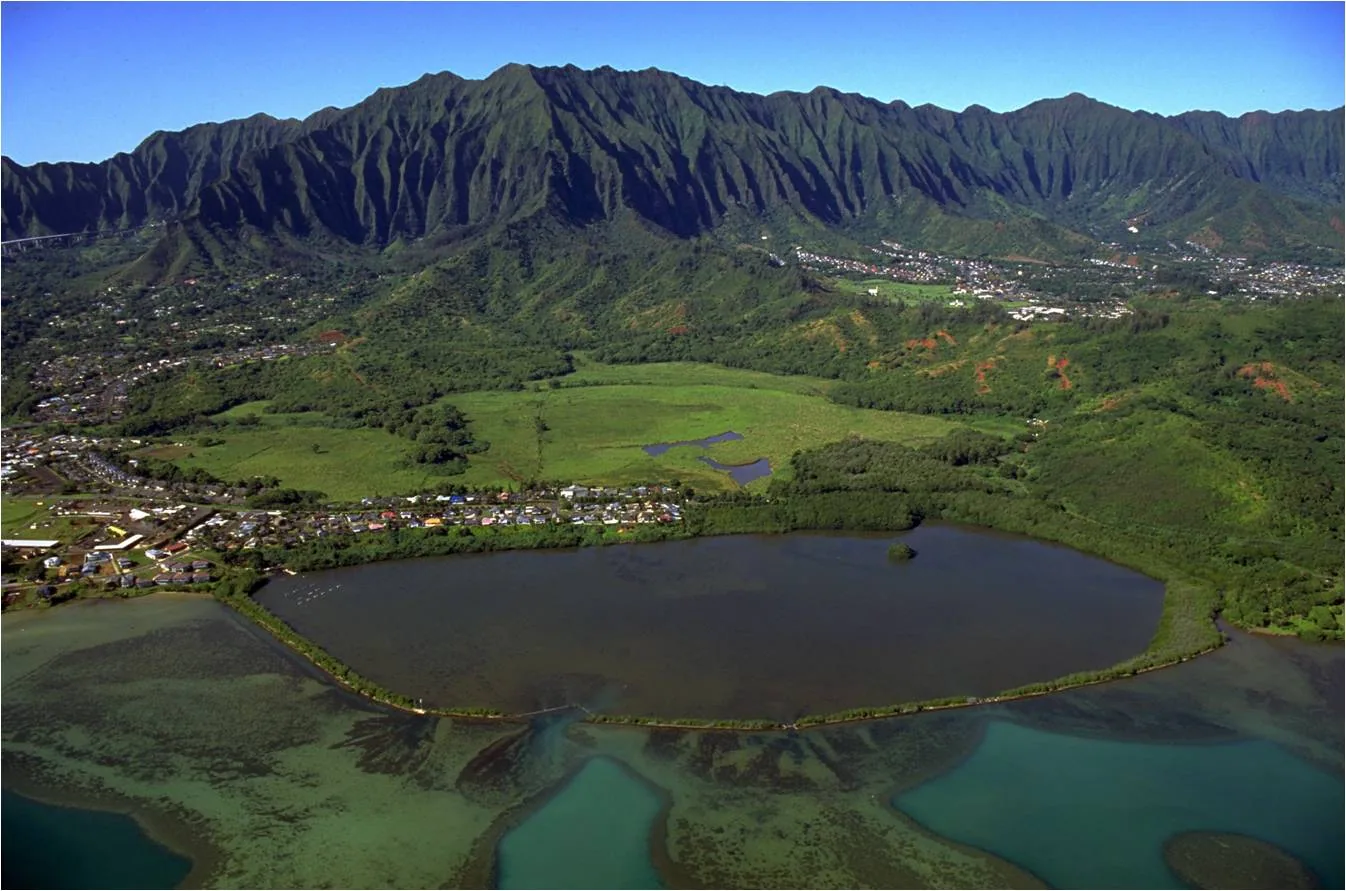
A commercial roof near Kailua Road needs a scope that separates a visible failure from the concealed assembly. Kailua is a windward Oahu community northeast of Honolulu, with its central commercial district following Kailua Road; the surrounding community is primarily residential. These facts describe the place, not the roof of any individual property. We identify the reported area, note visible seams and transitions and record how far the examination can reach. If hidden material could change the repair choice, we set an owner-approved opening and a stopping point before removal begins. The written recommendation then ties the proposed correction to observed conditions, with a closure plan that protects the roof and the use below.
Keep the work specific to the property
A district with a central commercial corridor and a primarily residential community can include different operating patterns, but no single schedule should be assumed. The property representative identifies business hours, quiet periods, access routes, equipment that must remain active and interior areas that need protection. We mark those constraints against the roof area under review. That gives the crew a work zone and lets the owner see whether a repair can be isolated or should be phased. The plan records who can authorize a change if removal reveals a layer beyond the stated boundary.
Kailua Road is the local commercial reference. Kaneohe’s commercial center along Kamehameha Highway and Waimanalo’s small commercial area along Kalanianaole Highway are separate place contexts, not substitutes for a Kailua inspection. For this roof, occupied-building sequencing can identify protection, access and shift closure when people remain below the work area. If several roof sections are under review, a located report keeps the observations connected to the approval for each section.
Trace water beyond the visible point
A ceiling mark starts the investigation; roof water can travel along an assembly before appearing indoors. We map the reported location, then check the surrounding field, seam, curb, wall transition, penetration and drainage route. A prior patch can change where water moves, so we note its edge and condition. If no surface detail explains the report, we identify what a controlled opening could show about the insulation or deck. The owner approves its size and location first. Photographs establish what was present before removal and whether the material found matches the proposed repair scope.
Hawaii’s statewide weather summary describes persistent northeasterly trade winds, moderate humidity and rainfall differences over short distances. It also reports that leeward lowlands are typically drier than windward slopes. We treat these as regional planning context, not an individual Kailua roof measurement. A hands-on roof inspection can document accessible details, and drainage work is included when the outlet and adjoining surface support it. If active water entry requires temporary protection, an emergency response can secure the affected area while the permanent scope is established.
Choose between repair and broader work
A localized correction is a sound option when a defect is bounded, nearby material is secure and the repair can be joined to a prepared surface. Repeated failures or moisture under a wider area may change that recommendation. A coating depends on a substrate that can be cleaned and detailed; it does not rebuild a failed deck. A recover requires evidence that existing layers and attachment can support another assembly. Replacement may address broader deterioration, but it includes removal limits, insulation decisions, perimeter transitions and a longer period of temporary exposure. We present each path with the finding that supports it and the condition that could change it.
The written scope keeps confirmed work separate from allowances for material that is still concealed. It identifies the approval point before the removal area expands, along with the protection and closure needed at each phase. Replacement planning should account for edge metal and wall details as well as the field membrane. A repair option can use recover evaluation only after substrate and moisture conditions are reviewed. If the owner is comparing the roof with a future capital cycle, the observed assembly and remaining questions can be carried forward without converting an isolated opening into a condition rating for the entire building.
End each shift with the assembly protected
Hawaii’s heaviest rain generally comes during winter storms from October through April. Rainfall differs over short distances, with windward slopes generally wetter than leeward lowlands. This is seasonal context, not a forecast or measured condition for a Kailua building. Before work begins, we check current weather and decide how much surface can be opened and restored within the work period. Trade winds make temporary protection and loose materials at exposed edges a handling concern. The sequence names the area that will be closed, the drainage paths to keep clear and the person who confirms the roof is secure before the crew leaves.
The property representative also confirms how workers enter, how occupants are protected and which operations cannot be interrupted. If the window tightens, the plan ends at a completed closure before another section is opened. Maintenance observations can be recorded after the project, so a later review starts with drains, seams and details that were actually checked. Any open issue stays visible in the handover rather than being implied as resolved by a nearby repair.
Give the next approval a clear record
When work is complete, the owner receives a record that connects the original report, the opening and the finished repair. We label photographs by roof area, describe layers actually exposed and identify the seam, flashing, curb or outlet corrected. Acceptance checks follow the approved scope, and any unresolved observation remains separate from completed work. That record is useful when a later water report appears because it shows the area examined and the boundary that was not opened. It can also support a maintenance or capital discussion without making a claim about other parts of the building.
Kailua Road gives the commercial district a center, while Kamehameha Highway and Kalanianaole Highway connect other Oahu communities with distinct local contexts. Wahiawa has an inland plateau setting, while each Kailua property needs its own roof evidence. We keep the location facts in the background and put the actionable findings in front of the owner: repair, further investigation or a replacement comparison. The final file states what was authorized and how the roof was left.
Commercial Roofing Questions
Does a commercial district mean every roof uses the same assembly?
No. Kailua Road identifies a commercial center, not an individual roof construction. We inspect the actual surface, transitions and accessible layers before naming the system or pricing a tie-in.
Can the ceiling stain define the removal boundary?
It identifies where water was reported, not the full path. We inspect nearby roof details and state whether an approved opening is needed to establish concealed material.
How do you use the windward climate context?
It informs seasonal planning and temporary protection, while a current forecast guides the work date. We do not treat a regional rainfall pattern as a measurement of one building’s roof.
Can a recover be priced before inspecting the old layers?
We first review the existing assembly, moisture and attachment. If those conditions do not support an added layer, the proposal compares a different correction rather than covering an unresolved problem.
What proves that an area was accepted after repair?
Located photographs, recorded materials, completed details and acceptance checks tie the finished work to the approved boundary. We list adjacent observations separately if they were not repaired.
Make the work boundary reviewable
Arrange a commercial roof examination in Kailua. We will record accessible conditions, identify any approved opening and provide a repair or replacement scope with a defined closure point.
Tell Us About Your Roof
We will follow up to set up a time to walk the roof.

Request a Roof Assessment
Tell us about the building and what you are seeing. We will follow up to set up a time to walk the roof.