
A distribution manager needs a roofing plan that identifies when construction will affect loading, order movement and the equipment serving those activities. Commercial Roofers Honolulu repairs and replaces distribution center roofing in Honolulu, HI, with those operating dependencies connected to the assembly scope. Iwilei’s commercial-industrial uses and the employment settings of Lower Mapunapuna and Waiwai Loop provide broad local contexts for the work. We examine the particular roof and define the affected areas, allowing the manager to coordinate a construction sequence without assuming that every dispatch route can remain available throughout removal.
Distribution activity can make a short restriction at a specific loading or movement area more consequential than a wider restriction elsewhere. The owner identifies those operating priorities, while we explain the stages and roof conditions controlling the work. The result should identify a useful sequence and its limits. An undefined assurance about uninterrupted operation cannot replace decisions about material delivery, debris removal, weather protection and access to roof equipment during the project.
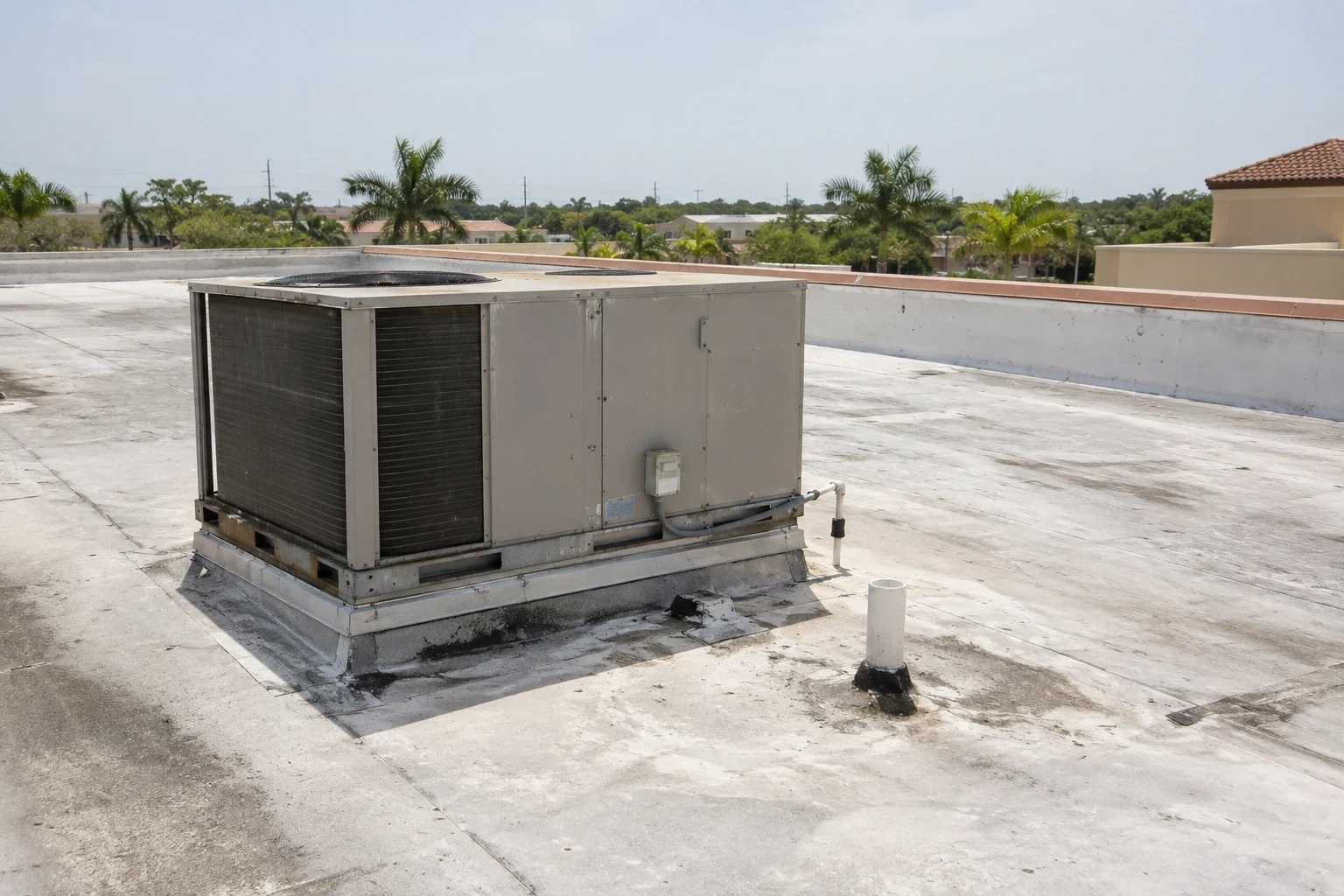
The construction route meets the operating route
We agree how personnel and materials reach the roof and where removed material leaves the building. Those routes are considered with loading activity, internal movement and areas needing protection below the work. The plan identifies shared locations and the restrictions required during the relevant stage. If a proposed staging area conflicts with the owner’s operation, it is resolved before construction rather than treated as space that roofing automatically has permission to occupy.
Rooftop equipment access can create another dependency. A service operation may need to occur before flashing reconstruction or remain available through a phase. We identify the roof work involved and coordinate with the responsible equipment contractor and manager. The sequence should show when a connection can be opened and when it must be closed, keeping an operating requirement connected to a practical construction task rather than leave it as a general note to avoid interruption.
The roof findings establish the work boundary
A distribution roof examination records accessible field and detail conditions with location references. Membrane damage, displaced metal and deteriorated terminations receive different repair considerations. We assess adjoining material to establish whether the defect is local or part of wider deterioration. That record helps the manager identify the roof areas requiring work without confusing the visible surface finding with a complete account of concealed insulation or support.
Where leakage has affected an operating area, investigation of the entry path relates interior observations to roof connections. The observed water location does not automatically define the opening to be repaired. We examine the relevant details and identify additional testing or selective investigation where needed. The repair boundary then follows the evidence, allowing operating protection to be planned around the actual roofing work rather than a guessed point above the symptom.
Separate roof sections may contain different layers or details after additions and earlier projects. Records and direct examination establish those variations where they affect scope. Confirmed wet material or deteriorated backing receives appropriate removal limits. We explain how replacement layers meet retained construction and identify supporting questions needing qualified input. The manager can then understand why one phase requires more work than a visually similar area elsewhere.

The selected assembly includes service details
A standing seam roof proposal has panel, attachment and movement requirements distinct from a membrane assembly. The actual roof condition and accepted project requirements establish an appropriate option. We identify the complete construction, including insulation where specified and the transitions at penetrations and edges. Material selection should not leave a curb, drain or perimeter interface to a later decision after the field has been installed.
Equipment curbs and service penetrations need sound support and an appropriate waterproofing connection. If another trade must disconnect or alter a component, its stage is assigned before roofing proceeds. New roof thickness can change usable flashing height and outlet relationships. Those consequences are considered in the proposal, allowing the owner to review the system as a connected scope rather than only compare the visible membrane or panel material.
Storage-focused warehouse roofing may place different emphasis on goods below openings, while production-building roof coordination adds process-specific operating questions. The distribution plan uses the actual dispatch and movement requirements of the building. This avoids applying an occupancy description from another use without establishing which restriction or equipment dependency matters to the manager’s operation.
Phases follow details and daily closure
A phased distribution roof replacement needs boundaries that allow the assembly to be closed appropriately at the end of the operation. Drains, curbs and geometry can control where that boundary belongs. We consider concealed repair time and the protection required if findings change the scope. A schedule based only on equal areas may not account for the details that must be completed before the opened roof can provide suitable weather protection.
Hawaii’s heavier winter storm rainfall makes that closure planning important where active operations continue below the work. The crew assesses the available interval for removal, reconstruction and protection. Temporary transitions are identified in the record and replaced or completed according to the final system requirements. The manager should know which area is finished and which remains a protected construction boundary, so operating decisions correspond with the roof’s actual stage.
Material handling and equipment access also affect the phase sequence. Completed roofing is protected from subsequent traffic and other trades’ work. We identify the routes and connection stages requiring coordination, including areas where technicians need access after a new surface is installed. That planning helps prevent a phase accepted as complete from being unnecessarily disturbed by an operation already known to be required later in the project.
The operating record remains useful after construction
Owners in Iwilei’s commercial-industrial district receive located findings, relevant concealed-layer photographs and completed detail records. Authorized changes remain with the final scope. The handover describes retained and replaced construction together with any outstanding interface. A later leak or equipment alteration can then be examined against the known assembly rather than recollections of how a loading route was managed during replacement.
Distribution roof capital planning can use that record alongside subsequent inspection findings. Repairs and recurring defects are tracked by location, with changes in rooftop use included where they affect the assembly. We identify the next investigation or action supported by current conditions. The owner retains a practical basis for both operating coordination and future expenditure, connecting the roof’s material account with the work needed to keep its protection appropriate for the building’s use.
Commercial Roofing Questions
What operating details should be agreed before distribution roof work?
Loading routes, staging areas and equipment dependencies need coordination with the owner. The plan identifies which roofing stage affects each location and the restriction or protection required during that work.
Can a roof phase be set solely by a daily area target?
Details, geometry and closure requirements can determine a more suitable boundary. The opened assembly must be protectable even when concealed findings change the work expected within the scheduled area.
Why separate a leak symptom from its roof repair location?
Water can travel before it appears inside. Investigation establishes the entry path and relevant connection so the roofing boundary and operating protection follow the actual work required.
How are later equipment visits considered during construction?
The sequence identifies access and connection work still required after field roofing is installed. Suitable routes and protection help avoid disturbing completed areas unnecessarily during known follow-up operations.
Which handover information supports the next operating plan?
Located assembly records, repaired details and outstanding interfaces establish the construction starting point. A current assessment then identifies the restrictions and closure needs for any new roof operation.
Define the roof stages around distribution activity
Plan distribution center roofing with Commercial Roofers Honolulu to connect assembly findings, loading-route coordination and the daily closure requirements of the proposed work.
Tell Us About Your Roof
We will follow up to set up a time to walk the roof.

Request a Roof Assessment
Tell us about the building and what you are seeing. We will follow up to set up a time to walk the roof.