
A retail owner choosing a TPO roof needs the membrane proposal connected to the layers and details that will support it. Commercial Roofers Honolulu installs and repairs TPO roofing in Honolulu, HI, with substrate condition, attachment and welded connections included in that review. Kapolei’s retail and office uses and the commercial-residential mix in Ala Moana provide occupied settings for planning the work. We define what the project will retain, replace and reconstruct before presenting a new membrane as the complete roofing decision.
TPO is a thermoplastic single-ply membrane whose field seams and many detail connections are heat welded. The material provides one part of the assembly; the supporting deck, insulation, cover board where specified and perimeter arrangement remain consequential. We explain those components and their relationship to the selected installation. An owner can then assess a system-specific scope rather than compare membrane descriptions that leave the concealed layers and difficult junctions undefined.
The membrane needs a suitable base
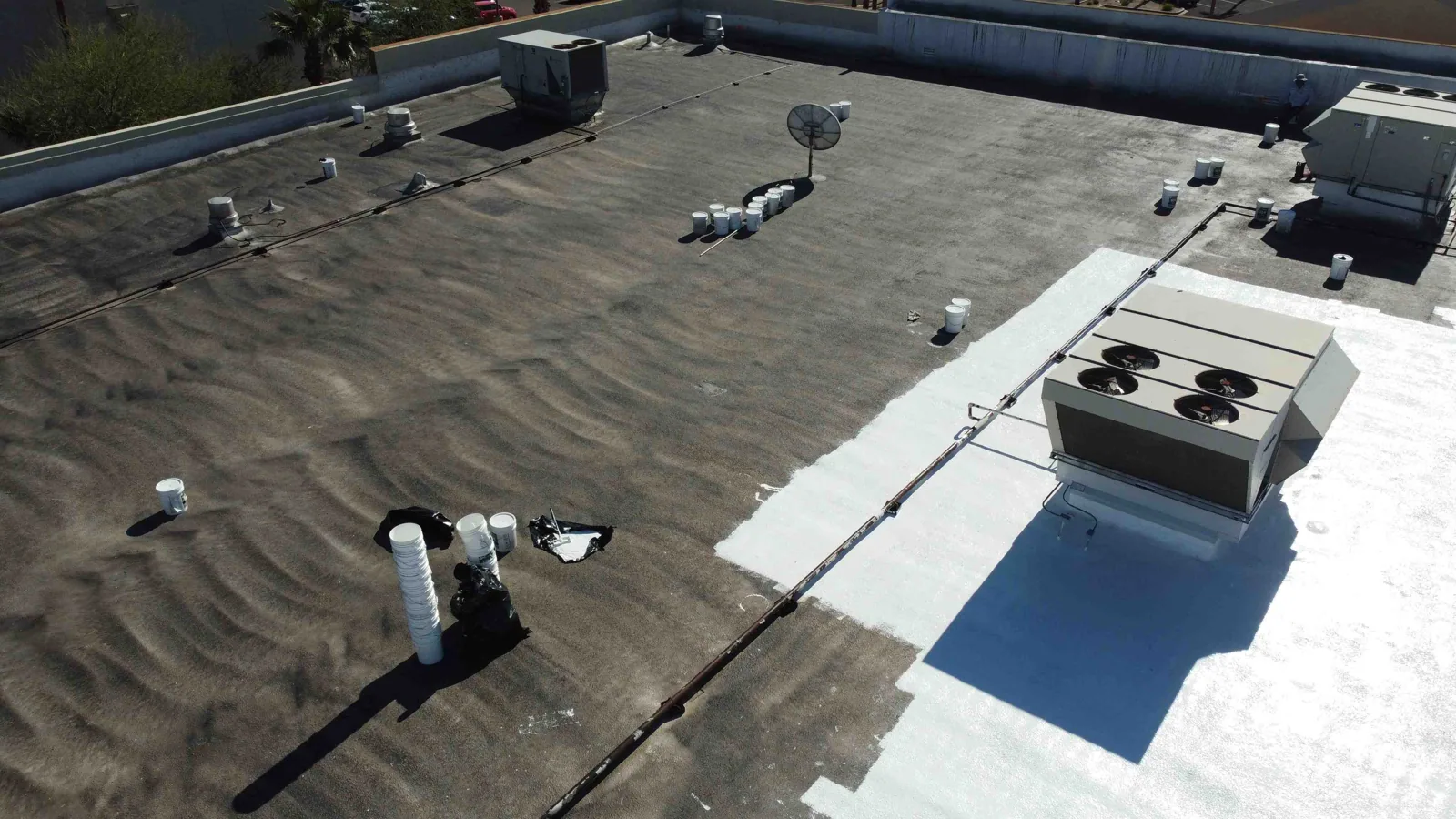
Existing roof records and direct investigation help establish the construction below a proposed TPO membrane. We examine accessible surfaces and use selective openings where concealed material affects retention or removal. Different roof additions may contain different layers, so the scope identifies those variations. A smooth-looking surface does not establish that insulation or supporting material beneath it is dry, attached suitably or appropriate for the new assembly.
Confirmed wet or damaged material receives defined removal and replacement limits. Moisture investigation before membrane selection may assist under suitable conditions, with direct confirmation of findings where needed. The proposal identifies how replacement layers connect with retained areas. That boundary matters when a local damaged zone is surrounded by otherwise suitable roofing, allowing the owner to review a retention decision based on condition rather than an assumed uniform roof.
Where the project includes new insulation and cover board, their thickness and installation requirements are coordinated with the membrane. The supporting surface must provide the base required by the selected system. Joints, transitions and local height changes need appropriate treatment before the sheet is installed. Preparation should not leave the membrane bridging an unsuitable gap or sitting over a defect that becomes hidden when the field is completed.
Attachment follows the selected assembly
Mechanically attached and adhered TPO installations involve different substrate and execution requirements. The choice follows the accepted assembly, supporting construction and project criteria. We identify the relevant components and any information needed to establish the arrangement. A membrane thickness alone does not determine suitable attachment. The proposal needs to show how the field, perimeter and details work together, including locations where the existing deck or backing requires further assessment.
Fastener placement, plates, adhesive application and substrate preparation follow the requirements of the selected system and project. We examine material condition and installation surfaces before those connections are made. Where a concealed supporting question remains, it is resolved through appropriate investigation or qualified input rather than inferred from nearby construction. Records of relevant preparation and installed layers support acceptance after the membrane conceals the work beneath it.
Hawaii’s persistent northeasterly trade winds make handling and control of loose sheets and materials important during installation. The crew assesses the work conditions and the planned sequence. That climate context does not establish the attachment design for an individual roof; the project requirements and selected assembly provide that basis. We keep those distinctions clear so a local weather observation is not substituted for the technical information needed to approve construction.
Welded joints receive their own checks
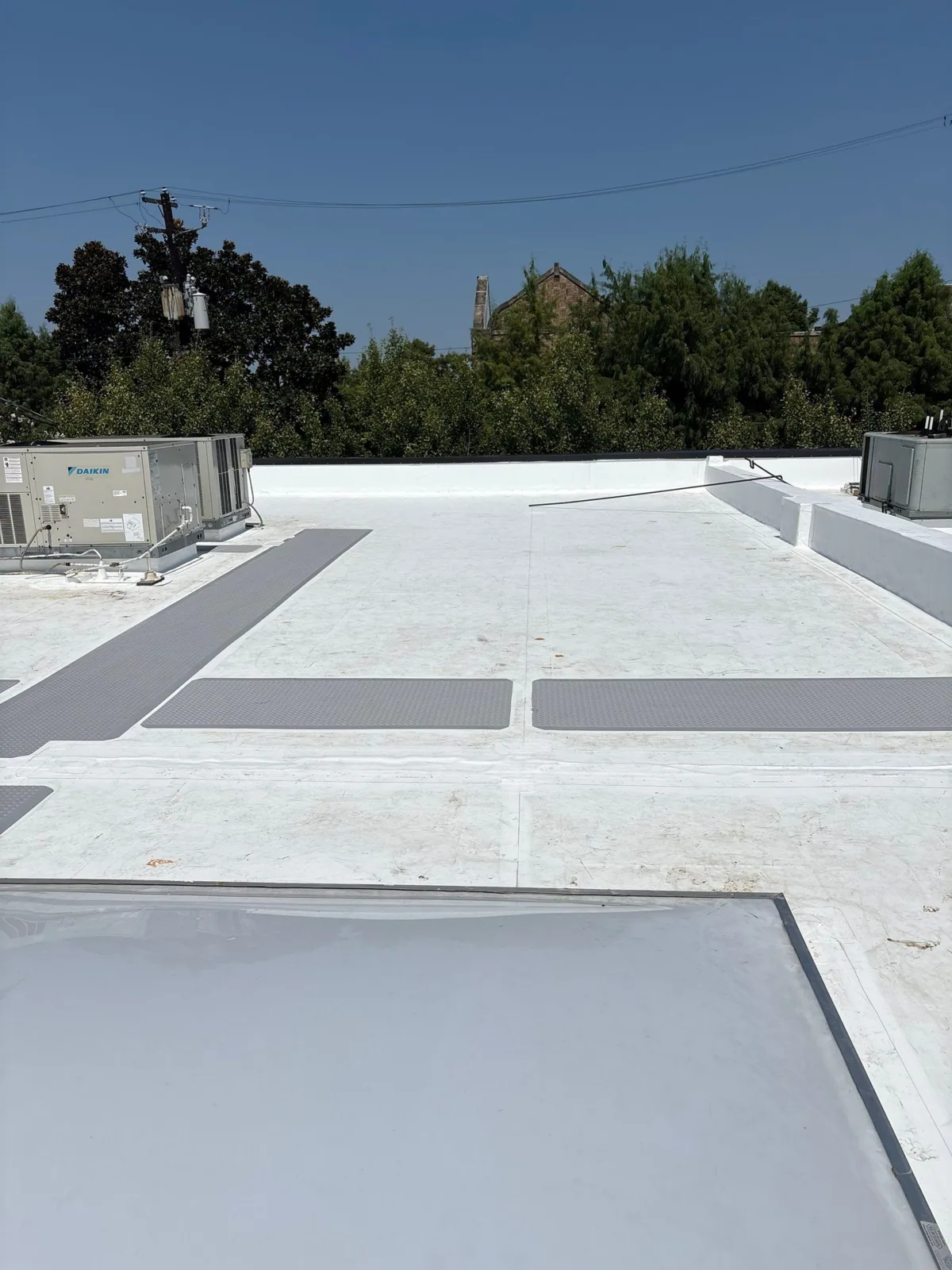
Heat welding requires suitable material surfaces, equipment settings and working conditions. We prepare the connection and check the completed seams as appropriate to the system. A visible overlap is not the same as a sound welded junction. At corners and changes in direction, the detail arrangement needs enough room for proper formation and inspection rather than an improvised fold that leaves an uncertain connection.
Pipe boots, curbs and wall transitions are formed with compatible components and material. Penetration and curb flashing work is coordinated with the height and shape of the component being enclosed. Deteriorated backing or a changed equipment base can affect the detail. Those conditions are addressed before the final termination is accepted, preserving a record of preparation and closure where part of the connection will later be difficult to see.
Drain and edge details also need a suitable membrane junction. The selected component and retained roofing determine preparation and the connection method. Water should reach the intended outlet without a new height change creating an unresolved low area. We identify the roofing work around each affected detail and any separate trade requirement, keeping the welded field connected to the actual drainage and perimeter scope.
Existing TPO is assessed before repair
An existing TPO roof may need a local patch, seam repair or detail reconstruction. The aged surface and earlier treatments affect preparation and the suitability of a new welded connection. We identify the membrane and examine surrounding condition before choosing a method. Targeted commercial roof repair can address a defined defect, while distributed deterioration or concealed damage may require a broader roofing assessment.
Restoration and replacement are evaluated as different scopes. A PVC roofing alternative has its own system requirements and should not be treated as interchangeable patch material for TPO. Where another approach is considered, compatibility and the retained assembly need examination. We explain the evidence supporting the selected route, allowing the owner to compare actual work requirements rather than assume that all thermoplastic membranes connect in the same way.
Owners comparing single-ply options may also consider an EPDM rubber membrane. Its seam and flashing methods differ from TPO heat welding. The comparison should address the proposed complete assemblies, including supporting material and detail work, so the choice remains tied to construction requirements rather than a shared single-ply label.
The completed system remains identifiable
For big-box retail roofing projects, installation sequencing accounts for deliveries, occupied activity and rooftop equipment access. Winter storms tend to bring Hawaii’s heavier rain, making exposed TPO installation stages dependent on a suitable interval for placement and closure. We identify the area opened and the closure required before work stops. Material records and relevant installation photographs preserve the assembly delivered, including authorized changes encountered during removal.
Owners in Kapolei’s commercial building area can keep the TPO system description with future inspection and equipment records. Maintenance personnel should know the compatible repair requirements and the access protection needed at frequently serviced equipment. We identify completed details and outstanding work outside the contract. A useful handover therefore supports both acceptance of the new roof and the next decision involving its waterproofing, rather than leave the installed assembly represented only by its surface color.
Commercial Roofing Questions
What distinguishes a TPO installation proposal from a membrane quotation?
The installation scope identifies supporting layers, attachment and details as well as the membrane. Those components and the existing condition establish what construction is actually proposed for the building.
Can old TPO receive a welded repair?
The existing material and surface condition need examination and suitable preparation. We assess whether a compatible connection can be formed before choosing a local repair method.
Why does attachment need review beyond membrane thickness?
Attachment depends on the supporting construction, selected assembly and project requirements. Membrane thickness alone does not establish the field and perimeter connections appropriate for the roof.
Are PVC and TPO interchangeable repair materials?
They are distinct membrane systems with their own compatibility and connection requirements. A repair should use an appropriate method for the identified existing roof rather than substitute material by appearance.
Which information helps future equipment contractors protect the roof?
The installed system record, detail photographs and defined access routes provide useful guidance. Proposed equipment changes still need coordination with the existing membrane and its supporting assembly.
Review the TPO construction scope
Evaluate TPO roofing with Commercial Roofers Honolulu and establish the substrate, attachment and welded detail requirements for the proposed installation or repair.
Tell Us About Your Roof
We will follow up to set up a time to walk the roof.
Request a Roof Assessment
Tell us about the building and what you are seeing. We will follow up to set up a time to walk the roof.