
A wet ceiling above a hotel service room can interrupt work long before the owner has a reliable account of the roof entry point. For hotel properties in Waikiki and office buildings in Downtown Honolulu, HI, Commercial Roofers Honolulu connects the interior observation with an examination of the roof assembly and adjacent details. We establish where water has appeared, what conditions preceded it and which parts of the building need immediate protection. Those findings guide leak tracing and the repair selected to stop the identified entry.
Leak repair begins with an operating problem and ends with a defined waterproofing action. A drip during rain, moisture after an equipment cycle and staining beside a wall may require different investigation. We record those distinctions rather than make the first visible defect the assumed explanation. The owner receives the observed path, the examination or testing used to clarify it and the limits of the repair, including any concealed material requiring removal.
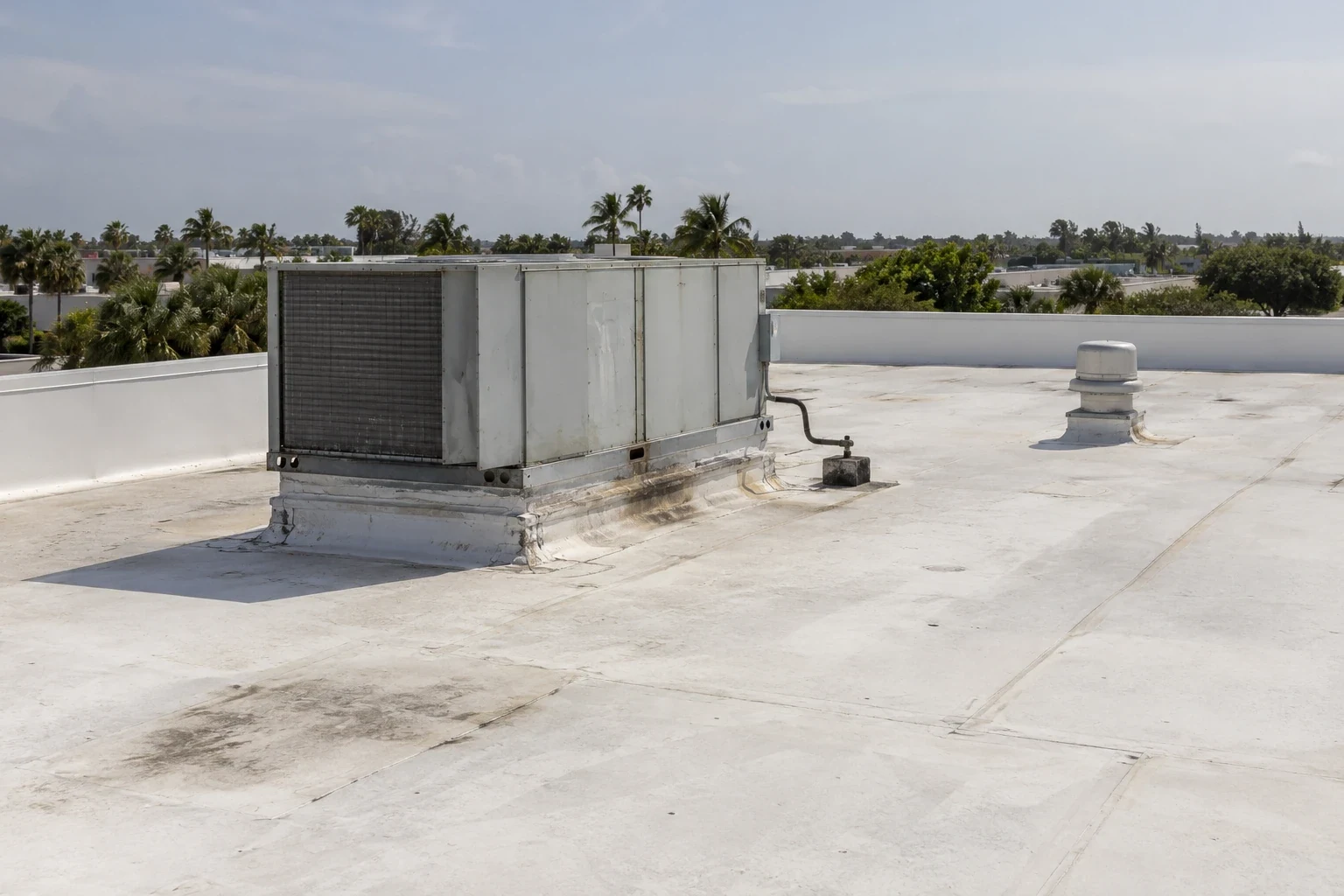
Interior observations guide examination
The timing of water entry can identify useful differences between roof leakage, equipment discharge and condensation. We ask when the moisture appears, whether it follows wind-driven rain and what work has recently occurred above the affected room. Photographs and interior reference points help relate that account to the roof, especially where ceilings hide the supporting structure. A marked plan prevents similar rooms or repeated drip locations from being treated as the same observation.
Water can travel along decking, insulation interfaces or structural members before it reaches an interior opening. We examine the roof area associated with that path and the adjoining penetrations, transitions and walls. In a hotel with occupied service and guest areas, the investigation also identifies what can be accessed without disturbing other rooms. Where the interior path remains concealed, we explain which opening or observation would help distinguish the competing possibilities before authorizing a wider roof repair.
The roof examination is selective
Open seams, damaged flashing and punctures are examined together with the surrounding drainage condition. A blocked outlet can hold water against details that see less exposure under normal drainage, while a loose wall termination may admit rain under particular wind conditions. The inspection records these features and relates them to the reported leak timing. We identify the roof material and previous patches so the next step suits the assembly rather than the surface color or apparent age.
Where an accessible defect explains the observed path, a permanent membrane or flashing repair can follow the necessary preparation and removal. Where several entry paths remain possible, we define further tracing before combining them into one unexplained repair area. A broader condition examination may be useful if the leak occurs alongside widespread deterioration, because stopping a particular entry does not resolve unrelated defects that are already affecting the roof.
Roof-to-wall transitions deserve attention when moisture appears close to an exterior wall. Counterflashing, sealant joints, wall surfaces and the termination of the roof membrane can interact at that junction. We distinguish roofing defects from adjoining building-envelope work and identify where another trade’s investigation is needed. The repair acceptance should make clear which connection was restored and which adjacent condition still requires action, so continuing water entry can be assessed against an understood scope.
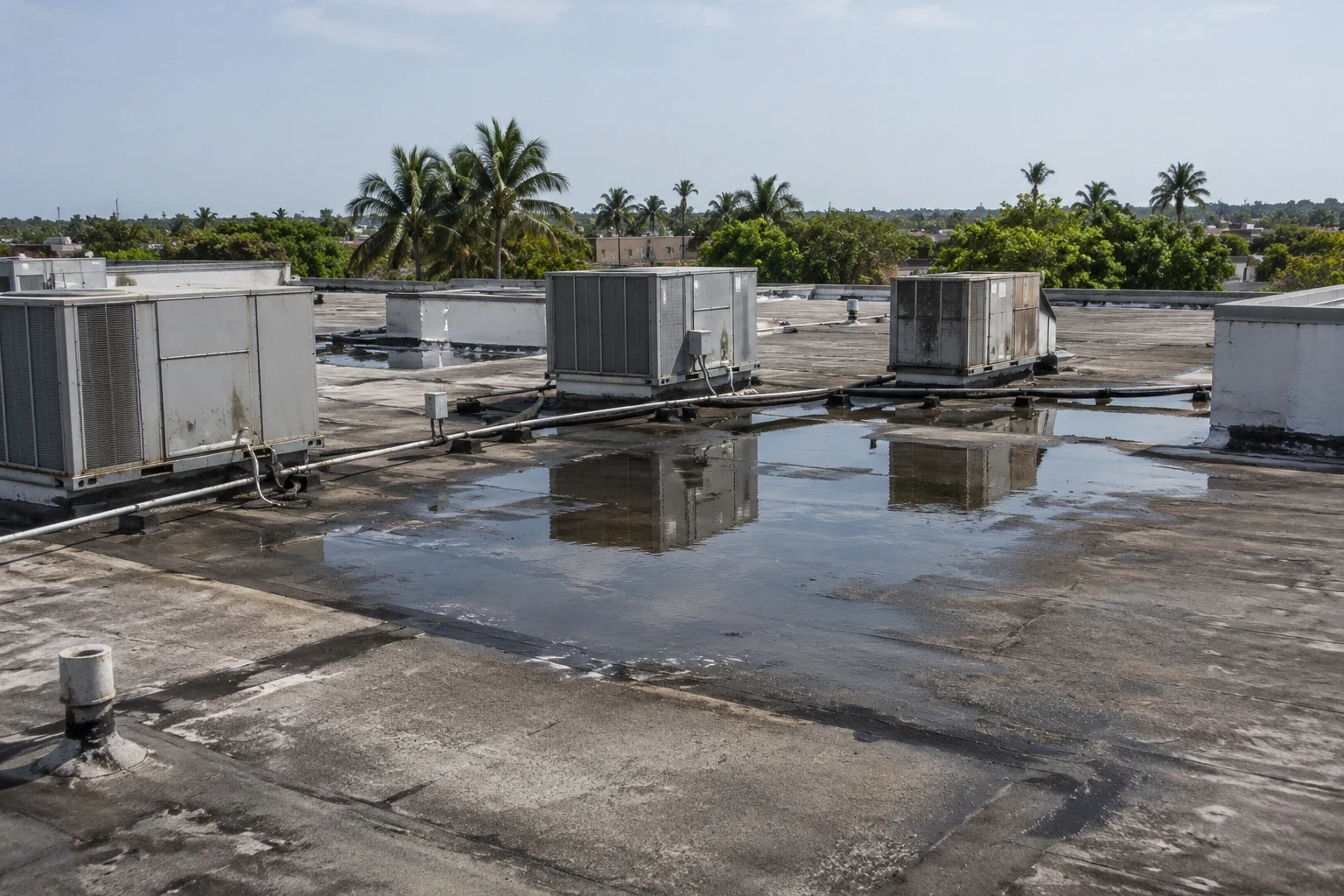
Testing follows a sequence
A controlled water test can help isolate an entry path when examination alone leaves uncertainty. We select the area and sequence, coordinate interior observation and control the amount and location of applied water. Testing several details at once can make the result difficult to interpret. The record therefore identifies which feature was tested, the timing of any interior response and the next change in the investigation, with protection arranged for occupied space below.
Testing is chosen for the building and assembly. Electrical equipment, sensitive interiors and inaccessible concealed paths can restrict the method or require a different approach. Moisture investigation may reveal wet insulation even where an active drip is absent; an infrared moisture assessment can identify suspect areas under appropriate conditions, followed by physical confirmation. That result helps define material-removal limits, while leak tracing still establishes which entry detail the permanent repair must address.
Weather details remain specific
Hawaii’s persistent northeasterly trade winds make the direction of rain relevant to a reported leak at a wall or termination. We record the conditions the owner observed and compare them with the exposed details. The state’s heavier rain generally occurs during winter storms between October and April, so a roof that has only been observed during dry periods may need examination before those wetter conditions. Seasonal context supports scheduling; the roof findings establish the actual repair.
In Waikiki’s hotel district, leakage above a service area can affect operations differently from water appearing in an office near Bishop Street. We identify the interior use and protection required without assuming identical roof assemblies across those settings. Urgent water entry may require immediate temporary weather protection before tracing can be completed safely. We distinguish that control measure from the permanent repair and identify the remaining examination needed after access and weather improve.
Debris at drains, displaced strainers and poorly connected outlets can produce leakage or prolonged water contact near the affected area. We examine those conditions before declaring the membrane the only problem. Repairing the drainage connection may involve clearing an obstruction, restoring the waterproofing at the bowl or coordinating plumbing work. Each action addresses a different cause, and its inclusion should be visible in the repair scope rather than hidden within a general leak allowance.
Repair closes the identified path
Once the entry detail is established, we prepare suitable surrounding material and rebuild the connection with compatible roofing components. Deteriorated substrate or wet insulation found during opening is recorded before closure. The completed repair should reconnect the waterproofing without creating another obstruction or abrupt transition nearby. We inspect the relevant seams and terminations, and explain any follow-up observation or testing appropriate to the work and the earlier leak conditions.
The owner receives photographs of the defect, the prepared repair and the finished detail, with the interior location linked to the roof work. We identify any other conditions discovered during tracing that remain outside the accepted repair. New moisture, a different drip location or water appearing under a different operating condition should be reported with that record available. It allows the next examination to begin with the actual work performed instead of an uncertain account that the roof was generally sealed.
Commercial Roofing Questions
Should every defect near a drip be repaired together?
Defects should be identified individually. We explain which one matches the observed entry path and which additional repairs are justified by their condition, even if they are unrelated to the drip.
Can equipment condensation resemble a roof leak?
Equipment discharge and condensation can produce interior moisture without a membrane opening. Timing, equipment operation and examination help determine which trade and repair action the problem requires.
Why might testing be delayed during heavy rain?
Uncontrolled rainfall can make a localized test difficult to interpret and can limit safe access. We first address protection, then select conditions that support a meaningful investigation.
Does stopping the drip establish that insulation is dry?
Water retained beneath the covering can remain after entry is stopped. We assess suspected moisture separately and identify any necessary removal before the repair is considered complete.
What information helps assess a leak that returns?
Record the room, timing, weather and equipment conditions. Comparing those observations with the accepted repair location helps determine whether the same connection or another path needs attention.
Trace the water entry
Contact Commercial Roofers Honolulu to arrange protection, examination and leak repair supported by a clear account of the identified entry path.
Tell Us About Your Roof
We will follow up to set up a time to walk the roof.

Request a Roof Assessment
Tell us about the building and what you are seeing. We will follow up to set up a time to walk the roof.