
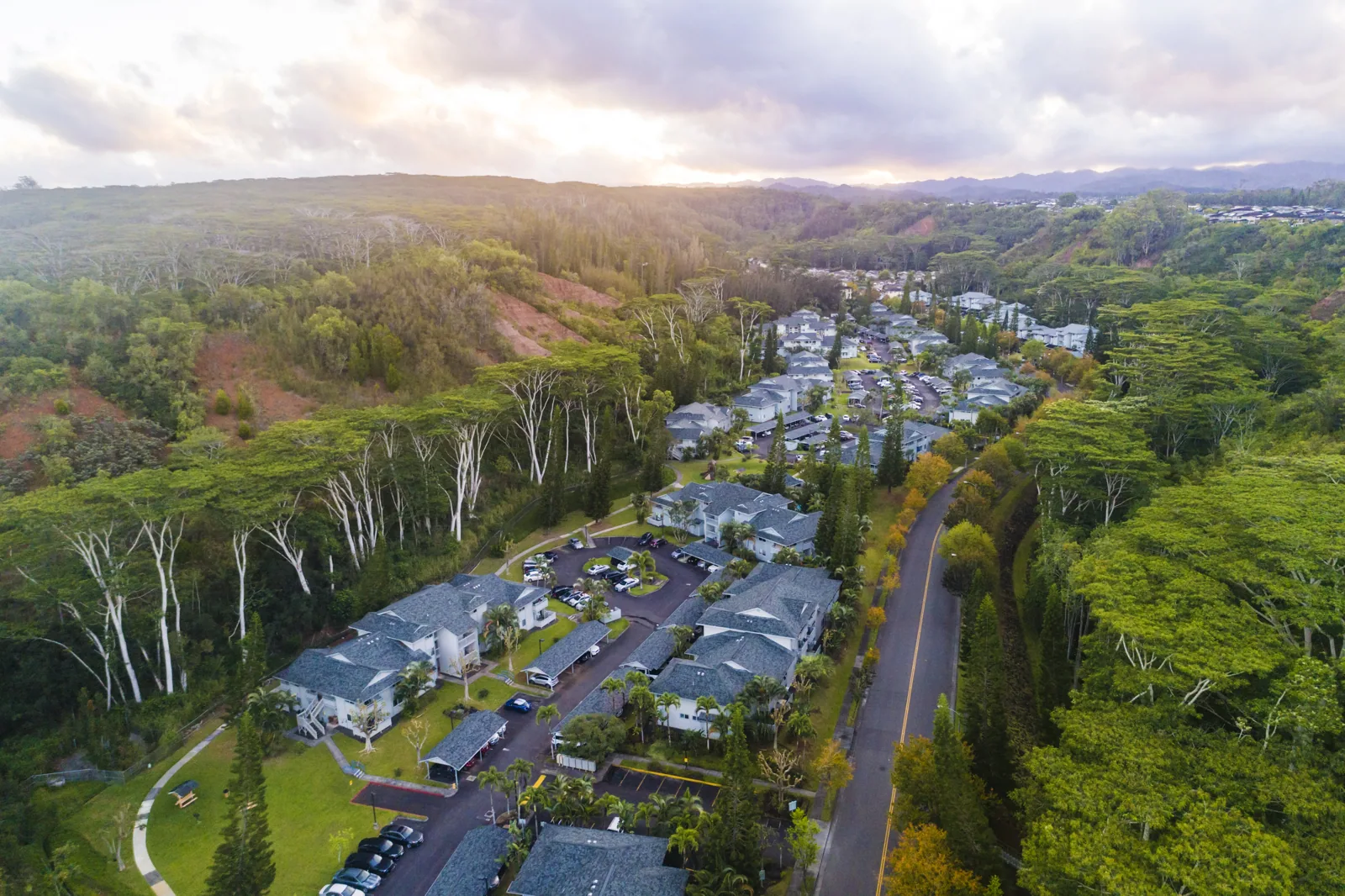
A roof scope above a school, shop or community building needs enough detail for the person approving it to see where the work starts and stops. Mililani includes those public and commercial uses, with much of its retail activity west of H-2. We confirm the system present at the property before selecting a repair or replacement approach. The first examination records the assembly we can identify, the report location, accessible transitions and drainage. Where a concealed layer affects the repair choice, we propose a limited opening with a stated boundary and an approval point. The record then carries the actual finding into the price and closure sequence, so the owner can compare a local correction with broader work. This matters when one access point shows only part of a roof, or when approval must pass through several departments before a larger scope is released.

Coordinate around the property schedule
Schools, shopping centers and community centers each bring a different pattern of people, deliveries and access. We confirm the property’s own operating schedule rather than infer it from the town’s building mix. Before tools and materials move to the roof, the owner identifies protected entries, interior areas beneath the work and a contact for each shift. We mark where the crew may stage and how people can continue using unaffected parts of the building. If roof access requires a key, escort or time limit, it becomes part of the written sequence rather than a last-minute change.
H-2 and Kamehameha Highway connect Mililani with Wahiawa to the north and Waipio to the south. For properties connected by H-2 toward Wahiawa or Kamehameha Highway toward Waipio, the owner confirms the correct entrance, delivery window, staging point and roof-access procedure for each address. For the Mililani property, occupied-use phasing can set out work zones and closure points, while a capital plan can distinguish immediate corrections from later replacement decisions.
Name the assembly only after inspection
Much of Mililani Town’s commercial and retail activity sits west of H-2, so we confirm the service entrance and material staging point before roofing work. We inspect visible membrane, seams, curbs, vents, wall details, perimeter metal and outlets, then record the roof system only where the material can be established. If the surface has multiple repairs, we note their edges and condition instead of assuming the upper layer is the whole assembly. At a proposed opening, we photograph the exposed layer before widening removal or recommending broader work. A moisture survey may help target an area for follow-up, but it does not reveal the exact concealed construction. If the decision depends on the insulation or deck, an approved opening provides a limited view that is photographed before material is removed or covered.
Across Hawaii, August and September are typically the warmest months, with temperatures sometimes reaching the 90s. Before selecting preparation and application windows, our crew checks roof-surface and material conditions. Once the system is identified, metal panel repair or EPDM membrane work can be assessed against the actual seams and transitions. A drone survey can document accessible field conditions where a hands-on route is limited, with any finding that changes scope confirmed by an appropriate examination.
Make the repair choice comparable
Owners need to distinguish a bounded defect from a roof condition that keeps recurring across the field or perimeter. A repair can fit when surrounding material is secure and the new detail can bond at a prepared edge. Liquid restoration can renew a suitable surface after preparation, but it does not dry wet insulation or correct weak attachment. A recover is considered only after review of moisture, existing layers and project requirements. Replacement may be the clearer choice when the assembly has broad deterioration, though it requires removal decisions, temporary closure and transitions at walls and equipment. We connect each recommendation to the observation that supports it.
The proposal states what is included, what remains concealed and which condition would need additional authorization. For a roof with several service records, condition documentation can preserve the difference between an observed detail and a confirmed defect. Coating restoration is compared only when surface preparation and substrate condition support it. The roof assembly and access plan at a property in Waipahu are assessed separately. The Mililani proposal uses this building’s assembly, access, staging and removal limits to define the work and cost drivers.
Plan where each shift ends
Hawaii’s heavier rain generally comes with winter storms between October and April, while leeward lowlands are typically drier than windward slopes. We check the current forecast and roof conditions before setting a work date. We set a workable opening size, identify which drains and edges need protection and assign the check that confirms the surface is weather-closed before a pause. Trade winds can affect temporary covers and loose material, so the closure plan includes how those items are secured. If a weather change shortens the period, the shift ends at the last complete, protected boundary.
On an occupied property, closure has an interior side as well. We coordinate notice, noise, access and protection with the designated contact, then record changes to the work zone. Emergency response can protect an active leak while the permanent scope is assessed. For a larger planned project, replacement sequencing can divide removal into manageable areas. The closeout shows how the roof was left, which supports maintenance planning without promising a specific future condition.
Give the owner a usable record
When work is complete, the owner needs evidence of the repaired location, the material found and the detail accepted. We keep photographs tied to a roof map, list layers removed or retained and note the seam, curb, drain or edge that was reconnected. If testing forms part of the scope, we record what was tested and where. Any nearby issue outside the approved boundary remains separate. This lets a facility manager understand what the crew addressed without treating one repair as proof that every section of a campus or commercial property was reviewed.
Mililani’s connections to Wahiawa and Waipio through H-2 and Kamehameha Highway place the work within a wider Oahu service area, but each roof decision remains property-specific. We can carry the record into a later inspection or multi-site review. Preventive maintenance can note changing seams and drainage conditions, while a replacement assessment can use confirmed assembly information. We document only the areas examined and the work approved for this property.
Commercial Roofing Questions
How do you identify the roof system before proposing work?
We inspect exposed membrane, seams, edges and penetrations, then compare available records. If a concealed layer controls the decision, we propose a limited opening with an agreed boundary.
How are school hours handled during roof work?
The school representative sets the actual access and operating limits. We place them in the work sequence, define the protected area and document the closure required before each shift ends.
What evidence supports opening a roof assembly?
We identify the unanswered question, the smallest area likely to resolve it and how the opening will be restored. The owner approves that boundary before concealed material is exposed.
Can a drone inspection replace a hands-on roof walk?
It can document visible areas that are safely accessible to the aircraft, but it does not establish every seam, attachment or concealed layer. We select the examination method for the decision at hand.
What should a closeout say about nearby defects?
It should distinguish completed work from observations outside the authorized area. We locate both in the record so the owner can decide whether a separate inspection or approval is needed.
Connect the scope to the building record
Arrange an examination in Mililani. We will document the accessible assembly, identify any approved opening and leave the owner with a defined repair and closure sequence.
Tell Us About Your Roof
We will follow up to set up a time to walk the roof.
Request a Roof Assessment
Tell us about the building and what you are seeing. We will follow up to set up a time to walk the roof.