
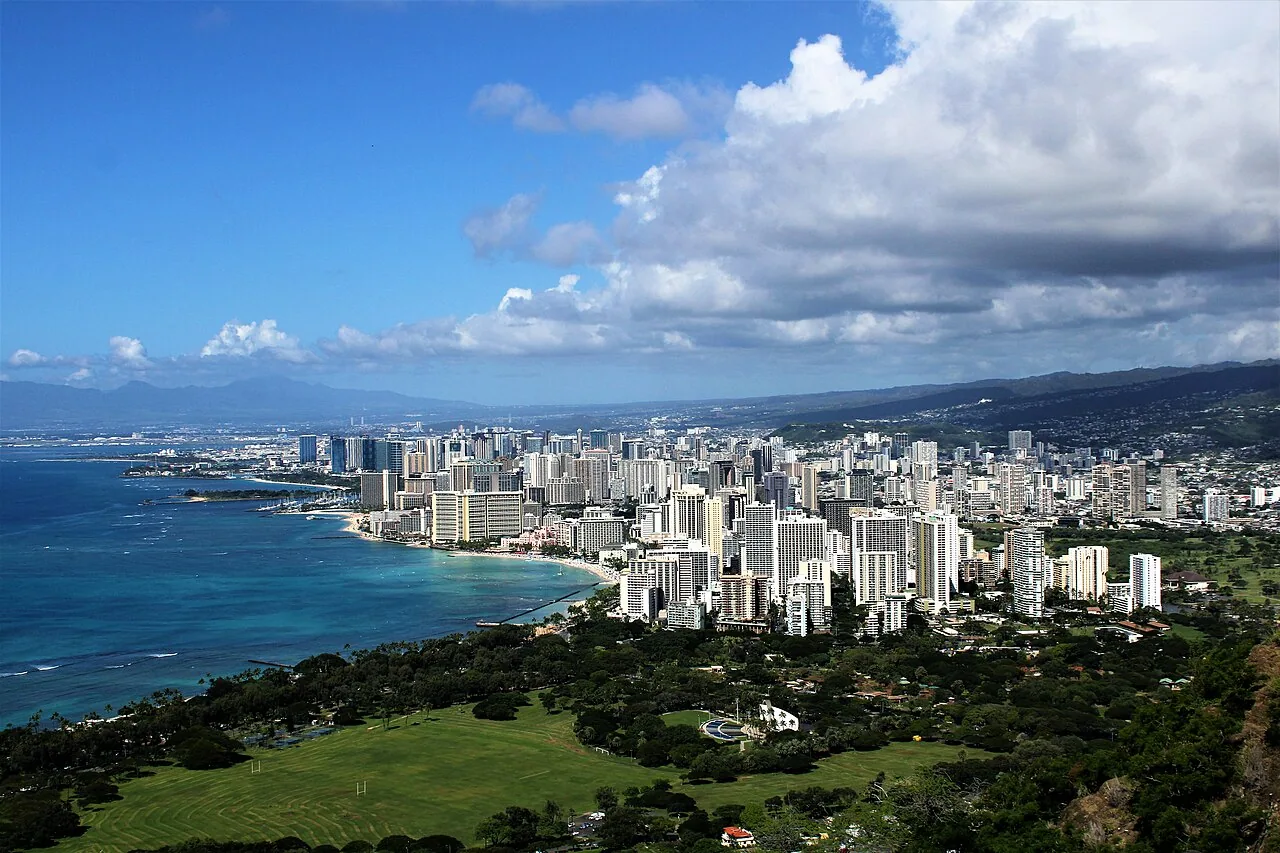
We begin by locating the water report, photographing the accessible assembly and identifying the opening that the proposed work requires. Downtown combines modern and historic buildings in the city’s economic and governmental center, with the central business district concentrated near Bishop Street and Fort Street. Our examination records the actual membrane, seams, edges, penetrations and drainage before we price a repair, recovery or replacement.
Keep the work boundary legible
A leak in an occupied office can interrupt a suite below the entry point, a corridor used by tenants or equipment that must remain in service. The ceiling mark helps us locate the report, but the roof walk follows water across seams, curbs, wall transitions and drains. We mark which findings are visible, which areas are inaccessible and where a controlled opening could answer a question about wet insulation or a concealed layer. If the condition is isolated, a repair may be the right scope. If repeated openings, failed attachment or saturated materials extend beyond it, the owner needs that evidence before comparing a broader correction. Downtown Honolulu’s civic area includes federal, state and city government buildings, where access rules and occupied use belong in the sequence rather than being left for the day the crew arrives.
That record supports a decision about temporary protection, interior coordination and the location of the final repair. Our roof condition reports keep observations and recommendations tied together. When water entry is active, commercial leak repair starts with containment and tracing rather than a surface patch chosen from below. A roof in Chinatown has different access and assembly questions, so we inspect each property on its own.
Read the roof as installed
The district’s mix of newer and historic buildings makes the existing assembly a first-order question. A low-slope roof may include several membrane layers, insulation, cover board, older repairs or abandoned penetrations. A metal roof has different laps, fasteners and movement points. We identify the system we can establish, note transitions and record visible deterioration before deciding which material can be opened or joined. When access permits, a small opening can show the layer sequence and whether wet material extends farther than the visible stain suggests.
For a repair, new material must be compatible with the existing surface and prepared to receive it. We check the membrane condition, remove loose or contaminated material, dry the substrate where required and treat the repair edge so it does not simply relocate the failure. Replacement needs more evidence: removal limits, insulation decisions, attachment, perimeter details and tie-ins to walls and equipment. Our built-up roof work and single-ply TPO work are evaluated against what is actually on the building. Product selection follows the assembly and project requirements, not a neighborhood label.
Compare correction with replacement
Owners usually need to decide whether to correct one failure, restore a larger area or replace the assembly. We make that comparison with the same evidence in view: repair history, moisture findings, attachment, drainage, penetrations and the condition of the field and perimeter. A recover can preserve serviceable material only when the existing roof and applicable requirements support it; added layers cannot solve trapped moisture or a weak substrate. Coatings can restore a suitable surface when preparation and details are sound, but they do not replace failed insulation or rebuild a deteriorated edge. Replacement has more demolition and closure work, yet can give the owner a defined assembly and new transitions where patching would keep adding exceptions.
We separate confirmed work from allowances that depend on opening the roof. The proposal identifies the area, detail and removal limit for each option, along with items that could change after concealed material is examined. A replacement scope can include phases when occupied use requires it. If existing material may remain, we examine the conditions for a roof recover before treating it as an alternative.
Plan a workable closure
Hawaii’s winter storm season extends from October into April and brings the greatest rainfall; leeward lowlands are generally drier than windward slopes. We check current conditions, the roof opening and the time needed to restore a watertight surface before starting a phase. Trade winds make loose sheet goods, insulation and temporary covers a handling concern at exposed edges. If the weather window narrows, the plan should leave the roof closed, even if a later phase must wait.
For offices and civic buildings, closure protects people and systems below. Waikiki hotel roof use raises a different scheduling concern. We coordinate access, noise and material movement with the building’s operating schedule, then document the protection installed at each shift boundary. Our occupied-building roofing work can be phased around use, and a storm-related examination can preserve observed conditions before corrective work changes them.
Keep hidden layers in the record
Once insulation, cover board or flashing is covered again, the finished surface cannot show what was removed or how the transition was rebuilt. We photograph the opening with its roof location, record the material found and identify any wet or damaged layer included in the removal. If moisture extends past the approved limit, we stop at the defined boundary and show the owner the added condition before expanding the work.
Repair acceptance should be just as specific. We document seams, terminations, penetrations and any tested area, then identify observations that do not form part of the completed correction. If the roof ties into walls or rooftop equipment, edge and coping work or curb and support details can be scoped with the field membrane.
Authorize the next step
A useful roof examination ends with a decision that can be approved. We summarize the reported condition, locations examined, materials identified, immediate protection and recommended work. Where access or concealed construction limits a conclusion, we state what additional observation would resolve it and what it could change in price or schedule. We give the owner a repair boundary, a path to verify uncertain layers and a record that can be compared with later maintenance or capital work.
For a developing leak, share the affected room, recent weather, prior repairs and access restrictions when arranging an examination. We identify roof areas we can reach and the protection needed before opening them. A broader review can include a hands-on inspection when the roof and question justify it. Commercial Roofers Honolulu can examine the condition, price the needed work and provide a closeout record that keeps the decision understandable to the owner and facilities team.
Commercial Roofing Questions
Can one ceiling stain define the repair area?
No. We trace the report across the roof, inspect nearby details and record what the examination supports. A controlled opening may be needed to establish how far wet material extends.
What changes when a historic roof has several repair layers?
We identify the visible assembly and document each layer exposed at an approved opening. That evidence helps set removal limits and choose a tie-in that does not rely on an unknown surface.
How do you keep an office operating during roof work?
The schedule starts with the occupied area, access path and work boundary. We coordinate protection and noise, then leave each shift with the opening secured and the closure recorded.
What belongs in a Downtown roof closeout?
The owner should receive located photos, materials found, work completed, repair acceptance notes and any unresolved condition. We connect those records to the roof area so a future review can use them.
When is a recover not suitable?
A recover is not a substitute for correcting trapped moisture, weak attachment or a failing substrate. We examine those conditions and applicable requirements before pricing an added layer.
Set the scope before the opening
Arrange an examination of the reported roof area. We will record accessible findings, identify the necessary repair or replacement boundary and document how the roof will be closed.
Tell Us About Your Roof
We will follow up to set up a time to walk the roof.
Request a Roof Assessment
Tell us about the building and what you are seeing. We will follow up to set up a time to walk the roof.