
A wall line, curb, pipe, or roof edge can admit water where two materials meet even when the surrounding membrane appears intact. We inspect that transition, identify the direction water can travel, and mark the limits of the affected detail before selecting a repair. Waikiki contains resort hotels and older hotel buildings, while Downtown Honolulu combines modern and historic commercial properties; each roof can have different parapets, equipment, and prior repairs. Those differences do not prove a flashing defect, so the examination follows the actual roof-to-wall or penetration condition. We photograph the metal, membrane termination, sealant, fasteners, and adjacent surface, then note whether concealed materials require a selective opening. If a leak is active, our crew can respond around the clock, holidays included, with temporary protection documented separately from the permanent tie-in.
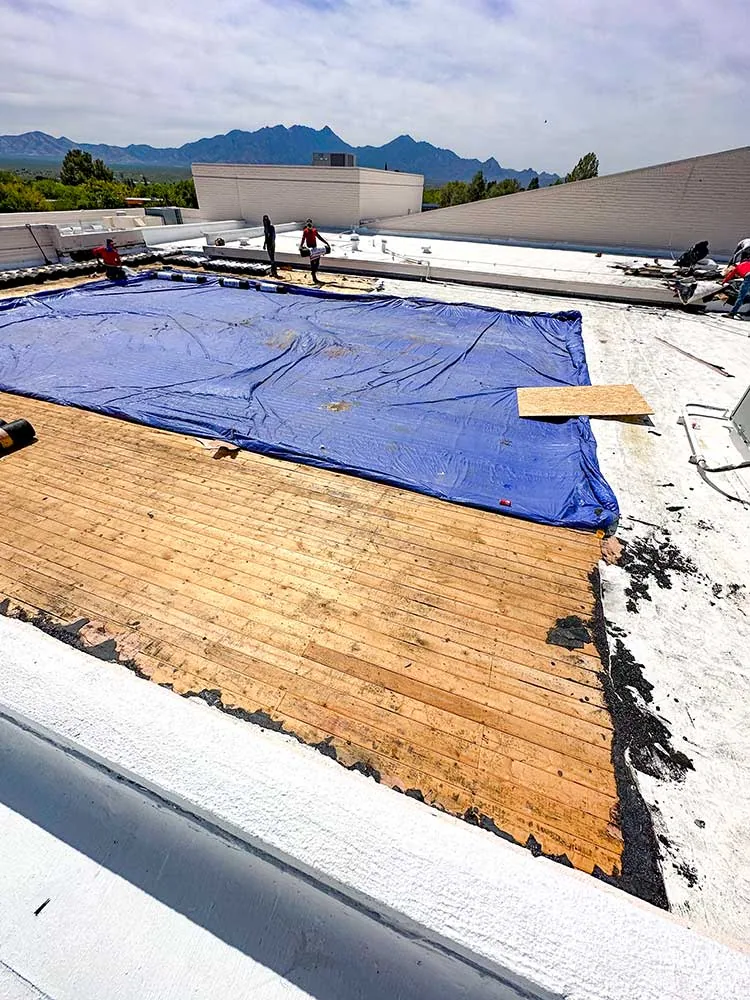
Trace the change in plane
Flashing controls water where the roof meets a vertical wall, curb, pipe, skylight, or equipment support. We check for open counterflashing, loose termination bars, split corners, failed sealant, and membrane that has pulled away from the receiving surface. The inspection follows the detail in both directions because water can move behind a wall surface or along a seam before appearing indoors. We also examine nearby drains and roof slope so a ponded area is not mistaken for a single failed joint. Each observation is labeled by roof zone, with a close photograph and a wider view to show where the detail sits. Where the adjoining seam has also opened, a seam repair scope may be needed along with the flashing work.
Expose only what must be confirmed
A surface bead can hide a loose termination or a deteriorated substrate, but removing the whole assembly is not the first step. We state the question a test opening will answer and set a maximum boundary before cutting membrane or trim. The opening can show whether a vertical leg reaches the required height, whether the receiver is sound, and whether water has reached the concealed layer. We photograph the original condition, removal sequence, prepared surface, and completed tie-in. If wet insulation or a corroded attachment extends beyond the planned area, we secure the opening and request a revised scope instead of enlarging it without authorization. The marked condition record keeps each layer connected to the detail that exposed it.
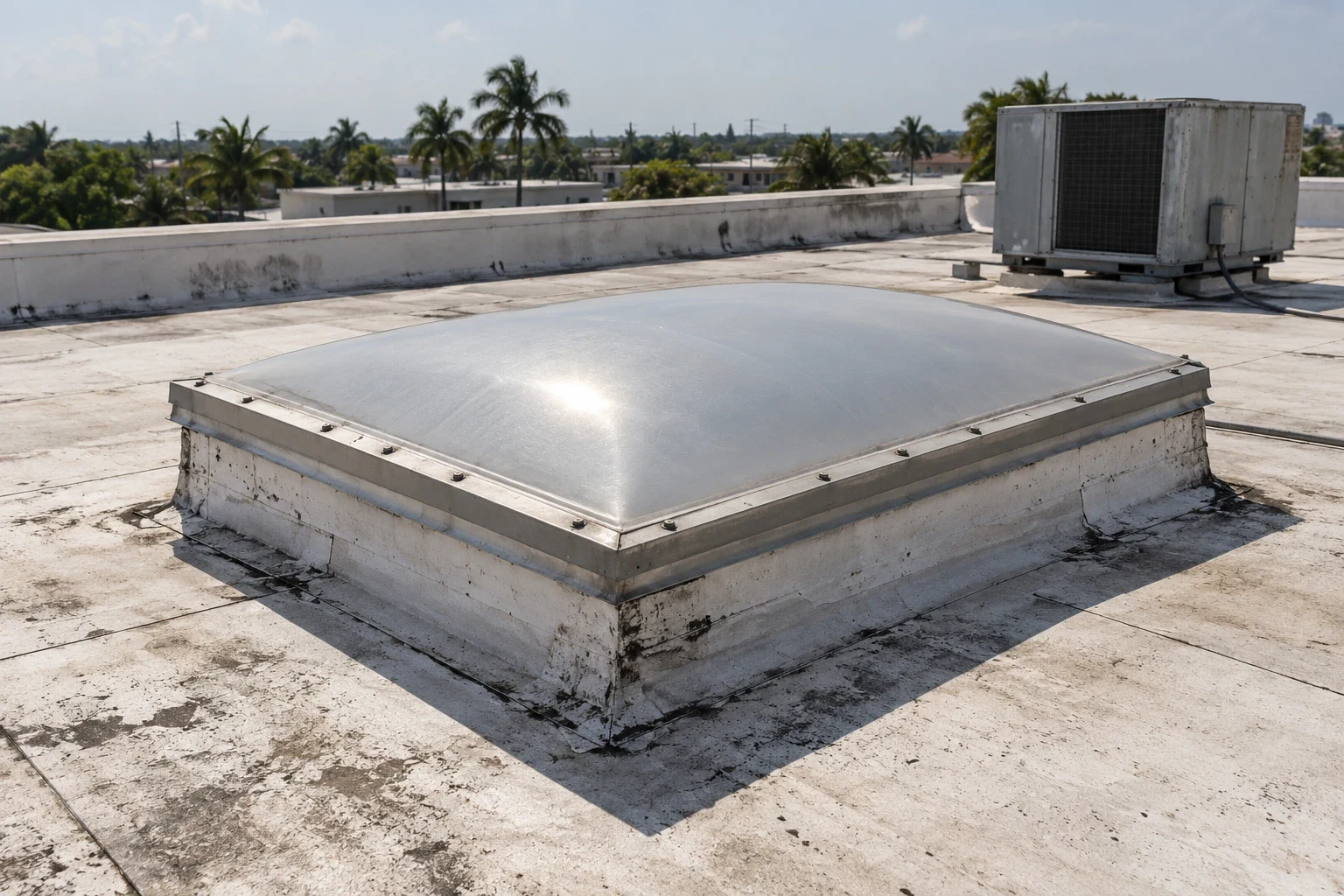
Match repair materials to the assembly
The repair method depends on the roof system, substrate, metal, and receiving surface. A membrane patch has to be compatible with the existing material and prepared to accept a lasting seam; new metal needs suitable gauge, laps, and attachment for its purpose. Sealant is a maintenance component at some details, not a substitute for a missing upstand or loose termination. We identify the existing system from visible evidence and available records, then specify the materials needed for the actual connection. If past work layered different materials at one corner, the scope explains which layers will be removed and how the new flashing will reconnect. A wind-exposed edge near the harbor can need a different attachment review than a protected interior curb, so the wind-related edge inspection remains tied to its own condition.
A roof-to-wall joint also needs a termination that sheds water back to the field rather than directing it behind the vertical surface. We check the upper edge, counterflashing overlap, and any change in wall finish that may interrupt the seal. At a curb, the same review follows all four corners, not just the side where a stain appeared. This makes the repair scope more precise and gives the owner a photograph of each side before the detail is closed.
Keep the opened transition protected
Hawaii’s trade winds persist through the year, and the island’s heavier rain generally arrives in winter storm periods between October and April. When a flashing detail is opened, the crew must be able to secure the wall line and roof field before leaving. We define the amount of trim or membrane that may be removed, keep the specified temporary protection ready, and record the closure check at the end of the shift. A weather change may shorten the available work window, particularly where old sealant or a wet substrate must be removed before a new bond is made. We do not cover a damp receiving surface simply to preserve the schedule. The field record identifies what remains temporarily protected and who confirms that the boundary is secure before the building resumes normal use.
Repair the detail or renew its roof zone
A localized flashing repair can be sufficient when the receiving surface is sound and the rest of the membrane remains serviceable. Repeated separation at several walls, wet concealed material, or a failing roof-to-wall assembly can call for a larger scope. We compare the detail repair with broader removal by stating affected length, material transitions, access, and tie-in limits. A coating does not correct a loose receiver or a flashing leg that terminates short of the required connection. The repair option can address a discrete transition, while the replacement scope can include new perimeter and wall details where the existing assembly no longer provides a sound base. The owner sees the evidence and the boundary for each option before authorizing work.
Show the finished connection
The closeout file includes the original detail, any concealed layers exposed, prepared substrate, flashing or membrane installed, and the completed tie-in. We label each image with the roof-zone reference and identify whether the final detail is at a parapet, curb, pipe, or wall. If the repair depends on a sealant joint or another trade’s counterflashing, the record states what was completed and what remains outside our scope. That distinction keeps future maintenance from treating a visible top bead as proof that concealed connections were replaced. For a property in Waikiki, a roof access route can pass near guest or service areas, so the handover also notes any access limitation needed for a return visit. The result is a location-based record that facilities staff can compare at the next inspection. The owner can compare future repair proposals with the same record.
The final image should show the full edge, not only the sealant bead.
Our record keeps that view with the roof-zone reference.
Commercial Roofing Questions
Can sealant alone repair a leaking roof-wall joint?
Only if the existing flashing and receiving surfaces remain sound and the detail calls for that maintenance. We inspect the termination, substrate, and water path before identifying a sealant repair as sufficient.
How do you find the source when water appears away from a wall?
We compare the interior report with accessible roof transitions and the routes water can follow through the assembly. A selective opening can confirm a concealed path when surface observations do not settle the question.
What happens if the receiver is loose or corroded?
The scope identifies the condition and the limit of the opened area. We secure temporary protection, document the attachment or substrate, and present any added replacement work for approval.
Should flashing be repaired before a coating is applied?
Transitions should be inspected and corrected before a field coating covers them. The surface and detail must both support the selected system, with each repair photographed before the finish is installed.
What photos will show the repair was completed?
The sequence should include the original defect, prepared surface, concealed layers if opened, installed flashing, and final tie-in. Each image needs a roof-zone label so staff can find the same detail later.
Trace the flashing transition before sealing it
Arrange a commercial roof inspection in Honolulu, HI. We will examine the affected wall, curb, or penetration detail and provide a repair scope with clear opening and closure limits.
Tell Us About Your Roof
We will follow up to set up a time to walk the roof.

Request a Roof Assessment
Tell us about the building and what you are seeing. We will follow up to set up a time to walk the roof.