
A recurring pool on a low-slope roof points to a flow problem that should be mapped before a drain or membrane detail is changed. We note the ponding location, nearby outlets, roof-plane changes, and any interior report, then inspect the surrounding surface and drainage components. Waikiki’s mix of resort and older hotel buildings gives roof access and equipment layouts that differ from a retail property in Kapolei; the condition on each roof still controls the work. Hawaii’s rainfall varies over short distances, making an outlet and overflow path important to examine at the specific building. We identify whether debris, a blocked strainer, a low point, a crushed line, or a broader slope issue is supported by the inspection. If water is entering occupied space, our response is available around the clock, holidays included, with the temporary protection and permanent correction kept as separate decisions.
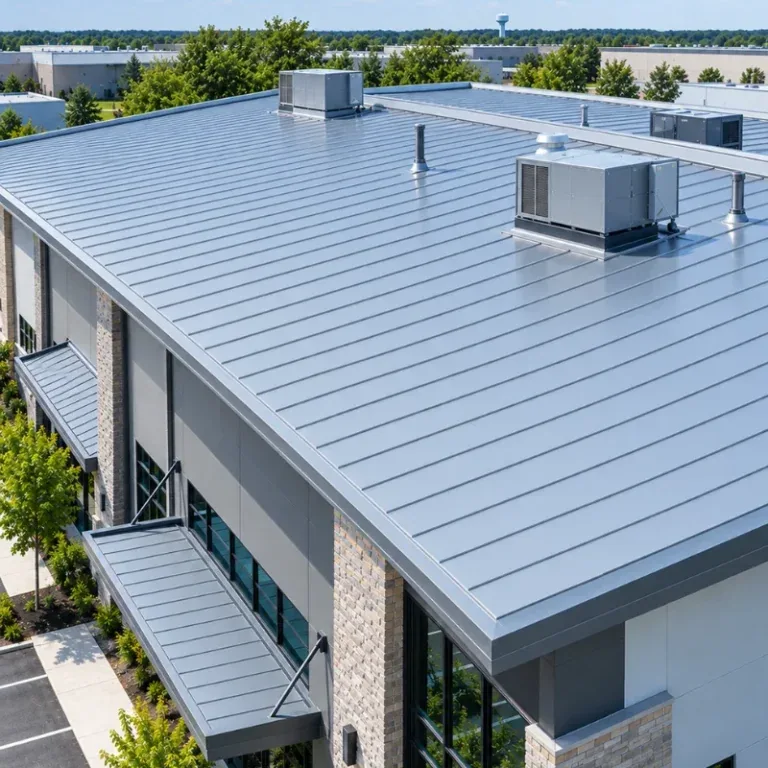
Map the basin before clearing an outlet
A strainer can be clean while water still remains trapped because the roof plane slopes away from it or a nearby overflow sits above the ponding line. We check drain bowls, scuppers, overflow openings, leaders where accessible, and the path water follows toward each outlet. Photographs mark the standing-water boundary and show whether sediment, vegetation, or a displaced component is present. We do not treat every shallow pool the same; duration, depth, substrate, and membrane condition affect the repair choice. The written record distinguishes a maintenance item from a condition that calls for slope correction or a controlled opening. A drain and scupper inspection can identify an obstructed route, while the roof-plane review confirms whether water can reach the outlet after cleaning.
Check how standing water meets the membrane
Water that remains after a storm can stress seams, patches, penetrations, and transitions around equipment. We inspect those details at the pool’s edge and compare them with the roof area that drains normally. The survey notes membrane condition, surface wear, open laps, blisters, soft spots, and any visible separation from the substrate. If a moisture survey indicates a wider concealed area, we define a selective opening to confirm insulation or deck condition before expanding the repair. The owner receives the opening limit and a description of what finding would change the scope. A separated seam near a pond should be repaired as a membrane detail; it does not by itself prove the whole basin needs replacement. Each observation stays tied to a marked roof zone.
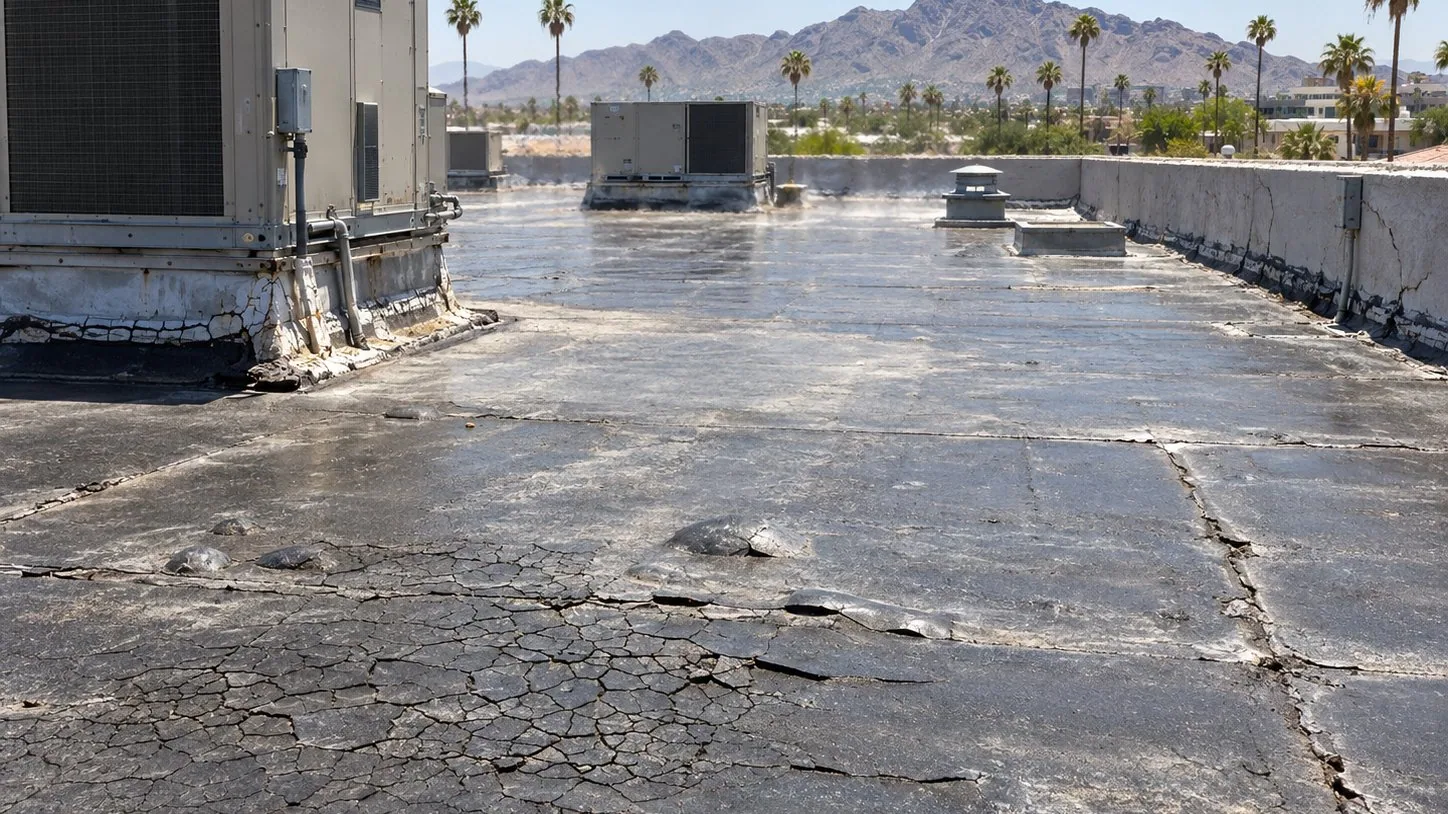
Separate a blocked drain from a low plane
When an outlet is clear but water remains, the roof may have a low area, deflected deck, or altered slope from previous work. We compare standing-water boundaries with drains, scuppers, parapets, and roof elevations that can be measured safely. The next step may be cleaning, outlet correction, a tapered insulation design, or a structural review by the appropriate project professional. We do not prescribe added material until the existing assembly and drainage route are understood. The report can show the affected field and the tie-in detail so a manager can see whether a localized correction will affect adjacent equipment or doorway heights. Where flashing must be raised or reworked, the flashing transition needs to remain continuous after the drainage correction.
Read the pool after a meaningful rain
Hawaii’s winter storms, generally between October and April, bring the heaviest rain; leeward lowlands are typically drier than windward slopes. A ponding review benefits from a dated observation after rain, with the amount of standing water and elapsed drying time recorded for the same roof zone. We keep that note distinct from a single dry-day photograph, since a surface may look clear after evaporation even when the flow path remains restricted. Persistent trade winds and humidity also affect the work window for a membrane repair or coating, so the closure detail must account for a surface that is clean and ready for adhesion. If a repair opening is required, we set the maximum exposure and temporary protection before removal, then record the closure check at shift end.
Choose the smallest supported correction
A maintenance visit may resolve ponding caused by debris or a blocked strainer. A damaged membrane around an outlet can need a localized patch and reinforcement, while a low plane or repeat water exposure may require a broader drainage plan. We compare those options with measured conditions and identify what each would change: removal depth, insulation, slope, drain height, overflow capacity, access, and tie-in. A coating is considered only when the existing surface and drainage can support restoration; adding a surface layer does not correct an underlying depression. The repair scope can stay focused on an outlet or detail, while a replacement plan can address a larger roof-zone condition. The recommendation follows the inspected assembly rather than a generic ponding label.
Return a repeatable drainage record
We hand over a roof plan with the ponding boundary, nearby outlets, photographs, and any measurement used to compare the area. The record notes what was cleared or repaired, whether water remained after the visit, and what observation should be repeated. For a property in Kapolei, rooftop equipment and drainage access can be reviewed with the local site contact before a follow-up visit; no adjacent building’s condition substitutes for that roof’s inspection. If a manager oversees multiple properties, stable zone labels make it easier to see which basin was corrected and which remains under review. The condition report can preserve that history alongside other repair evidence. A future maintenance visit can then check the same outlet and flow path after weather exposure.
When several outlets serve one roof, the drainage map should show which basin reaches each one and where overflow protection begins. We note whether a downspout or leader could be inspected from the roof and identify access limits that prevented confirmation. If another trade has recently moved equipment or piping, the condition record can include that detail as a question for the next visit, not as a conclusion about the cause. A repeat photograph after the next rain can show whether the pool boundary shifted after the correction. That comparison gives the facilities contact a practical way to decide whether cleaning, another membrane detail, or a broader slope review is warranted.
Commercial Roofing Questions
Does standing water mean the roof must be replaced?
No. We inspect the basin, membrane, outlet, and concealed layers before comparing a maintenance correction, repair, or larger renewal. The report explains which condition supports each option.
How do you tell if a drain is blocked or the roof plane is low?
We inspect the outlet and trace the surrounding flow path, then record the pool boundary and roof elevations that can be measured. An open drain does not by itself establish that the roof slopes correctly.
Can a coating solve a ponding problem?
A coating may restore a compatible surface, but it will not change a depressed roof plane or correct a blocked outlet. We check drainage and substrate first, then identify where coating is appropriate.
What information is useful after heavy rain?
A dated photo showing the same marked roof zone, pool boundary, and nearby drain can help compare drying behavior. We record when the image was taken and avoid drawing conclusions from one dry-weather visit.
Will a drain repair require an interior shutdown?
The access route and the rooms below the work determine the sequence. We coordinate a work zone and closure plan with the site contact before opening the assembly or changing the outlet detail.
Trace the drainage path before changing the roof
Arrange a commercial roof examination in Honolulu, HI. We will map the ponding area, inspect drainage and membrane details, and define a correction supported by the roof condition.
Tell Us About Your Roof
We will follow up to set up a time to walk the roof.

Request a Roof Assessment
Tell us about the building and what you are seeing. We will follow up to set up a time to walk the roof.