A medical office owner scheduling an equipment change needs the roof connection resolved before the replacement unit arrives. Commercial Roofers Honolulu coordinates rooftop equipment curbs and supports in Honolulu, HI, by examining the existing assembly and defining the waterproofing work associated with the change. Kailua Road is a central commercial corridor in Kailua, while Downtown Honolulu concentrates financial, commercial and government activity. These distinct settings can bring different access questions to equipment work. We establish how the proposed component meets the roofing and identify the structural, mechanical or electrical decisions that must be completed by the responsible parties.
Equipment work can alter a roof even when the unit occupies approximately the same area as its predecessor. A curb adapter, new service route or relocated support may change heights, attachment and drainage. The roofing scope therefore begins with the proposed arrangement and the condition of the existing connection. We document what remains, what must be exposed and how the final waterproofing is formed, preventing an equipment replacement from leaving the roof interface to be improvised after installation.
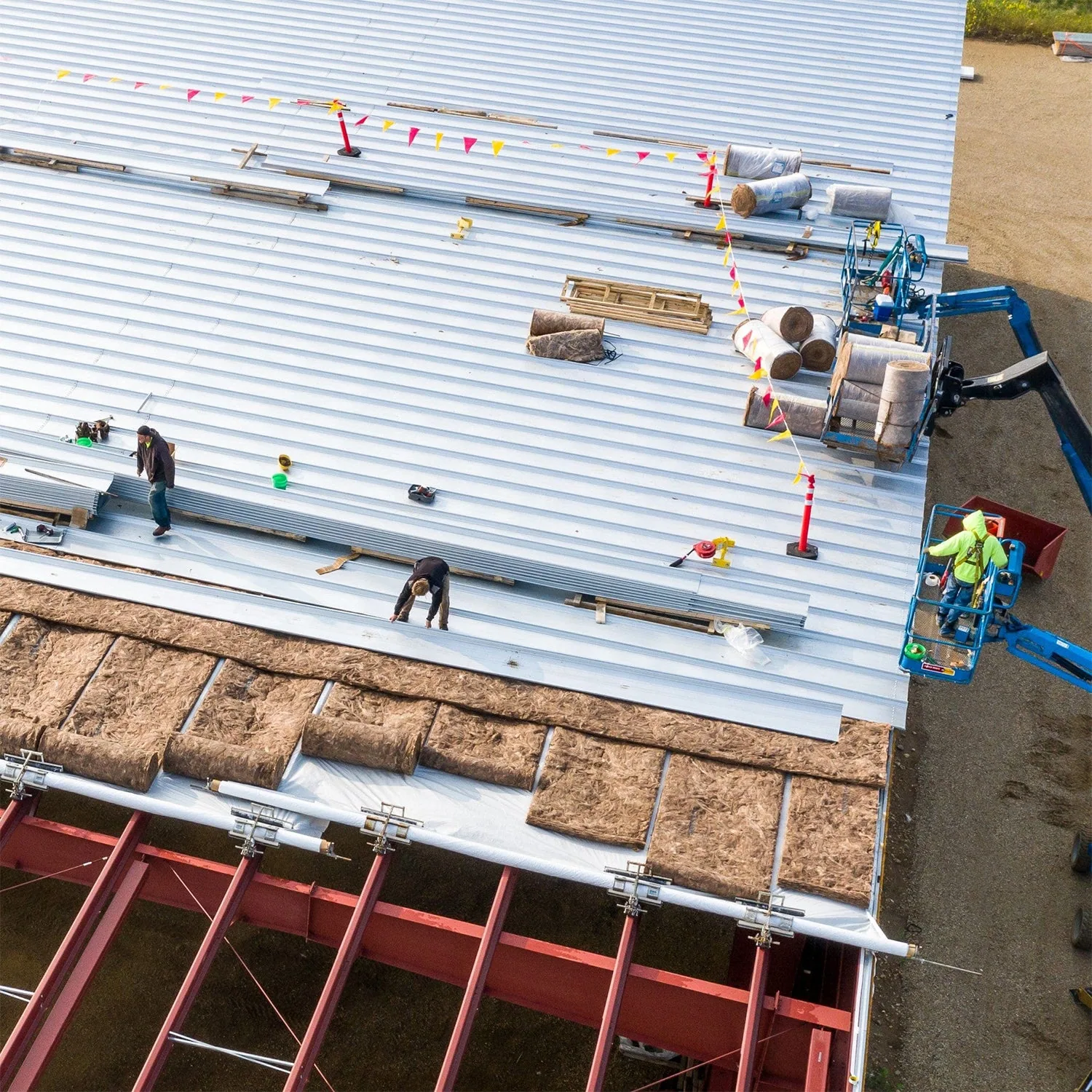
The equipment arrangement comes first
Available equipment information, curb details and roof records help establish the work boundaries. We examine the accessible existing curb, surrounding flashing and service penetrations. Differences between the proposed component and the existing arrangement are identified before removal. A change in footprint or height may require a revised connection, while a new access requirement may affect adjacent roofing. Those questions need resolution early enough to inform the work sequence and material preparation.
A roof assessment before equipment work can identify deteriorated material or unresolved leakage near the intended operation. The owner should know whether the surrounding assembly is suitable to receive a new connection. Where concealed material needs investigation, openings are planned and recorded. This provides a basis for the roofing scope instead of assuming that a serviceable mechanical unit establishes the condition of the curb and layers supporting its weather protection.
The curb and flashing work together
A curb provides an interface between equipment and roofing, but its structural and mechanical functions need their own assessment. We examine the accessible surfaces relevant to the flashing and identify damage or unsuitable backing. If replacement or modification is proposed, the responsible parties establish the component arrangement and support requirements. Our roofing work is then defined around that accepted configuration, with the upper termination and connection to the field shown in the scope.
Roof thickness affects the exposed height available for flashing. An adapter or equipment base may also change how the termination is protected. We coordinate those dimensions with curb flashing reconstruction, identifying any work another trade must complete before waterproofing proceeds. A new metal component should not conceal a damaged junction or prevent access needed to form the detail. The completed connection needs a suitable base and a defined weathering transition.
For a KEE roof membrane assembly, compatible material and preparation are considered with the curb geometry. Other membranes require their own appropriate methods. Corners, seams and terminations are examined as part of the connection rather than treated as finishing touches after the equipment is placed. Photographs taken before those details are obscured preserve the roofing work and help establish what can remain during a future equipment change.
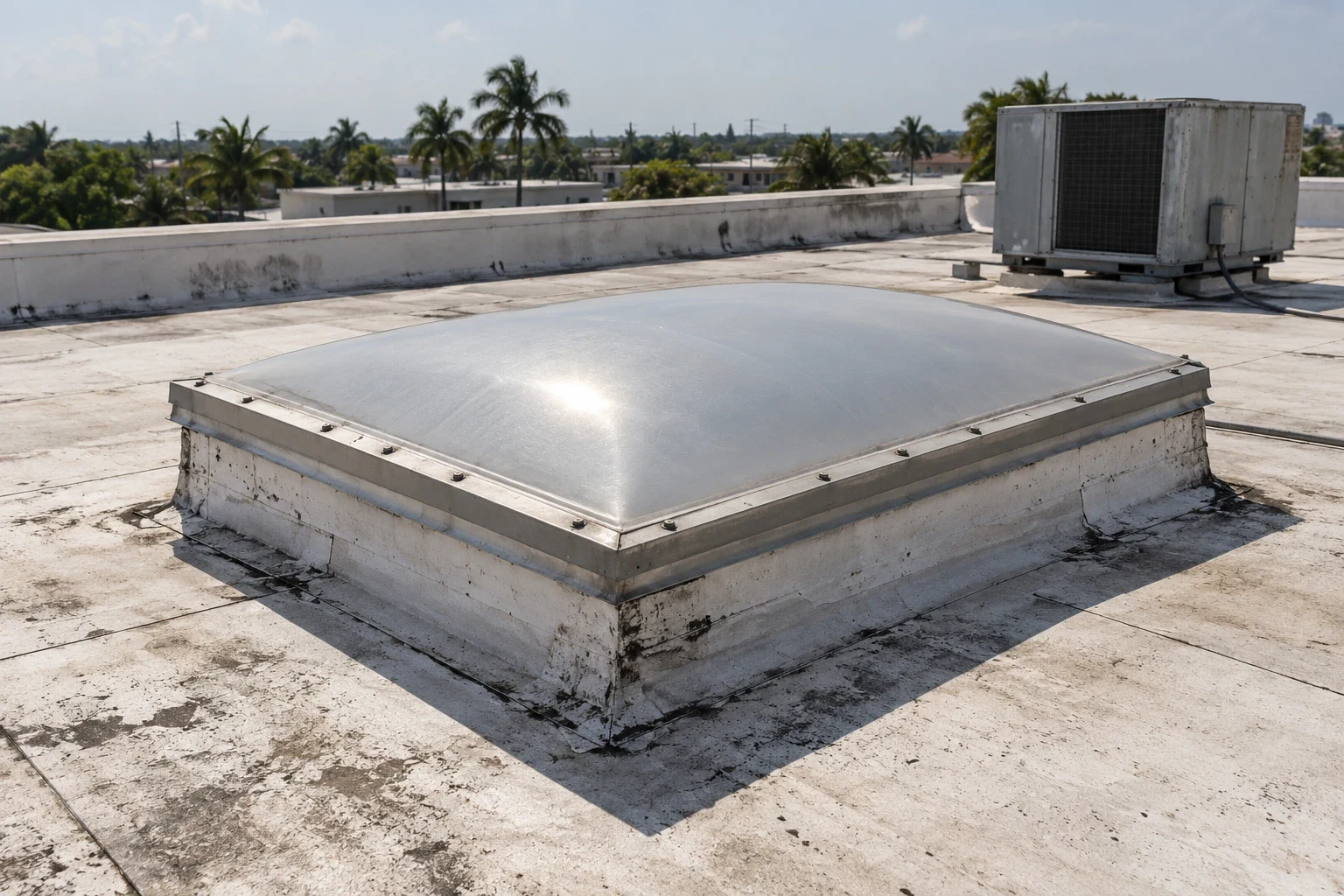
Supports must preserve the roof assembly
Pipe and equipment supports can concentrate contact or create a penetration through the waterproofing. We examine the proposed contact locations and the existing roof condition. The selected arrangement needs to address load transfer, movement and the roofing interface through the appropriate design and trade input. A piece of protective material under a support does not establish that the roof or structure is suitable for the imposed load.
Where a support penetrates the roof, its flashing is coordinated with the component’s shape, movement and attachment. Where it rests above the roofing, compatible protection and drainage around the contact area require consideration. We identify the roofing requirements and the information still needed from the equipment or design team. The owner can then distinguish a waterproofing task from decisions about support capacity or equipment restraint that lie outside a local roofing repair.
Service lines and conduits also need an arrangement that permits inspection and future maintenance. Closely grouped components can make a durable closure difficult if they leave no room for suitable flashing. The proposed work may require relocation or a different support detail before the roofing is completed. We document that dependency, giving the responsible trade a specific interface to resolve rather than leave the crew to fill inaccessible spaces with another application of sealant.
Trade sequencing protects the opening
Equipment removal can expose the building to weather or reveal damaged layers around the old connection. We agree the opening boundary and closure sequence before the unit is disconnected. The equipment contractor’s work, roof reconstruction and final placement are coordinated so a protected roof does not depend on an undefined return visit. Where a temporary closure is needed between stages, its construction and limitations are recorded for the owner.
Hawaii’s heavier winter rainfall makes the available weather window relevant to an equipment operation that opens the roof. We assess the planned stages and the protection required if conditions change. The roof area opened should remain within the crew’s ability to close appropriately. New insulation or support material affected during the operation is examined before it is concealed, keeping weather protection connected to the actual assembly condition rather than the scheduled delivery date.
For medical office roof coordination, equipment interruptions and work below the opening may affect the operating sequence. We agree roof access, removal routes and restrictions with the owner. The roofing scope identifies when other trades must complete their part and what condition they must leave for flashing installation. Clear handoffs reduce the risk that completed waterproofing is disturbed by a connection that remained unresolved during the earlier stage.
Handover identifies every interface
Completion photographs show the prepared curb or support connection, relevant concealed repairs and final flashing. The record distinguishes roofing work from equipment and structural work completed by others. Any outstanding interface receives a clear description. A final equipment installation does not by itself establish acceptance of the waterproofing, so the owner should retain the roofing closure record alongside the separate commissioning or equipment documentation.
Owners in Kailua’s commercial area can use that record with subsequent roof care and documented condition reviews. Technicians returning to the roof should know where access protection is needed and which parts of the connection must remain undisturbed. The record also helps a future project begin with the installed arrangement, allowing a proposed relocation or replacement to be assessed against known details rather than an assumed standard curb.
Commercial Roofing Questions
Who establishes whether the roof can support new equipment?
Load and supporting construction require the appropriate qualified assessment. We identify roofing interfaces and coordinate our work with the accepted equipment and structural arrangement rather than infer capacity from the roof surface.
Does a replacement unit always fit the existing curb detail?
Its footprint, base and service connections need comparison with the existing arrangement. A changed component may require curb modification or new flashing before installation can be treated as complete.
What should happen between equipment removal and replacement?
The opening needs an agreed protection and closure sequence. Roofing repairs and the responsible trade’s work are coordinated, with temporary measures documented where the operation occurs in separate stages.
Can supports rest directly on the membrane?
The proposed support needs assessment of its roof contact, protection and load transfer. Compatibility and supporting capacity must be established for the arrangement rather than assumed from its appearance.
Which documents should remain after the equipment project?
Keep the roofing closure photographs and descriptions with the separate equipment and support records. Their clear scope boundaries help future personnel understand the complete interface before altering it.
Resolve the roof interface before installation
Coordinate equipment curb and support work with Commercial Roofers Honolulu to define existing conditions, trade dependencies and the permanent roofing connection.
Tell Us About Your Roof
We will follow up to set up a time to walk the roof.

Request a Roof Assessment
Tell us about the building and what you are seeing. We will follow up to set up a time to walk the roof.