
A warehouse operator arranging equipment work needs the roof opening defined before a curb or service penetration is altered. Commercial Roofers Honolulu examines skylight and penetration flashing in Honolulu, HI, with attention to the transition between the roof assembly and the component passing through it. Lower Mapunapuna’s industrial area and Waiwai Loop’s employment district and Kapolei’s retail and government buildings require building-specific coordination when a roof opening affects equipment or occupied space. We assess the accessible junction, identify the scope boundary and coordinate the roofing connection with the equipment or glazing work that affects it.
A leak near a skylight or pipe can originate at several different connections. Roofing at the curb, the curb structure, glazing joints and equipment components require distinct examinations. We document the location and observed condition, then explain which part of the junction our roofing work can address. The owner receives a connected plan for the necessary work rather than a patch placed around a component whose own condition remains unresolved.
The junction has separate responsibilities
We examine the transition from the roof field to the vertical flashing and its upper termination. The curb height, corners and relationship to the existing assembly affect how a new detail can be formed. Accessible movement, separation and previous repairs are recorded. A flashing that appears serviceable may sit below a leaking glazing or equipment connection, so the investigation follows the observed entry path rather than assume the lowest waterproofing layer is responsible.
A focused water-entry investigation can help distinguish those paths when the condition is uncertain. We relate interior observations to roof locations and examine the detail in a considered sequence. Where a glazing specialist or equipment contractor must assess another component, that need is communicated with the roofing findings. Coordinating the examinations prevents a new flashing from being accepted as a complete leak solution when an adjoining component still requires attention.
Curbs provide the flashing base
Supporting material around a curb needs to accept the proposed connection. Removal of failed flashing can reveal deteriorated backing, loose attachments or an irregular surface requiring reconstruction. We photograph those conditions and identify the work needed before replacement waterproofing is installed. The repair boundary includes the transition to retained roofing, with any concealed damage affecting that connection presented for authorization before it is covered again.
Changes in roof thickness can alter the usable curb height. A reroofing or insulation project may therefore require coordination with the equipment or skylight assembly instead of simply extending new material upward. We identify the relationship between the proposed roof build-up and the termination detail. Insulation and cover-board selection is considered with those heights, and any required curb modification belongs in the project scope before the roof layers are installed.
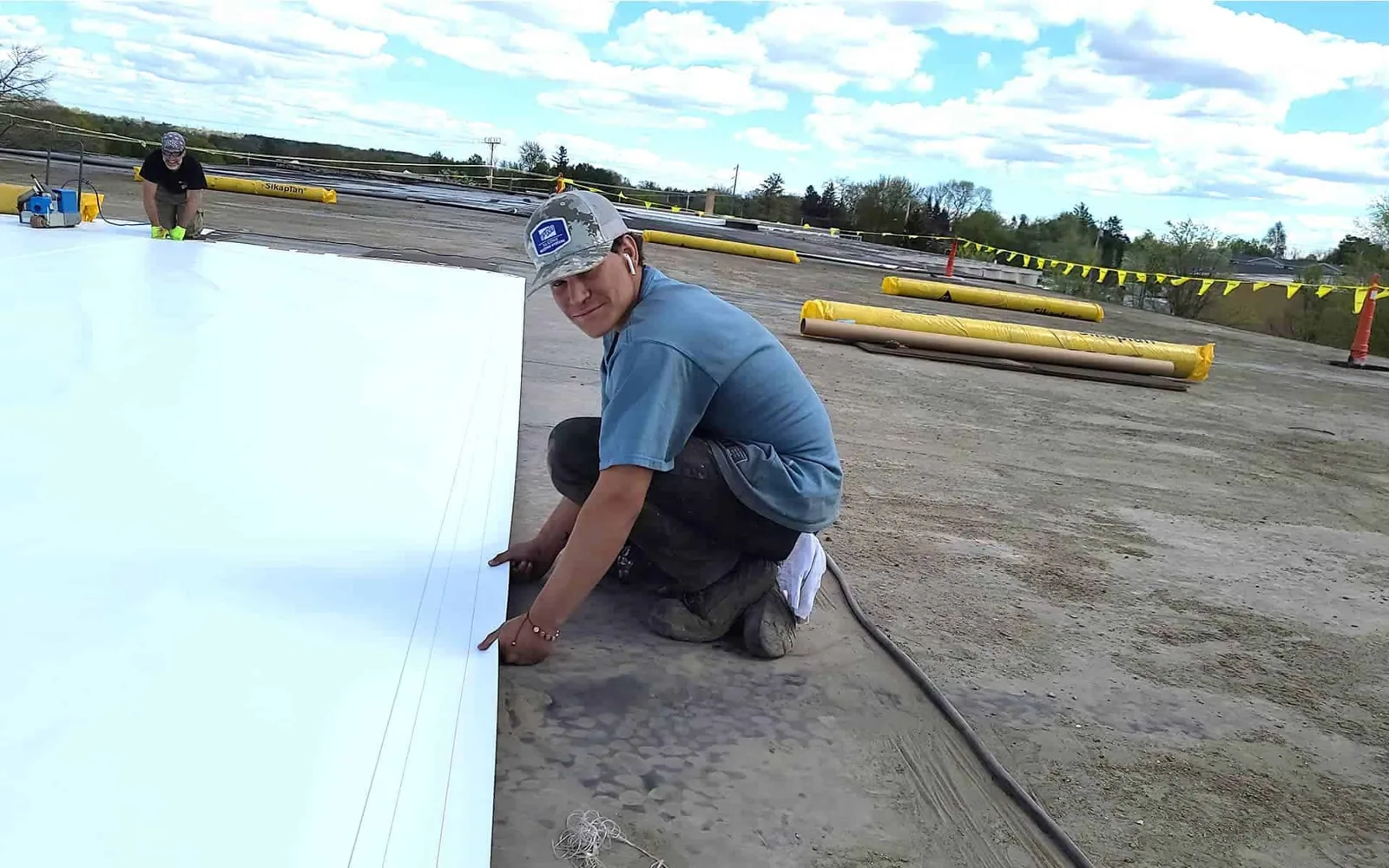
For PVC membrane flashing, suitable material, welding surfaces and corner treatment differ from a reinforced coating or bituminous detail. We identify the existing assembly and the compatible method before reconstruction. The proposed detail should accommodate the component’s geometry without leaving unsupported folds, open transitions or an improvised sealant connection where a formed waterproofing junction is needed. Photographs preserve the prepared base and the completed corners.
Each penetration needs its own closure
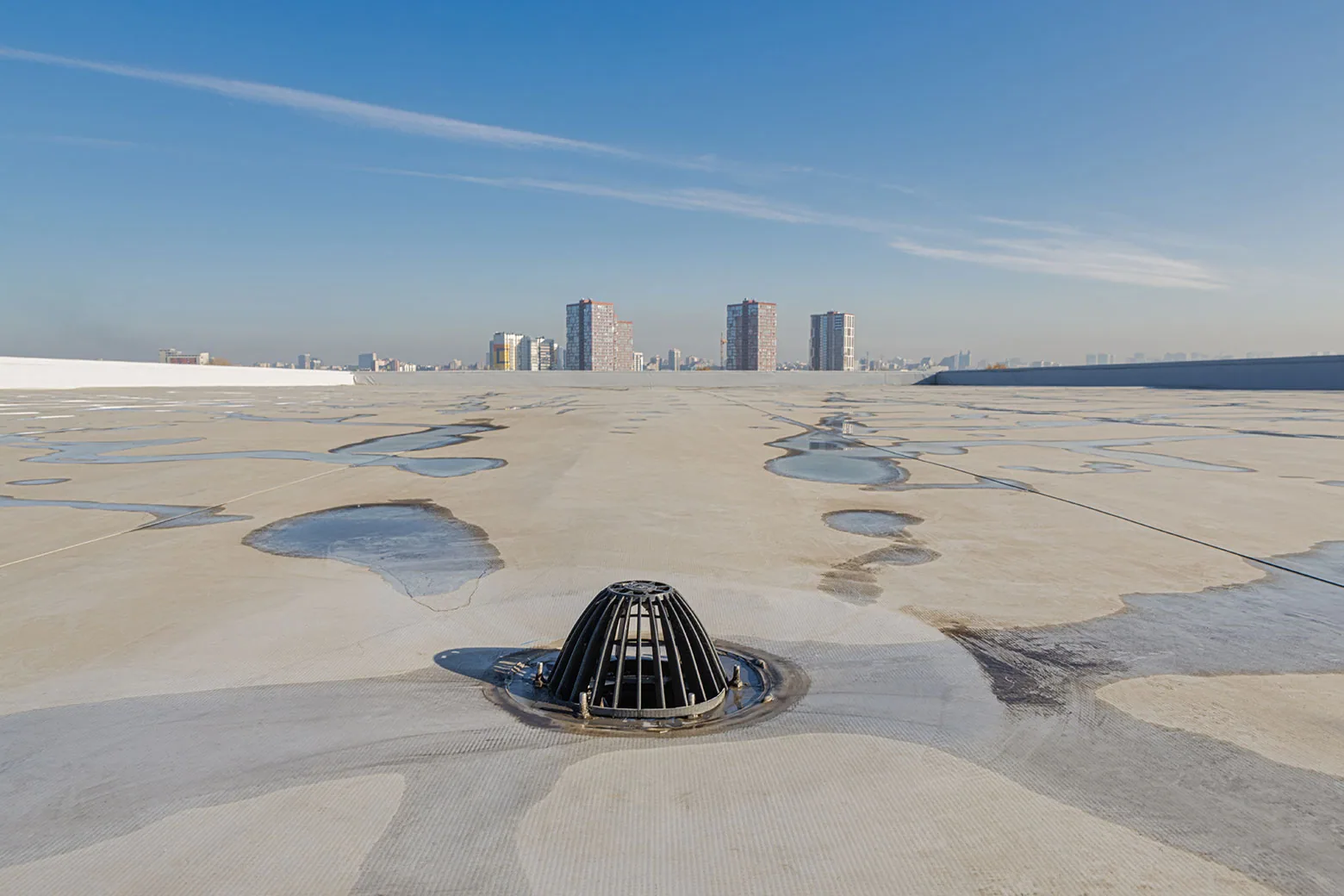
Pipe penetrations, conduit groups and supports can have different movement and temperature conditions. We examine the pipe or component, its support and the space available for a suitable flashing. A loosely supported service line can stress a roof connection even after its surface is repaired. Where another trade must stabilize or change the component, we identify that requirement so the new waterproofing is not installed around a condition expected to continue moving unpredictably.
Grouped services can make access and durable closure more difficult. The repair may need a defined assembly or a change to the arrangement rather than repeated applications of sealant between closely spaced components. We explain what must be removed, disconnected or supported by the responsible trade and how the roofing will reconnect afterward. Equipment curb and support coordination keeps those boundaries connected to the roof detail without assuming that a roofing repair includes mechanical or electrical modifications.
Previous repair materials are assessed before another layer is added. Contamination, loose sealant and incompatible treatments can prevent the proposed detail from bonding correctly. Removal may expose a larger area requiring preparation than the visible leak location suggests. We record that area and choose a repair method suited to the retained assembly, giving the owner a material basis for the work rather than describe every penetration repair as resealing.
Opening work requires a closure sequence
A skylight or curb repair may temporarily expose the building below. We coordinate the opening size, operating restrictions and protection with the owner before removal. Tools and removed components are controlled so they do not damage adjacent waterproofing. For warehouse roof work, the area below may contain stored goods or active routes, making the agreed restriction and closure sequence an important part of the roofing scope.
Hawaii’s heavier winter rainfall affects the choice of weather window for an exposed curb or removed flashing. Northeasterly trade winds also matter when handling lightweight components and protecting an opening. We assess conditions for the planned operation and limit removal to work that can be closed appropriately. If another trade’s work must precede waterproofing, its timing is coordinated so the roof is not left dependent on an undefined later return.
Where an opening changes size or location, a separate project assessment may be necessary for support, equipment and code requirements. We identify that coordination before treating the work as a local flashing repair. The roofing proposal explains the connection it will provide to the approved component, preserving a clear boundary between repairing an existing junction and creating a new opening in the building assembly.
The final interface remains traceable
Completion checks address the reconstructed flashing, corners, terminations and connection to retained roofing. A glazing or equipment repair completed by another party should have its own acceptance record. We identify the roofing work performed and any unresolved interface requiring follow-up. An owner can then review the final junction without assuming that a clean-looking curb establishes the condition of the skylight above it or the equipment supported inside it.
Buildings in Lower Mapunapuna’s industrial area can retain the closure photographs with ongoing roof maintenance findings. Later technicians should know which parts of the junction were rebuilt and how the roof connection must be protected during servicing. When another change is proposed, that record helps establish the starting detail and the trades involved, reducing uncertainty about what can remain and what must be altered before the new work proceeds.
Commercial Roofing Questions
Can roofing work correct a leak through skylight glazing?
Glazing and its seals need the appropriate specialist’s assessment. We examine the roof and curb flashing, then coordinate that scope with any separate work required above the roofing connection.
Why assess curb height during an insulation project?
Added roof thickness can reduce the height available for a suitable flashing termination. The proposed assembly and component arrangement need review before new layers are installed.
What if a pipe moves within its existing flashing?
We examine the movement and support before choosing a repair. Another trade may need to stabilize or modify the component so the new waterproofing does not inherit an unresolved stress condition.
Are all penetration repairs completed with sealant?
No. The component, roof material and detail geometry determine the suitable method. Some repairs require removal, a formed flashing or reconstruction rather than another surface sealant application.
Which record should follow a jointly completed curb repair?
Retain the roofing closure photographs and the separate equipment or glazing work record. Together they clarify which interfaces were repaired and which party completed each part of the junction.
Define the opening and its interfaces
Arrange a skylight or penetration assessment with Commercial Roofers Honolulu to establish the roofing detail, component responsibilities and closure sequence.
Tell Us About Your Roof
We will follow up to set up a time to walk the roof.

Request a Roof Assessment
Tell us about the building and what you are seeing. We will follow up to set up a time to walk the roof.