A manufacturing building owner considering a metal roof retrofit needs the retained panels and connections assessed before a new covering is approved. Commercial Roofers Honolulu evaluates metal roof retrofit in Honolulu, HI, with corrosion, attachment and drainage findings tied to the proposed work. The commercial-industrial uses of Iwilei and the employment area of Mapunapuna provide broad local settings for that assessment. We identify whether panel repair, coating restoration or a supported overlay can address the actual condition, keeping the retention decision visible within the proposal.
Retrofitting a metal roof can change the weathering surface while leaving important parts of the original assembly in place. Those retained components still need a suitable condition and defined role. An owner should know how the new work is attached, how details are reconstructed and where existing damage requires removal. We explain those connections before comparing options, so a smaller demolition scope does not become the sole reason to cover a roof whose supporting condition remains uncertain.
Retained panels receive a condition account
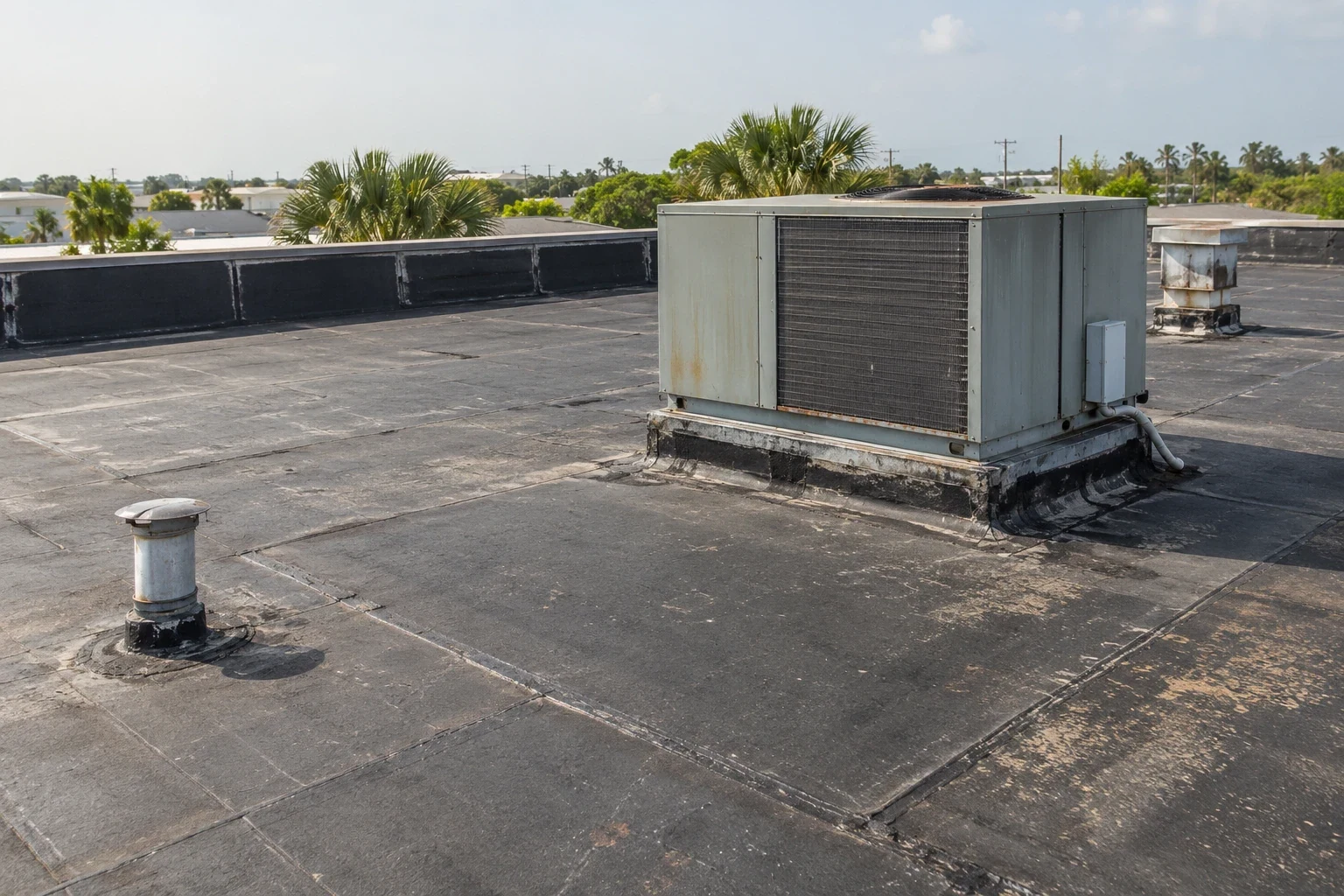
We examine accessible panels, seams, fasteners and surface treatments to establish the existing assembly. Exposed-fastener roofing needs assessment of the fasteners, washers and surrounding panel material, while other profiles have different connection questions. Corrosion, perforation and distorted joints are located in the record. A general description of aging metal does not establish the extent of usable retained material, so the scope identifies findings that affect each proposed work area.
A survey before metal roof retention records conditions and any further examination needed below the surface. Corrosion may affect a visible panel or extend to concealed support, requiring different work. Where removal is needed to establish that condition, the opening and closure are planned. The owner receives a description of what was directly examined and the question remaining at a concealed connection, preserving a sound basis for retention or removal.
Earlier sealants and coatings can complicate preparation. We identify loose material, contamination and treatments that affect the selected retrofit method. The scope may require their removal or a supported preparation sequence. Applying another layer over uncertain earlier work can leave the bond dependent on material that was never assessed. Relevant preparation findings therefore remain part of the record before the new surface obscures them.
Fastener work addresses the surrounding material
A loose or leaking exposed fastener may need more than a replacement washer. The panel opening, substrate and supporting connection determine what repair is suitable. We examine the accessible condition and identify where a damaged hole or deteriorated support changes the scope. Repeated tightening can leave a poor connection unresolved, so the proposal describes the material response rather than treat every fastener as an identical maintenance item.
Panel joints and end laps also need an appropriate method for their arrangement and movement. Preparation, compatible sealants or reinforced treatments follow the selected repair system. The work should not create a rigid connection that conflicts with the intended panel behavior. Where the existing profile or attachment cannot be established sufficiently, further investigation is needed before a retrofit detail is accepted. That question is recorded with its consequence for the owner’s decision.
A standing seam repair approach differs from work on an exposed-fastener assembly. The retained panel geometry and concealed components affect what can be changed. We identify the actual system before presenting a method, keeping the scope specific to the roof rather than transfer one metal repair description to every panel profile. This distinction helps an owner understand why two apparently similar buildings may require different preparation and closure work.
A coating route requires a suitable substrate
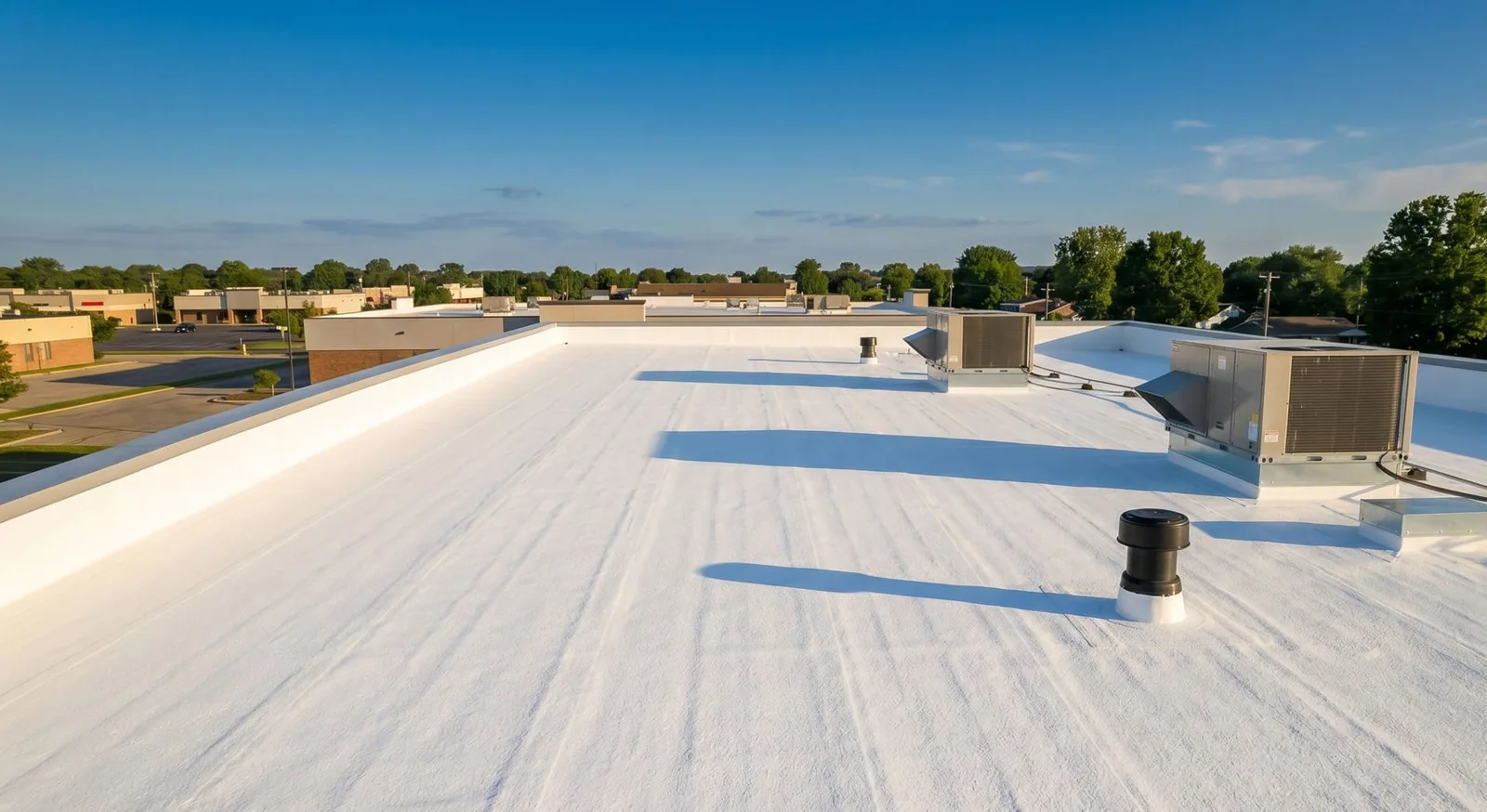
Coating restoration may be considered where the panels and details can provide an appropriate retained base. The assessment identifies damaged areas requiring replacement, joint work and the preparation needed for adhesion. A silicone coating option must be evaluated with the selected system’s substrate and exposure requirements. Material category alone does not establish that a contaminated or unstable metal surface is ready for application.
Corrosion preparation and primer selection depend on the actual condition and proposed system. We identify how affected areas are treated and where deterioration exceeds a restoration scope. A coating cannot replace metal or support that no longer provides the required base. The owner receives those removal boundaries with the restoration proposal, allowing the work to be reviewed as preparation, repairs and application rather than a field coating that leaves panel damage hidden below it.
Drainage and exterior discharge are examined where they affect the work. Gutter and roof-edge corrections may need coordination with panel or coating repairs. An unresolved gutter connection can continue to affect the building after the roof field looks renewed. The proposal identifies those interfaces and any separate trade requirement, preserving a connected scope at the boundaries of the restored area.
An overlay changes several connections
A supported overlay proposal needs assessment of retained construction, attachment and the new supporting surface. Roof recover eligibility review identifies the project requirements and conditions affecting that route. Added layers can change heights at curbs, walls and perimeter components. The work includes appropriate detail reconstruction rather than assume a new field covering can terminate at every existing component without modification.
Where a membrane is proposed above a suitable metal roof arrangement, its substrate and connection requirements are defined as part of the assembly. Supporting and design questions receive appropriate input before construction. We explain the load and attachment information needed from the responsible parties, keeping roofing work coordinated with accepted project criteria. A retrofit proposal should make those dependencies clear instead of presenting retention as automatic approval of the existing supporting construction.
The final record explains what remains
For manufacturing building roof work, the sequence accounts for operations below planned openings and equipment serving them. Hawaii’s persistent northeasterly trade winds influence handling of metal components and application conditions, while heavier winter rain affects protection during removal. The crew evaluates the specific operation and closes exposed work appropriately. New surface installation follows the established preparation findings, maintaining the retention basis on which the owner approved the project.
Owners in Iwilei’s industrial and commercial area receive a record identifying panel repairs, preparation and the installed retrofit system. It distinguishes retained components from replacements and includes relevant concealed findings. Later maintenance can then compare new observations with the known work rather than assume the entire original roof was renewed. Outstanding matters outside the contract are described, keeping the next ownership decision grounded in the assembly that actually remains beneath the completed surface.
Commercial Roofing Questions
What establishes whether corroded panels can remain?
Their extent of deterioration and role in the proposed assembly need assessment. Preparation may be appropriate for some surface conditions, while perforated or unsuitable material can require defined replacement.
Can every exposed fastener be corrected by tightening it?
The panel hole, washer and supporting connection determine the response. A damaged opening or deteriorated support may require a different repair rather than further tightening.
Why review earlier coatings before another restoration layer?
Their adhesion and compatibility can affect the new system. Loose or unsuitable earlier material needs an appropriate preparation response before the proposed coating relies on it as a substrate.
Does retaining a metal roof eliminate detail reconstruction?
No. Added layers and the selected system can change curbs, edges and outlet connections. The scope identifies the reconstruction needed to make those details work with the retained assembly.
Which information explains the retrofit to a future owner?
The retained-component description, panel repairs, preparation photographs and installed-system record show what changed. They preserve the distinction between restoration, overlay and replacement of original material.
Define the retained metal roof role
Evaluate metal roof retrofit with Commercial Roofers Honolulu and establish panel condition, preparation and the connections required for an appropriate restoration or overlay.
Tell Us About Your Roof
We will follow up to set up a time to walk the roof.

Request a Roof Assessment
Tell us about the building and what you are seeing. We will follow up to set up a time to walk the roof.