
A commercial owner considering rooftop solar needs a roof decision before installation restricts access to the waterproofing. Commercial Roofers Honolulu provides solar-ready roofing in Honolulu, HI, by assessing the assembly and coordinating the roofing interfaces with the proposed solar work. The airport-area transit-oriented development plan considers employment areas in Lower Mapunapuna and Waiwai Loop, where a solar addition should leave the roof reachable for inspection and repair. Kapolei’s retail buildings and relocated government offices bring another kind of occupied roof into the discussion. We identify whether the roof needs repair, restoration or replacement, while the responsible solar and design parties establish their equipment, electrical and support requirements.
Solar-ready describes preparation for a proposed use; it does not establish that every existing roof can receive an array. The owner needs to know the condition of retained layers, the connections planned through or above the roofing and how future maintenance will reach the assembly. We document those questions before work proceeds. A sound roofing scope makes the solar interface explicit rather than leave waterproofing decisions to the installer after mounting locations and service routes have already been fixed.
Roof condition precedes array placement
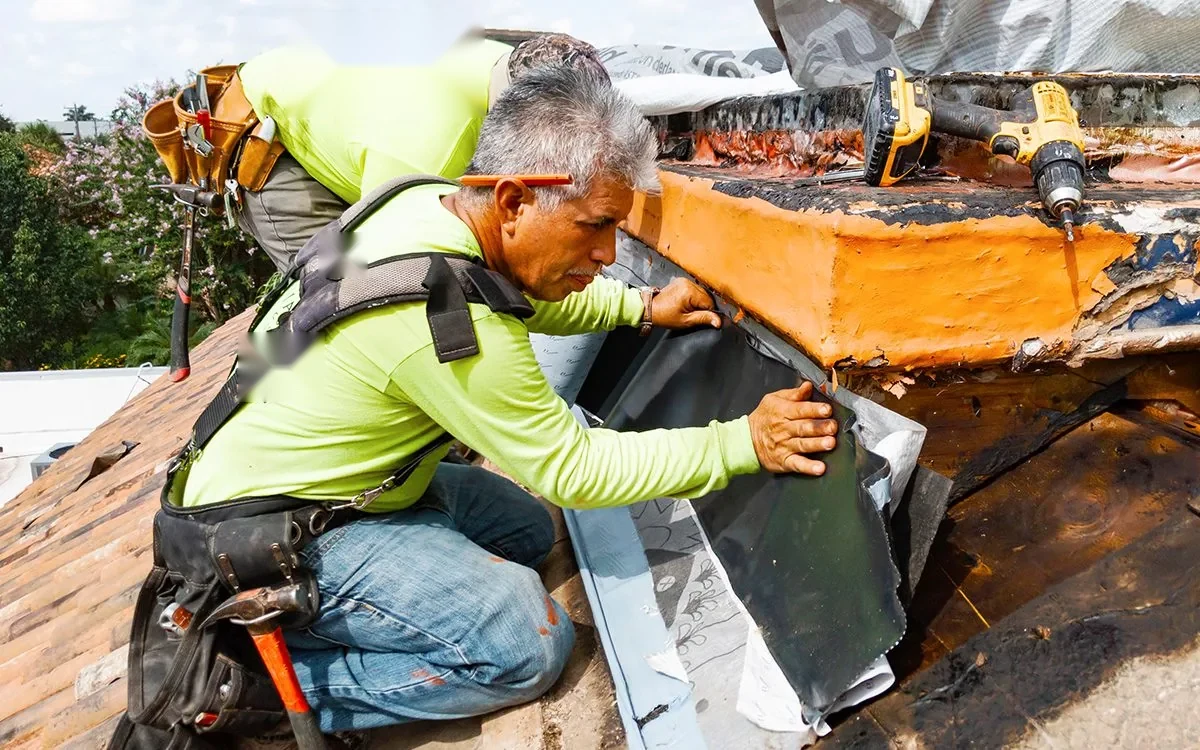
We examine accessible roofing, details and earlier repair records to establish concerns that could become harder to address after installation. Distributed deterioration, recurring leakage and suspect concealed material can affect the appropriate project sequence. A pre-solar roof condition review identifies the examination needed for an informed choice. The findings distinguish immediate repair items from broader assembly questions, allowing the owner to authorize useful investigation before committing to the final equipment layout.
Where concealed moisture is relevant, an assessment of retained insulation may help identify suspect areas under suitable conditions. Selective openings confirm material findings where needed to set the roofing scope. Wet or deteriorated material should not be left beneath a new array merely because the surface can be patched. The record explains removal limits and the connection to retained roofing, so the owner understands the basis for work proposed before installation reduces access.
A roof requiring broader work can be evaluated through a replacement scope before solar installation. That sequence may allow details and layers to be coordinated with the planned use. The assessment does not assign an unsupported remaining service life to the existing assembly. Instead, it describes the condition and work requirements that inform the owner’s timing decision, including areas where further evidence is needed before a retained roof option can be supported.
Mounting interfaces need defined boundaries
The solar design establishes its mounting arrangement, loads and applicable project requirements through the responsible qualified parties. Our roofing review addresses how that accepted arrangement interacts with the waterproofing. Penetrating attachments need suitable details and accessible closure work. Nonpenetrating arrangements still require assessment of roof contact, compatible protection and the effects on access or drainage. A visible absence of holes does not establish that the existing assembly is suitable for the equipment.
Roof support interface coordination identifies the information required before installation. We review contact locations, proposed penetrations and the space needed to construct and later inspect the roofing details. Where a component must be altered by another trade, that dependency is recorded. The roofing scope should specify the connection it will provide to the accepted support, keeping structural and electrical responsibility distinct from the waterproofing work.
Material compatibility also matters where protection or mounting components touch a membrane. On a TPO roof prepared for added use, contact materials and any new welded details need to suit the selected assembly. Other roofs have different requirements. We identify the existing system and the necessary preparation, avoiding an assumed universal pad or flashing method. The arrangement should preserve a suitable roofing connection at each support rather than use the field surface as an unexamined base.
The layout preserves maintenance access
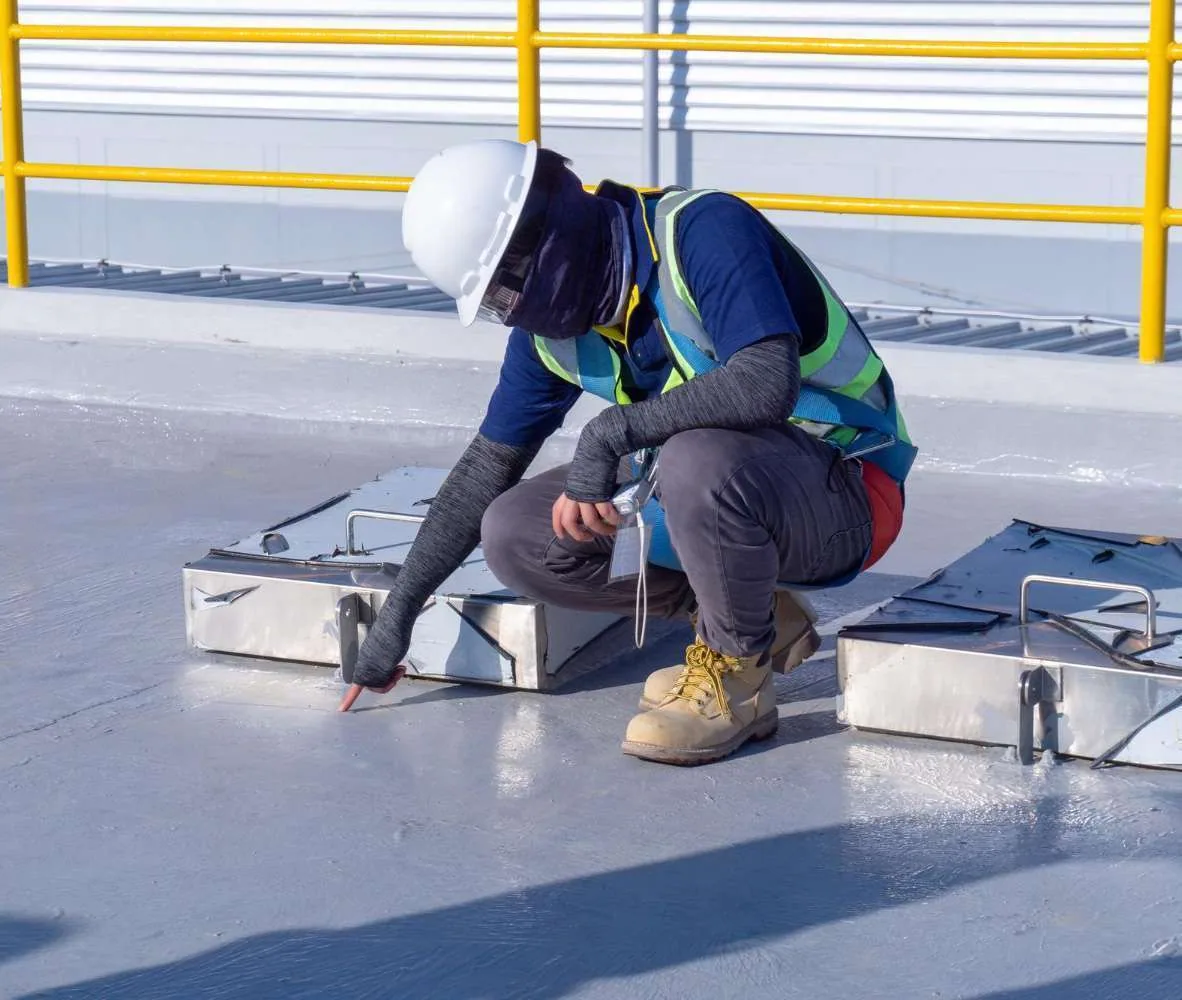
Array placement can affect access to drains, perimeter details and mechanical equipment. The proposed layout should allow those components to be examined and serviced without avoidable disturbance to completed roofing. We identify the roof details requiring access and communicate them to the solar team. Where the layout creates an inaccessible repair location, that issue is resolved before installation rather than left as an operating problem for a later maintenance visit.
Water movement needs similar coordination. Equipment and protection components should be considered with the existing drainage route, especially near low areas and outlets. A roof assessment can identify drainage concerns requiring correction before the array is placed. The responsible project team reviews any altered arrangement. Our roofing work defines the completed waterproofing and relevant outlet connections without assuming that the solar layout itself confirms a suitable path for rainfall across the roof.
For flex-industrial roof projects, several building uses may share equipment and roof access. We agree routes, work restrictions and areas requiring protection with the owner. Installation staging should account for tools, removed packaging and repeated traffic, so the prepared membrane is not damaged before the new use begins. Photos of its condition before and after the equipment operation can help establish the roofing starting point and any work subsequently required.
The installation sequence protects completed work
Roof repairs or replacement should reach an appropriate completion stage before the relevant equipment is installed. We coordinate the stages where the solar contractor’s attachment work and our waterproofing must meet. Penetrations made after field roofing is complete require controlled preparation and closure. The owner should understand who performs each part, when it occurs and how the roof is protected between operations, rather than rely on an unspecified later seal around installed equipment.
Hawaii’s heavier winter storm rainfall affects weather-window decisions where roof layers or new penetrations are exposed. The work sequence identifies how openings are closed if conditions interrupt installation. We assess the actual planned operation and retained material condition, limiting the area opened to what can be protected appropriately. Solar work must also follow the responsible parties’ safety and electrical requirements; our roofing coordination does not replace those separate project controls.
Handover preserves the roof and solar interfaces
Completion records identify relevant roof repairs, support locations and waterproofing details with photographs taken before equipment obscures them. The owner retains the roofing scope alongside the separate solar installation documents. Any unresolved condition beyond our completed work is described. This combined record helps future personnel understand which party’s work may be involved when a leak, equipment change or access concern arises after the array is operating.
Owners in Lower Mapunapuna’s industrial area can use those documents with ongoing roof asset records. Later inspection should consider the areas remaining accessible and the additional coordination needed to examine roofing under equipment. A future removal or relocation also needs a roof closure plan. Preparing for solar therefore includes a practical maintenance and alteration record, keeping the roof’s weather-protection role visible throughout the added rooftop use.
Commercial Roofing Questions
Does solar-ready roofing certify structural capacity?
Structural suitability requires the appropriate qualified review of the proposed equipment and supporting construction. We assess roofing condition and define waterproofing interfaces for the accepted arrangement.
What should be examined before placing an array?
The existing assembly, repair history, concealed concerns and access to important details need review. These findings help establish whether roofing work should occur before equipment limits access.
Can a nonpenetrating mounting system still affect the roof?
Contact materials, load transfer, drainage and maintenance access remain relevant. The accepted arrangement must be coordinated with the roofing rather than considered suitable solely because it avoids penetrations.
Who closes mounting penetrations in the roofing?
The project scope should assign that work explicitly. We coordinate compatible roofing details with the responsible installer’s attachment work and record the completed connection.
Which photographs are useful after the panels are installed?
Retain the roof preparation and interface views taken before equipment obscures them, together with completion images. Their location references support later maintenance and any coordinated removal or alteration.
Establish the roof decision before the array
Coordinate solar-ready roofing with Commercial Roofers Honolulu to assess the existing assembly and define waterproofing, access and construction interfaces for the proposed use.
Tell Us About Your Roof
We will follow up to set up a time to walk the roof.

Request a Roof Assessment
Tell us about the building and what you are seeing. We will follow up to set up a time to walk the roof.