
After a fire, the roof can be affected by heat, suppression water, debris removal, or openings made for access, and each condition needs its own inspection record. We coordinate roof access with the property representative after the area is cleared for entry, then photograph visible membrane, flashing, insulation, deck, and rooftop equipment conditions. Downtown Honolulu has modern and historic office, civic, and commercial buildings, while Kalihi includes older residential stock and public educational buildings. Those contexts are not evidence of damage at a specific property; the roof and building team determine the safe route and scope. We mark what can be observed, identify any layer hidden by the surface, and set the boundary for a selective opening if needed. A response is available around the clock, holidays included, to help protect an exposed roof while the permanent repair is evaluated.
Confirm access before inspection
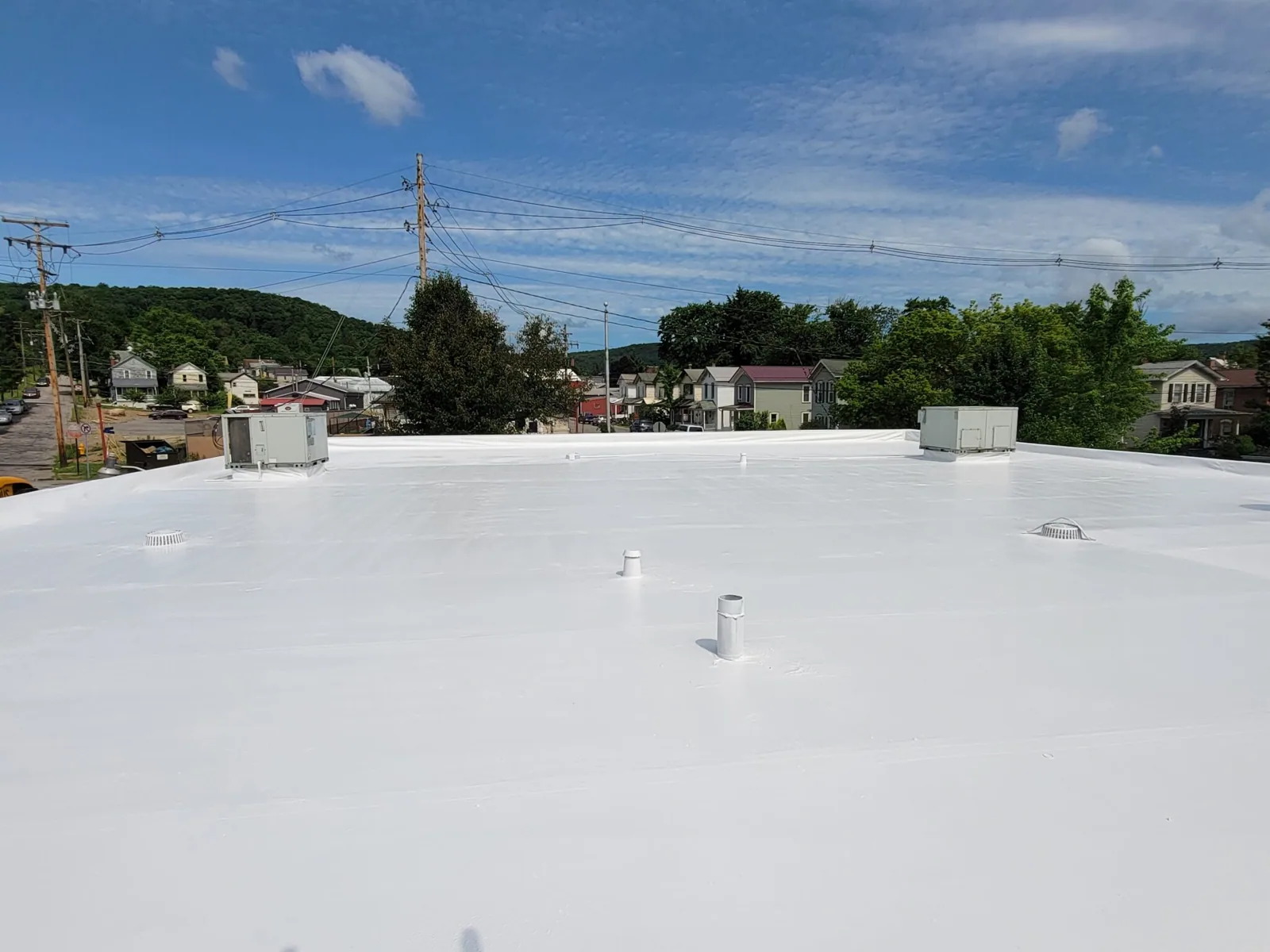
Roof access should follow the incident command or property safety release, not an assumed route from a prior maintenance visit. We confirm which stair, hatch, ladder, and roof zone are available, where debris or equipment restricts movement, and what areas remain closed. The first visit can document conditions without opening materials when heat or structural review is still pending. We identify the boundary between a permitted observation and work that requires separate authorization. That helps the property team avoid disturbing a roof area while other specialists are still assessing it. In a Downtown office or civic property, a route may cross occupied floors; in an older commercial building, stairs or roof edges may require a different access plan. The inspection scope records the confirmed access and any limitation before recommendations are made.
Debris removal can leave sharp edges, temporary cuts, or equipment marks that need to be distinguished from the original roof surface. We photograph that condition before the roofing scope changes it and list any area that another specialist must clear before a crew can enter. If a mechanical unit or service line is under review, its access boundary remains visible on the roof plan. The inspection can then proceed in a sequence that does not move debris across an intact membrane or cover an unexamined detail. Once the access zone is released, we return to the marked location and complete the roof-level assessment with the original surface record available.
Separate heat, water, and impact conditions
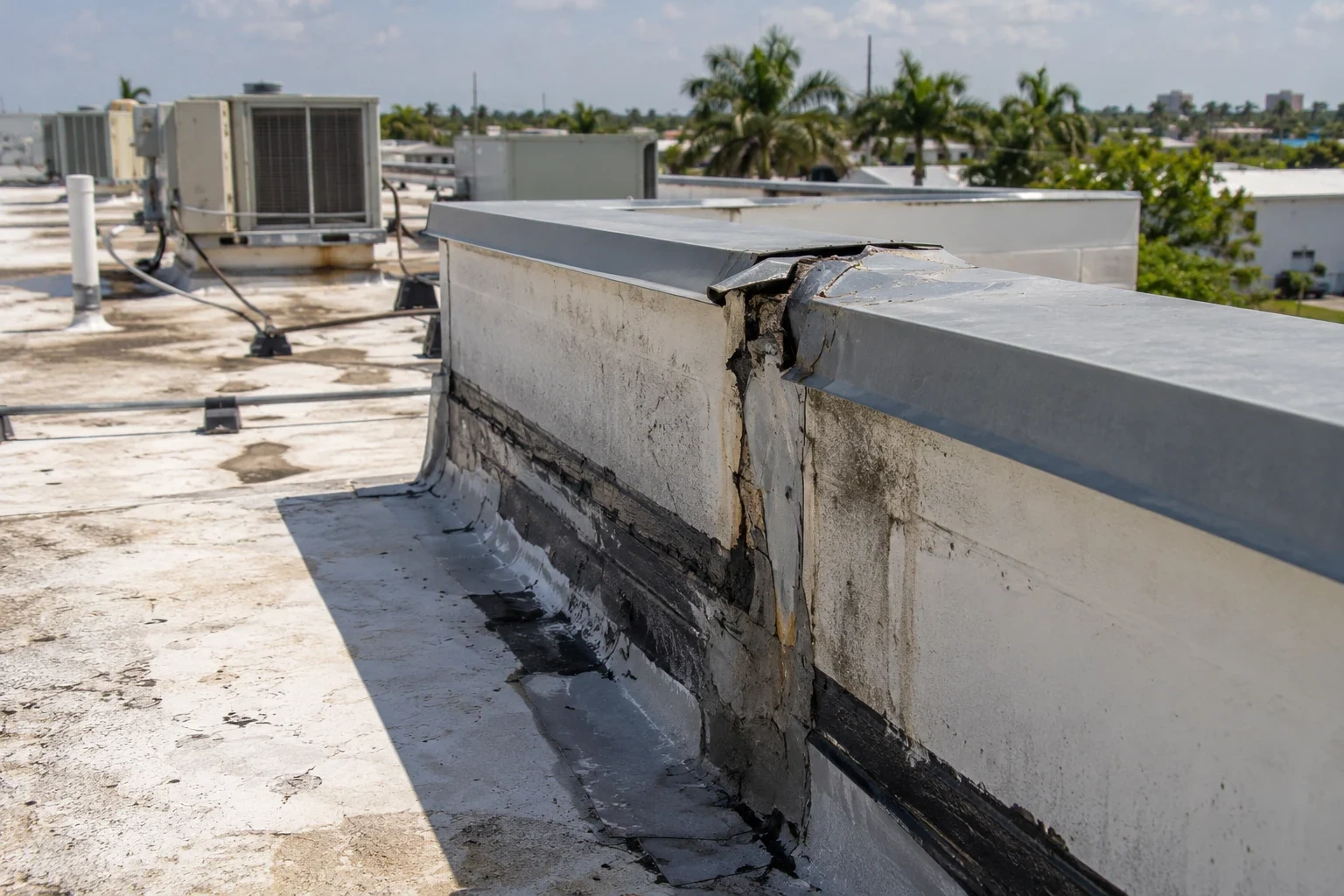
Fire-related roof conditions can include blistered membrane, distorted metal, damaged penetrations, wet insulation, residue, or cuts created during emergency access. We photograph each observation and label its location rather than attributing every change to one cause. Suppression water may travel beyond the visible roof opening, so interior reports and roof-level evidence need to be compared. A moisture survey can help identify an area for selective examination, while a test opening confirms the concealed materials only where removal is authorized and safe. We do not treat soot or discoloration as proof that the membrane has failed, and we do not close over a layer that needs separate review. The condition record distinguishes direct observations from questions that remain for the owner or incident team.
Control the test opening
When an opening is needed, the scope states the location, maximum size, protection method, and person who can authorize additional removal. The crew documents the membrane, insulation, cover board, and deck as each layer is reached, including any condition that changes the repair plan. If the substrate is soft or the deck cannot be accepted for roofing work, the area is secured while the owner coordinates the proper review. Materials should not be installed over a layer that remains under investigation. A different condition at an adjacent roof zone receives a separate location marker, so one test area does not become an unsupported description of the whole roof. When the confirmed condition is limited, a localized membrane repair may be appropriate; broader damage calls for a larger, documented boundary.
Secure the roof between visits
Temporary covering after a fire must account for the opening shape, exposed edges, drainage route, and wind. Northeast winds are a regular feature in Hawaii, and rainfall can shift sharply across nearby areas, so a temporary cover needs secure edges and a recorded closing check. We identify whether the protection is temporary, what area it covers, and who verifies it before the crew leaves. Winter storms between October and April generally bring the heaviest rain, making a defined stop point valuable if the permanent material cannot be installed that day. If another team needs to cross the roof, the work record identifies the route and any boundary they should avoid. The emergency protection scope can be completed separately from the permanent restoration so the property team can review both decisions.
Set a repair boundary from confirmed damage
A repair may be limited to a puncture, curb, or section where membrane damage is confirmed and the receiving surface remains sound. A larger roof area may need removal when inspection shows heat-related loss of integrity, wet insulation, damaged deck, or transitions that cannot accept a tie-in. We state what evidence supports each scope, what materials are expected to be removed, and what condition would require a revised authorization. A coating or recover is not a substitute for removing a layer that no longer provides a stable base. For a replacement, the scope should define edge and penetration details as well as the field membrane. Flashing repair and perimeter repair are separate details when their conditions are observed, not automatic additions to a fire-related work order.
Connect roof work to the recovery file
The handover includes dated photographs, access limitations, observed material condition, removed and installed layers, and final closure. Each image is tied to a roof-zone reference so a property manager can compare the repair with the original observation. We note which conditions were confirmed after an opening and which remained outside the roofing scope. If an interior restoration contractor will return to the same area, the file identifies where the roof is closed and where follow-up inspection may still be required. For a historic or modern building in Downtown Honolulu, that location reference also helps staff coordinate access through the correct part of the property. The repair acceptance record shows what roofing work is complete without treating unrelated recovery tasks as part of the roof scope.
Commercial Roofing Questions
Can the roof be inspected before all recovery work is complete?
We follow the property’s safety release and access limits. An initial visit can document observable roof conditions, while openings or repairs wait until the responsible site representative authorizes that work.
Does discoloration prove the roof membrane failed?
No. We photograph and describe visible changes, then inspect the membrane and transitions for actual loss of integrity. A selective opening is considered only when it can answer a defined question.
How do you account for suppression water below the roof?
We compare roof observations with reported interior areas and moisture evidence. The scope identifies where the concealed layer needs confirmation and keeps unrelated water paths separate.
What protects an exposed roof until permanent work begins?
The temporary method is selected for the opening, drainage, edge, and wind conditions. We record its limits, attachment, and closure check, then identify who should inspect it before the next visit.
What will the repair file show to the owner?
The file ties dated photos to a roof-zone plan and lists observed layers, installed materials, closure status, and any remaining inspection item. Direct observations stay distinct from conditions not opened.
Document the roof recovery scope
Arrange a commercial roof examination in Honolulu, HI. After the property releases access, we will record roof conditions and define a protected repair boundary for review.
Tell Us About Your Roof
We will follow up to set up a time to walk the roof.

Request a Roof Assessment
Tell us about the building and what you are seeing. We will follow up to set up a time to walk the roof.