
After a severe wind and rain event, a commercial roof needs a measured inspection before a property team decides which areas to repair or protect. Hurricanes and other severe storms are uncommon but possible in Hawaii, so the assessment should follow observed conditions rather than assume a particular event caused every defect. The documented event guides the examination. We photograph the roof field, perimeter, penetrations, equipment, drains, and interior reports, then map each confirmed issue. Waikiki’s hotel buildings and Hawaii Kai’s residential and commercial mix illustrate different building uses within Honolulu, but no district fact establishes a specific roof condition. The property’s assembly, access, and reported water entry control the scope. If an opening is active, our crew can respond around the clock, holidays included, and record temporary protection separately from permanent repair.
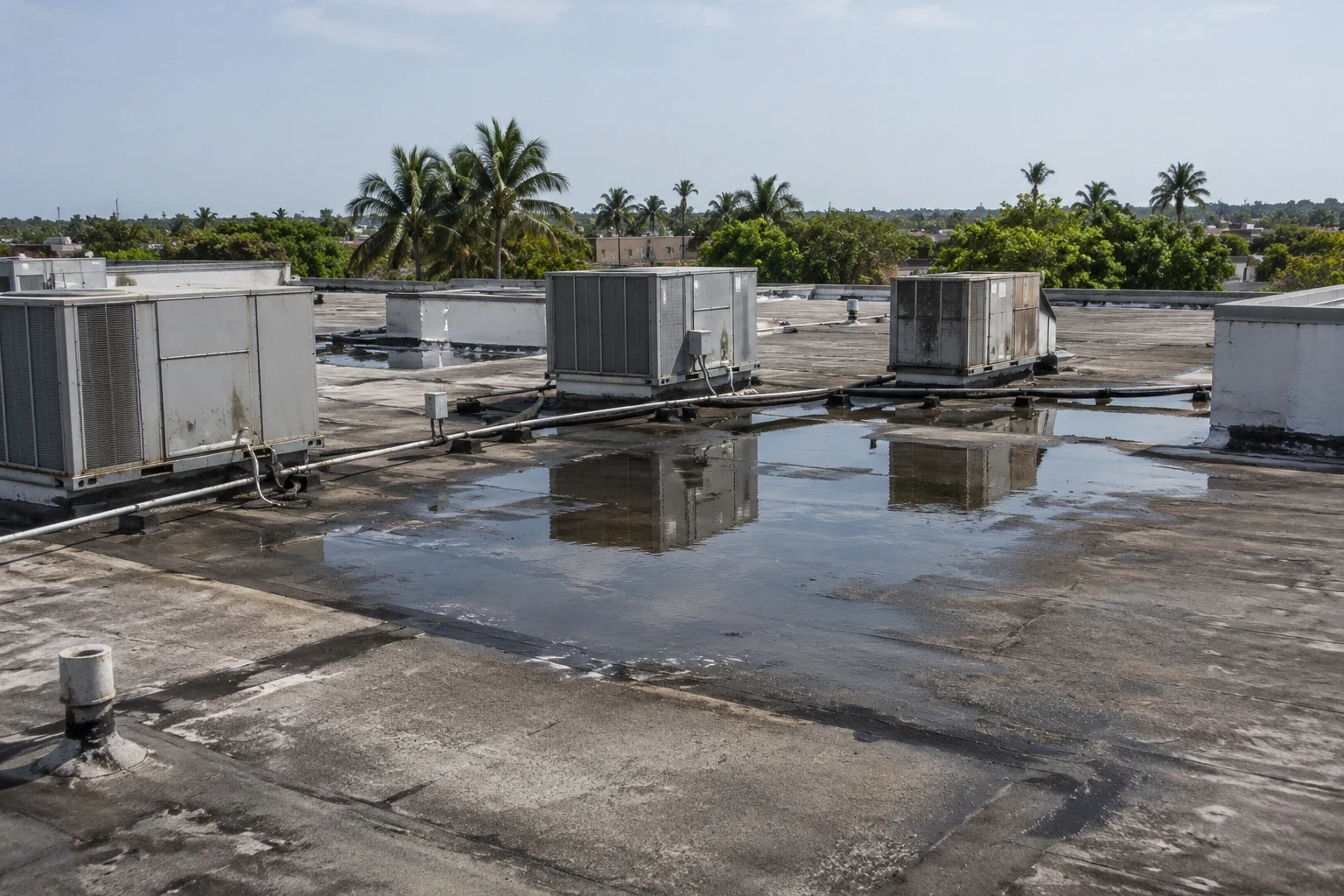
Survey the roof before debris moves
Before cleanup changes the evidence, we photograph loose components, displaced metal, membrane tears, blocked outlets, and any impact marks that can be reached safely. A wide view shows the roof zone; closer images record each seam, edge, curb, and penetration. We note debris location without assuming it caused the damage and keep pre-existing wear separate from a newly observed opening. The inspection checks whether parapet coping, edge metal, termination bars, and fasteners remain secure along the affected length. A wind-damage review can help organize perimeter findings, while a condition report connects them to a marked plan. This record gives the owner a sequence for urgent containment, targeted repairs, and a later roof-wide assessment if evidence supports one.
Inspect edges and wall transitions
Wind pressure and water exposure can test the connected details at corners, roof edges, parapets, and equipment curbs. We examine the membrane termination, metal attachment, counterflashing, and nearby seams for movement or separation. A loose cap does not automatically mean the field membrane has failed, but its adjoining lap and substrate should be checked before a repair is closed. We identify the length that moved, the attachment points reached, and any concealed area that remains unknown. At a roof-to-wall transition, water can enter behind a vertical surface, so a visible sealant bead is only one part of the detail. If flashing has opened, the flashing repair scope sets its own removal and tie-in boundary.
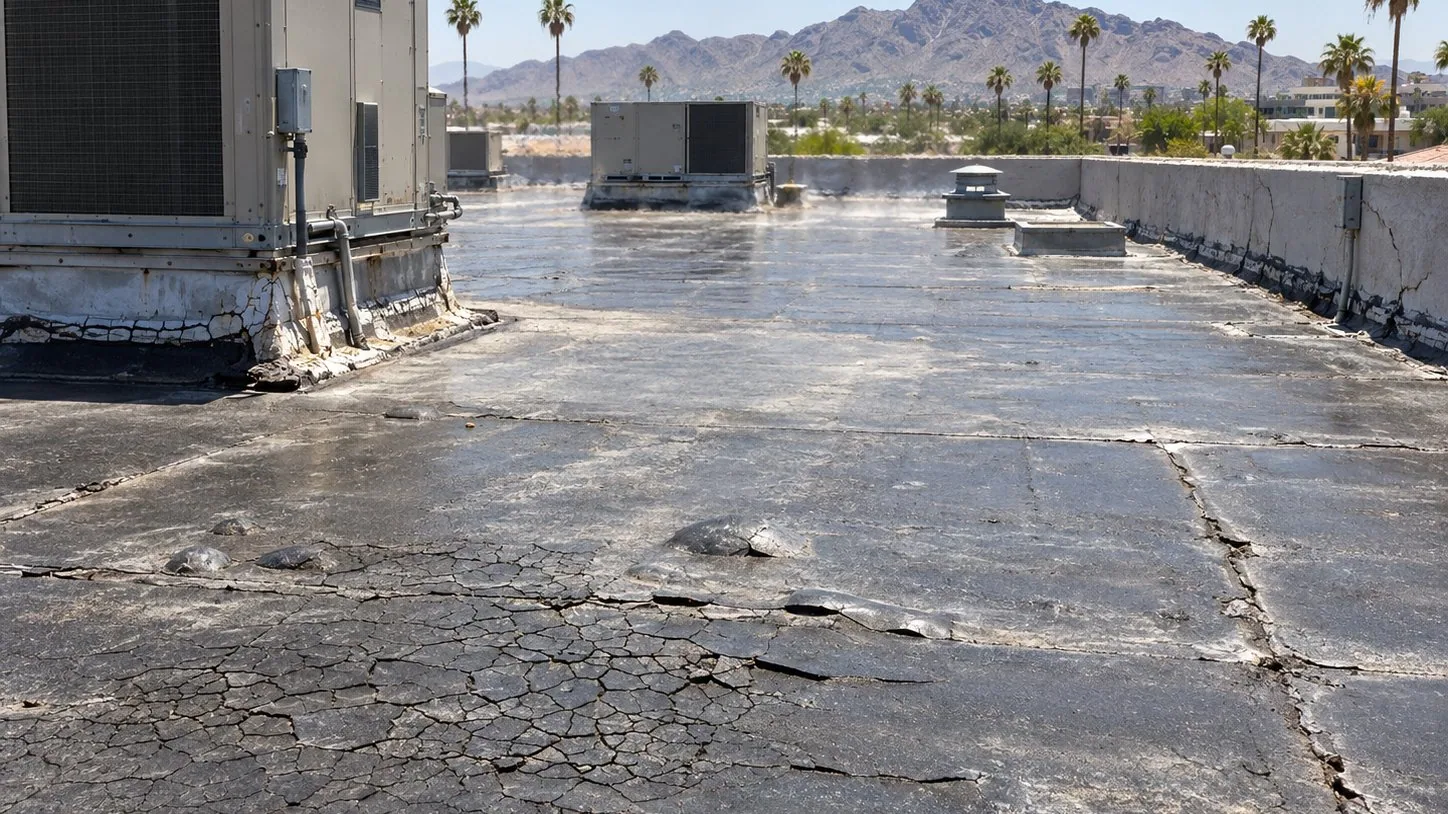
Restore water paths and overflow
Rain-driven debris can collect at strainers, scuppers, overflow openings, and low points. We record what is blocking the route, clear only what is authorized, and inspect the membrane around the outlet for damage or a separated seam. A drain that flows after cleaning may still sit below a roof area where water remains trapped, so the follow-up records both the outlet and the basin. We check that an overflow route is open and that temporary protection does not redirect water toward a building edge. If an outlet flange or surrounding sheet is compromised, we define that repair separately from routine debris removal. The drainage inspection can be paired with a roof survey, while a ponding review addresses a basin that does not drain as expected.
Test only the layer that remains uncertain
A visible tear may be small while moisture has traveled farther through insulation or an older roof layer. We use roof-level observations and moisture mapping to locate a selective opening that can answer a specific question about the concealed assembly. The scope states the location, maximum removal area, temporary protection, and the finding that would trigger added work. Each exposed layer is photographed before it is covered, and the report distinguishes confirmed wet material from an area that was not opened. If a deck or attachment needs separate evaluation, we secure the roof and present that change for authorization before continuing. The condition record keeps the opening tied to the event inspection without extending the finding beyond its evidence.
Secure every work boundary
Trade winds persist in Hawaii, and rainfall varies over short distances; winter storms generally bring the heaviest rain from October through April. A temporary cover must be attached for the roof conditions at its edges and must not block a drain or overflow. We establish a maximum opening, keep protection material ready, and document the check at shift end. If a weather window closes, the crew secures the exposed area and records whether the installed detail is temporary or final. No second roof zone is opened until the first one can be left in a known condition. The property contact receives the closure image and any access instruction for the next visit, so a return crew does not assume a temporary cover is the finished repair.
Prioritize by confirmed roof condition
Urgent work may be limited to a torn membrane, loose edge, open flashing, or blocked drainage path. A broader replacement review is warranted only if inspection finds repeated failure, wet materials across a larger area, or an assembly that cannot accept a reliable tie-in. We list the condition, affected zone, and limit of each repair option, then explain what removal or access changes under a larger scope. For hotel or residential buildings near Hawaii Kai, occupied access can shape the schedule without changing what the roof evidence supports. The repair plan can proceed before a separate replacement assessment when the immediate opening needs to be secured.
Maintain a dated event record
The closeout groups images by roof zone and identifies the original observation, temporary protection, concealed layers, installed materials, and final tie-in. It also notes what was cleared, what remains for monitoring, and whether a separate scope is pending. A later inspection can compare the same edge or drain against its post-event condition without treating old wear as new damage. We keep site access restrictions with the record so a property manager can arrange a safe return. The report states whether the roof section was directly inspected or simply observed from a permitted route. That distinction helps the owner prioritize roof work while preserving a traceable sequence for the property file.
We also keep any area not reached within the access boundary visible on the plan. The owner can decide whether a separate safe-access visit is needed, rather than assuming the first walk covered hidden or restricted roof sections. A dated follow-up image can document whether a temporary cover remains secure and whether the original drainage route is open again.
Commercial Roofing Questions
Do you assume every roof defect came from the storm?
No. We record visible conditions and separate new damage from prior wear when the evidence allows. Each repair recommendation is tied to a roof zone and the condition observed there.
What should be checked first after a major wind and rain event?
We prioritize active openings, displaced edge or flashing details, blocked drainage, and unsafe access. Photographs and a map preserve conditions before cleanup or repair changes them.
Can temporary protection stay in place between visits?
The protection method and its intended limit are documented, then checked at shift end. The owner receives any access or inspection instruction needed before a permanent scope is completed.
Will you inspect the full roof during an emergency visit?
The visit follows the authorized access and safety boundary. We address active water entry and record visible conditions, then present a broader examination separately if the owner wants that work.
How is a replacement decision supported?
A broader option follows evidence such as repeated failure, widespread wet material, or an assembly that cannot receive a sound repair. We document those findings before presenting a replacement scope.
Document the roof after severe weather
Arrange a commercial roof assessment in Honolulu, HI. We will map visible conditions, secure open areas, and define the repair or further inspection supported by the roof.
Tell Us About Your Roof
We will follow up to set up a time to walk the roof.

Request a Roof Assessment
Tell us about the building and what you are seeing. We will follow up to set up a time to walk the roof.