
An occupied senior living building needs roofing work related to resident routes and the services that must remain available during construction. Commercial Roofers Honolulu assesses senior living roofing in Honolulu, HI, with those requirements established alongside the assembly findings. Our residential roof coordination includes Makiki and Salt Lake, areas with different scales of housing construction. We examine the particular building and its actual care functions, giving the responsible owner team a defined opening, repair or replacement plan rather than assume one residential occupancy arrangement applies to every setting.
The owner’s operating and care teams establish their use restrictions. We describe construction access, material operations and the protection required below proposed openings so those decisions can be reviewed before work proceeds. A roofing plan should identify the affected stages and responsible-party handoffs. It cannot replace the operator’s control of resident care or imply that every activity may continue beneath an operation merely because the roof work is being performed above an occupied building.
Resident routes inform construction access
Material delivery, staging and debris removal are reviewed with the owner’s routes for residents, staff and visitors. We identify where a construction operation requires a restriction or protection and agree the permitted arrangement before arriving with materials. If a shared route cannot accept the initial plan, the roofing sequence needs another method or work period. That dependency is resolved in advance rather than left for field personnel to negotiate while removal is underway.
Locations below openings are similarly identified by the owner’s actual use. A room or shared area may need a temporary restriction established through the operating process. We explain the proposed opening and closure stages, including the condition that must be reached before work stops. The plan lets the owner coordinate resident use against the roof’s actual construction boundary instead of a general date that does not describe which details remain incomplete.
Leak records distinguish symptoms from roof conditions
The owner’s account identifies the location and timing of moisture and any known equipment or building changes. We relate that information to accessible roof details and earlier repair records. An interior stain can remain after a leak has been repaired, while new moisture may follow another path. The examination therefore identifies the current roofing condition and evidence needed to establish an active entry point rather than treat every visible interior mark as a new membrane failure.
When active water entry requires urgent action, emergency roof protection can be considered with safe access and the operating requirements. Temporary work receives a record of its location and limits. A later examination establishes the permanent repair, distinguishing immediate protection from restoration of the assembly. The owner should know what was closed and what further roofing work remains before that temporary response is accepted as final.
A senior living roof examination assesses adjoining field and details to identify local defects or wider deterioration. Concealed questions receive appropriate investigation where material condition affects retention or removal. Different roof areas are considered separately when earlier additions changed their layers. The resulting scope links findings to actual construction instead of assuming every part of the building shares the condition observed at one accessible location.
Operating services have assigned interfaces
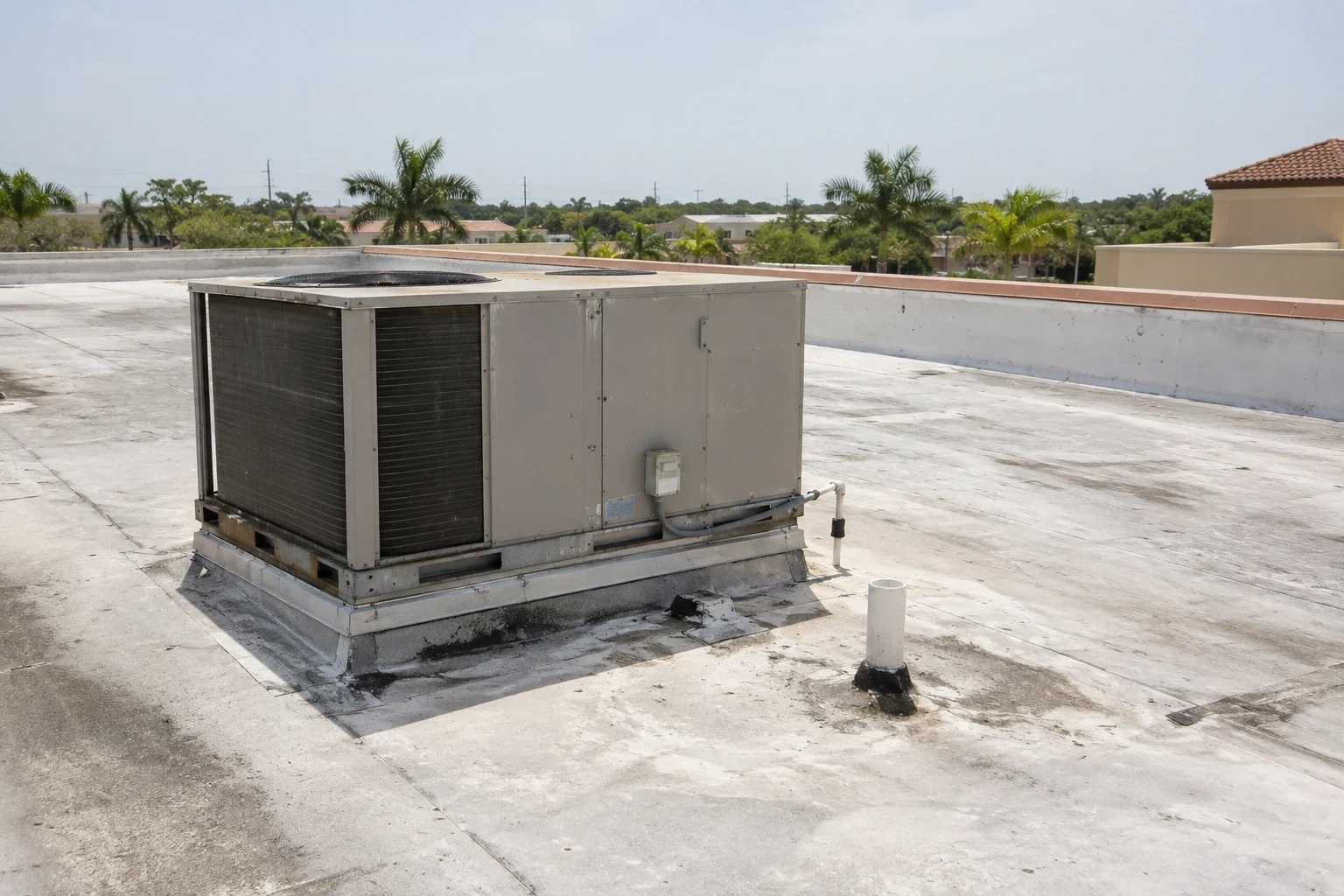
Rooftop equipment may serve several occupied areas. The responsible owner and equipment parties establish their service requirements before disconnection or component alteration. The roofing scope identifies the connection to an accepted curb, support or penetration and the prepared condition required for closure. A known equipment task is assigned in the sequence so the final waterproofing does not depend on an unspecified later adjustment.
Material application and removal methods are described for the owner’s review of occupied-use requirements. Areas near equipment intakes or other sensitive locations may need the responsible parties’ particular controls. We identify the roofing operation rather than make a blanket assurance about its effect on every care setting. That information lets the actual operator coordinate requirements appropriate to its building and the work planned.
Hospital roof work and apartment roofing coordination involve related occupied buildings with different operating responsibilities. Neither plan automatically establishes the requirements for senior living. The owner identifies the care and residential functions actually present, and the roofing sequence is reviewed against those functions before restrictions or permissions are assumed.
The selected system includes daily protection
An EPDM senior living roof option includes its supporting layers, attachment and compatible junctions. Other appropriate systems have distinct requirements. Confirmed wet material or damaged backing receives defined removal and connection work before a new surface is installed. The owner reviews the retained and replacement construction together, with supporting questions identified for qualified input where necessary.
Phased occupied residential reroofing establishes boundaries suited to geometry, details and closure capacity. Areas opened should remain within the practical ability to reconstruct or protect them during the work period. If a concealed finding changes that capacity, additional removal is reconsidered. Temporary transitions are recorded and later completed according to the final system requirements, keeping the operating account aligned with finished and protected roof stages.
Temperatures in Hawaii can reach the 90s, and August and September usually bring the year’s greatest warmth. Actual working conditions need consideration for the selected material operation and its sequence. The owner also coordinates any equipment or use changes through its responsible parties. We keep those concerns distinct, describing roofing tasks and dependencies without turning general seasonal weather into an unsupported prediction about the building’s interior comfort or service performance.
The construction account supports continuing care use
Owners coordinating work in Makiki’s residential area receive relevant layer findings and completed detail records for the actual roof examined. Authorized changes remain with the final scope. Separate equipment and operating records retain their own responsibilities, while outstanding interfaces are identified. The owner can use that account for later maintenance without assuming roof acceptance certifies services or care controls beyond the roofing contract.
Senior living roof capital review can compare current findings with repaired locations and installed construction. A recurring defect or new equipment requirement is assessed against that evidence before another intervention is chosen. We identify compatible care and the next roofing action supported by actual condition. The record gives the owner a practical basis for continued weather protection while maintaining the resident-use coordination required by the particular building.
Commercial Roofing Questions
Who sets resident-use restrictions during construction?
The owner’s responsible operating and care teams establish those requirements. We identify roof stages, openings and routes so their decisions can be made with the proposed construction consequences understood.
Does an old interior stain establish an active roof leak?
Current moisture and the entry path need assessment. A retained mark can differ from new water entry, so the roofing response follows current findings and the owner’s dated observations.
What information should follow emergency roof protection?
Its location, materials and remaining limitations are recorded. The permanent repair is defined through subsequent examination, keeping urgent closure distinct from completed assembly restoration.
Can another residential building’s operating plan be reused automatically?
The actual care functions and service dependencies need review. The owner identifies the requirements for its setting before roofing access or continued use is treated as authorized.
Which record supports a later resident-area roof decision?
Located findings, completed details and current condition observations provide the basis. Proposed openings or equipment changes still require coordination with the owner’s operating process before work proceeds. The record should identify the material involved and the closure task, making the proposed action reviewable alongside the area’s use requirements.
Define the roofing stages for operating review
Plan senior living roofing with Commercial Roofers Honolulu to establish assembly findings, resident-route coordination and the protection needed for the proposed work.
Tell Us About Your Roof
We will follow up to set up a time to walk the roof.

Request a Roof Assessment
Tell us about the building and what you are seeing. We will follow up to set up a time to walk the roof.