
Surface fading, chalking, a brittle seam, or a split around a curb can indicate exposure that deserves a roof-level examination before a coating or patch is selected. Hawaii’s warmest months are August and September, and temperatures can reach the 90s. We document the membrane condition, seam behavior, flashing, penetrations, and any interior report, then identify which areas remain flexible and bonded. Downtown Honolulu includes modern and historic commercial buildings, while Ala Moana combines retail, commercial, and residential uses; their roof assemblies and service conditions are not interchangeable. We inspect the actual material and tie-in rather than infer a repair from color alone. When deterioration leaves an opening, we can send a crew at any hour, including holidays, and keep the temporary measure distinct from the permanent repair record.
Read the surface beyond its color
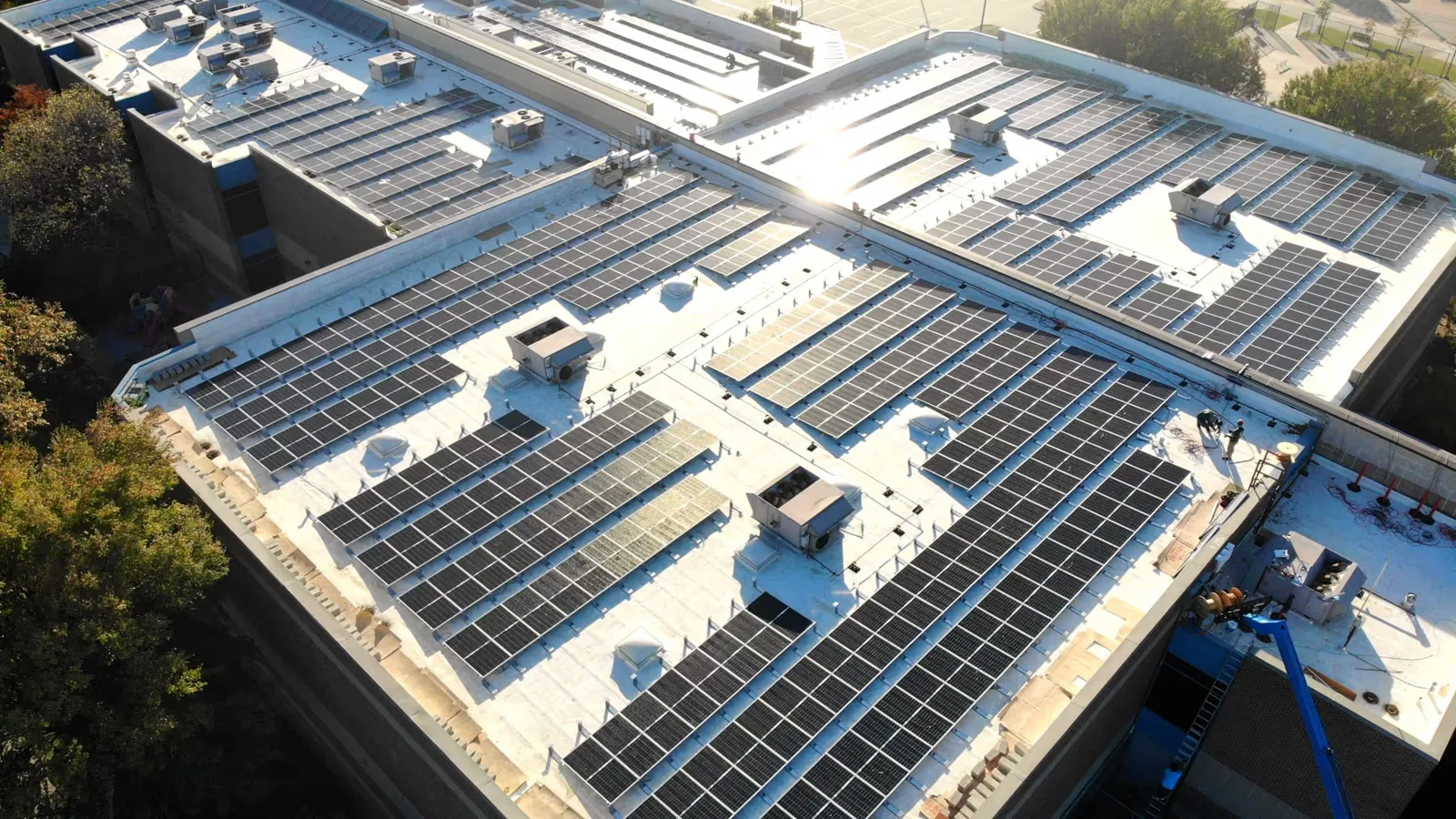
Color change by itself does not establish a membrane failure. We check whether the surface powders, cracks under normal handling, has lost granules, or separates at a seam, and compare those observations with the roof assembly and prior maintenance. The inspection looks at the field, perimeter, curb corners, penetrations, and exposed edges where water may enter. A location map and photographs show whether the condition is isolated or repeated across a roof zone. Where a coating is already present, we note adhesion, pinholes, blisters, and areas where the underlying sheet remains visible. Those observations help determine whether the surface can accept another compatible layer or whether removal is needed. A condition report keeps the surface description tied to a marked location.
Surface temperature and air temperature are not the same measurement, particularly on an exposed roof field. We note the time and roof zone when observing a coating or membrane that feels brittle, soft, or unusually warm, then compare it with the material behavior at a shaded transition. A single surface reading does not establish the condition of every area. The inspection checks whether a seam can flex without separating and whether a patch edge remains bonded after preparation. If a coating is considered, its application limits and cure conditions govern the schedule, not a calendar month alone. Where rooftop equipment blocks part of the field, we record those areas separately because shadow, exhaust, and service access can change the visible surface pattern. The owner can then distinguish a broad exposure concern from one damaged detail before authorizing work across a larger section.
Check seams and transitions for movement
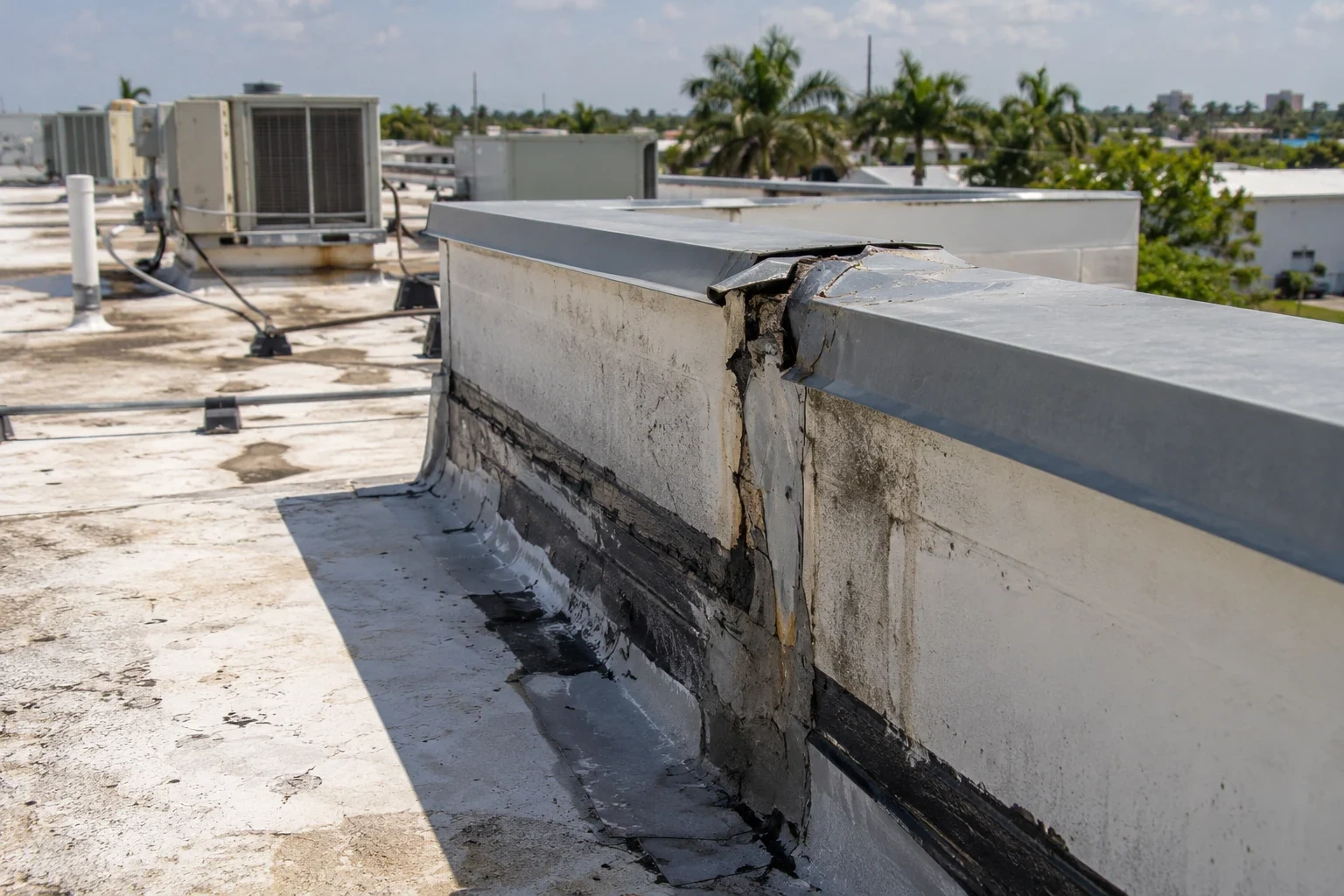
Repeated heating and cooling can stress laps, fasteners, terminations, and roof-to-wall transitions. We test the seam at the affected length and inspect adjacent material for separation or loss of attachment. A split at a curb may be a flashing issue rather than a field membrane failure, so each detail receives its own repair boundary. We also look for moisture evidence beneath a brittle surface, because covering wet insulation with a coating can trap the condition. If a seam has opened, the seam repair scope identifies compatible preparation and tie-in. A curb or wall joint that has separated is documented with flashing details rather than being folded into a broad coating allowance.
Confirm what is below the worn layer
A visibly aged membrane can still sit over dry, serviceable insulation, while a small split can admit water into a wider concealed area. We compare surface observations with any interior report and moisture readings, then identify whether a selective opening would resolve a layer question. The opening limit, temporary protection, and decision point for added removal are stated before work begins. We photograph the existing surface, removed material, insulation, cover board, and deck where reached, and note what each image confirms. If the exposed layer is wet or weak, the repair boundary is reviewed before the roof is closed. The localized membrane repair may address a defined split; a wider wet area needs its own removal and tie-in scope.
Compare coating with repair and removal
A coating can restore a compatible roof surface when the substrate is sound, transitions are secure, and drainage remains functional. It does not correct a soft deck, wet insulation, loose flashing, or a seam that cannot receive the selected system. We inspect adhesion, surface preparation requirements, drain details, and termination conditions, then identify a test area if needed. If the existing membrane is brittle or has multiple open laps, a localized repair or replacement may be more appropriate. The scope states the roof sections included, the tie-ins, and what remains outside the work boundary. The silicone restoration option and acrylic coating detail can be compared only after the field condition is established.
Set the application and closure window
Trade winds, humidity, and rainfall patterns affect surface preparation and the time available to close a repair. Hawaii’s heaviest rain generally arrives in winter storm periods from October through April, while warmer months can bring high roof temperatures. We identify the surface condition required for a patch, adhesive, or coating and state the maximum area that may remain open. The crew keeps temporary protection ready and records the end-of-shift closure check. A coating application also needs the manufacturer’s required conditions and cure period; we do not assume that each roof zone can be finished in a single visit. If the surface becomes damp or too hot for the selected process, work stops at the documented limit and the owner receives a clear status note.
We list the application area, start and stop points, and any detail that remains outside the coating work. The closeout records when the membrane can receive service traffic again and who releases the roof zone.
The same location label follows the next maintenance visit.
Track exposure by roof zone
The final record includes dated photographs of the original surface, seam or flashing work, materials installed, and finished closure. We mark the affected zone and note any remaining area that needs monitoring. For a property in Ala Moana, rooftop access and building use are coordinated with the site contact; those logistics do not change the repair evidence. A later inspection can compare the same marked seam or coating transition after exposure, instead of relying on an old color description. If the owner plans phased work, the record distinguishes completed sections from areas outside the scope and identifies what must be checked before a future tie-in. That makes a maintenance visit useful even after staff or service schedules change.
Commercial Roofing Questions
Does a faded membrane need a new coating?
Not based on color alone. We inspect surface integrity, seams, flashing, moisture evidence, and adhesion before comparing coating with repair or removal.
How can heat-related wear be distinguished from a leak defect?
We map surface changes and compare them with the reported interior location, seams, and transitions. A selective opening is scoped only when concealed layers need confirmation.
Can coating be applied over a brittle roof?
The existing surface must accept preparation and bonding, and the transitions must remain sound. We identify brittle or open areas and determine whether removal or repair is needed first.
What if the surface is too hot or damp on the workday?
The crew follows the application conditions for the selected method and protects the defined area if work pauses. The closeout records what is complete and what remains for a later window.
What will the maintenance record track after restoration?
It identifies the roof zone, materials, seam and flashing work, and any transition left for follow-up. New photographs can then be compared with the same marked locations.
Check heat and UV wear before choosing a system
Arrange a commercial roof examination in Honolulu, HI. We will assess the surface, seams, and concealed conditions, then compare repair, coating, and removal options.
Tell Us About Your Roof
We will follow up to set up a time to walk the roof.

Request a Roof Assessment
Tell us about the building and what you are seeing. We will follow up to set up a time to walk the roof.